As the United States approaches its 250th birthday on July 4, 2026, the nation faces a defining question: How do we celebrate this milestone at a time of deep division?
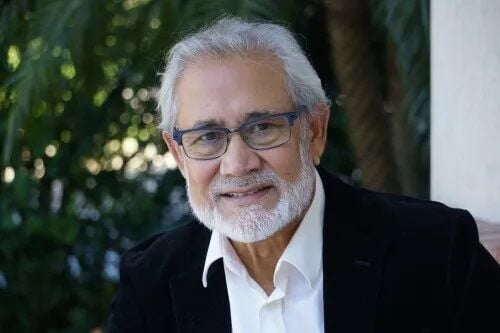
Victor Ghalib Begg
This semiquincentennial should be more than a commemoration. It should be a moment of reflection on whether we are living up to the ideals of equality, liberty and justice outlined in the Declaration of Independence.
Religious leaders have a vital role to play in that reflection. Across traditions, faith voices can affirm the moral foundations of our national life — uplifting shared values of peace, justice, dignity and compassion. At a time of polarization, they can help bridge divides by encouraging civic engagement, pluralism and a renewed sense of responsibility to one another.
The Detroit metropolitan area offers a compelling example. Known for its religious diversity, it is home to strong interfaith networks that foster dialogue and mutual respect. These efforts reflect the enduring aspiration captured in both “One nation under God” and E pluribus unum — “Out of many, one.”
People are also reading…

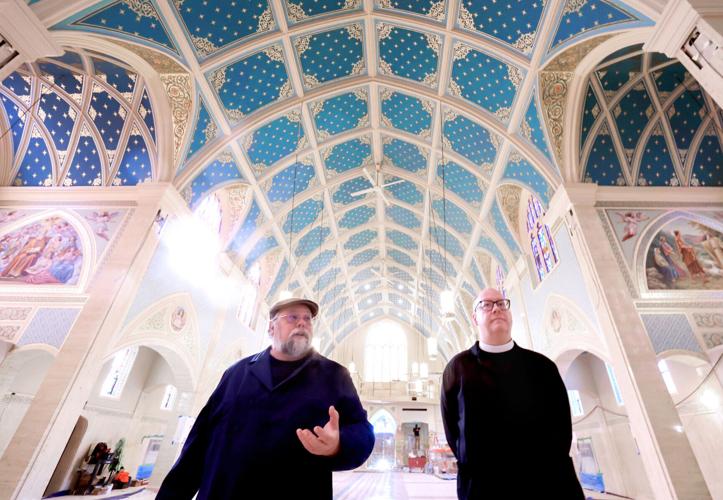
Paul Lang, director of real estate and construction for the Diocese of Madison, left, and Rev. Michael Radowicz, Pastor of St. Bernard’s congregation, view the inside of the future Cathedral of St. Bernard of Clairvaux in Madison, Wis. Monday, Nov. 3, 2025. JOHN HART, STATE JOURNAL
Bob Bruttell of the Interfaith Leadership Council of Metro Detroit points to the moral voice of Pope Leo XIV, who calls for “peace and dialogue, not conflict.” The pope also had weighed in on the treatment of immigrants with dignity. Bruttel invokes Frederick Douglass’ enduring question in his 1855 speech, “What to me is your Fourth of July?”, a reminder that many Americans still question whether the nation fully lives up to its promises.
Abraham Lincoln’s Gettysburg Address similarly reframed the Civil War as a struggle for equality, democracy, and national unity — ideals that remain unfinished work. The Founders, too, understood the importance of working across differences.
Rev. Daniel Buttry, a Baptist pastor and interfaith leader, highlights how evangelist John Leland urged James Madison to include protections for religious liberty in the First Amendment. That principle remains essential today: Religious freedom for all is the safeguard against division and the corruption of faith by power.
Rabbi Asher Lopatin of the Jewish Federation of Greater Ann Arbor points to the biblical call (Leviticus 25:10) to “proclaim liberty throughout the land to all its inhabitants.” This vision, echoed in America’s founding, affirms that all people are created equal and deserve dignity and rights. Faith leaders, he argues, must encourage civic participation and help strengthen that commitment.
Imam Steve Elturk of the Imams Council of Michigan turns to the Quran (49:13), which teaches that humanity was created from a single origin, Adam and Eve. This teaching directly resonates with the Declaration’s assertion that “all men are created equal.” America, in its diversity, reflects a manifestation of divine wisdom.
Encouragingly, initiatives such as Faith250 are already putting these principles into action. Thirty-two inter-religious networks across the country have brought 213 congregations together to promote dialogue, civic engagement, and a shared appreciation for the nation’s founding documents as instruments of unity.
At their best, faith traditions teach civility grounded in respect, kindness and dignity — values reflected in the call to love one’s neighbor and welcome the stranger. These principles carry particular weight as the nation observes the National Day of Prayer on May 7, 2026, in the lead-up to this historic anniversary.
At a time when division threatens to erode the nation’s fabric, faith leaders can serve as stewards of hope. They can help ensure that this Fourth of July can be more than a birthday party, but a recommitment to the future — one that unites communities, fosters dialogue and renews the values it has been working toward for 250 years.
Ghalib Begg is a former chair of the Council of Islamic Organizations of Michigan and vice chair emeritus of Michigan Roundtable for Just Communities. He wrote this for The Detroit News and USA TODAY Network.