

When I was growing up, adults were always telling me to “pay attention.” The basketball coach, the history teacher, my parents — they all wanted me to stop thinking about whatever I was thinking about and think about what they wanted me to think about.
Occasionally, the adults had something important to say. Like my grandma telling me to pay attention to how I was planting vegetable seeds in the garden, or my grandpa pointing to the bobber bouncing on the water. “Pay attention now. Get ready to set the hook.”
But more often than not, I wanted to say back to these adults, why don’t you pay attention to the call of that mourning dove, or to the curious way the wind is blowing through the trees, or to Sandra, sitting by herself over there, who seems unusually quiet and withdrawn today?
I resented their casual assumption that whatever they were doing was more important than whatever was on my mind; I resented the implication that my attention was something owed to them, that they had a right to command it at will. I was determined to safeguard the integrity of my own mind, to think the thoughts I wanted to think, to daydream when I liked, to questions when I wanted to question, to say “Absolutely not” inside my head even while my voice was saying “OK.”
People are also reading…
This duality of inner focus with outward compliance is a talent every child develops at some point. For some it takes the form of silent rebellion; for others it is the skill of tuning out; for me it was more like persistent inner questioning. That talent has served me well over the years, allowing me to maintain an inner equilibrium in the face of outward pressure from an unreasonable boss or an outraged colleague.
I will choose for myself, I want to say, whether your latest crisis shall be my crisis, to what extent your worry shall be my worry, or your pain, my pain. I will pay my attention to whom I wish to pay it, and when, and how much.
I want to say that. And yet, with every year, I’m finding it harder to do.
There is a scene in the old movie, “The Devil and Daniel Webster,” in which the devil tempts a young farmer with riches. He can have money, and all that money can buy. He can pay his debts, have a nice house and be the envy of all his neighbors. All he has to do is sign a contract surrendering his soul. After all, the devil asks, what is the soul anyway? “The soul is nothing,” he says. “Can you see it, smell it, touch it?”
I sign that contract daily, every time I install a new app on my phone, or update the software on my computer, or watch a video that is streaming online. It’s free, the company says, it costs you nothing. Just click the agreement at the bottom of the screen.
We are all living today in the attention economy. I don’t have an authority figure standing in front of me demanding that I listen to what he says. Instead, I have a phone that alerts me that my government has just bombed another country, that a young girl has been abducted from a neighboring town, that a storm is expected tomorrow morning. My watch buzzes and reminds me to get up and move or that I have 15 minutes until the next meeting.
The bulwarks I have carefully constructed over the course of half a century to protect the integrity of my own mind are disintegrating bit by bit. The question is, what, if anything, can I do about it?
I think the first step lies in recognizing that today’s demands on our attention, while they may be more persistent and insidious than in years past, are not different in kind. We did not invent the attention economy; we merely refined and monetized it.
“The world is too much with us,” warned William Wordsworth, in a poem that could have been written yesterday. “Late and soon, getting and spending, we lay waste our powers; little we see in nature that is ours; we have given our hearts away.”
If we have given our hearts away, the task is to recover them. To do that daily, bit by bit. Not just by retreating from the world, by rejecting technology or locking our phones away in a cabinet. We recover our hearts by directing our attention to that which is worthy of love. And there are two ways of doing this.
The first is in the direction of depth. We can deliberately turn our thoughts to all that is good, all that is beautiful, all that is true. This is the act of prayer, the loving attention we give to the source of life.
The second is in the direction of breadth. We can turn to the people around us, those who need our care, whether that be practical aid like food or shelter, or whether it be emotional support, like encouragement and kindness.
The key is to actively engage with the world. We can do this in any number of ways: by spending time in conversation, by reading a book, by learning a hobby, or even by going outside and taking a walk.
This morning, I woke up early and took a walk in my neighborhood. I saw the bluffs standing solid and reassuring against clouds barely illumined by a sun still far below the horizon. I heard cardinals all around me, and a couple mourning doves in the distance. It seems they have just returned.
A goose flew overhead, protesting the snow and ice that had covered the ground, reminding him that he had returned north too soon. I breathed deep the cold morning air and saw my breath go out onto the wind. I felt my soul return from wherever it had been hiding.
Here I am, it said. Thank you for finding me. Thank you for paying attention.
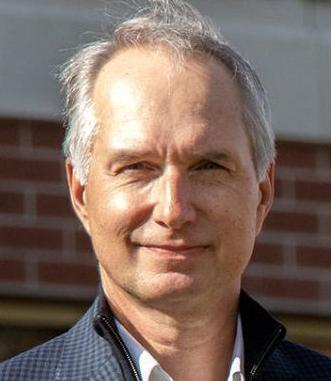
Richard Kyte
Richard Kyte is the director of the D.B. Reinhart Institute for Ethics in Leadership at Viterbo University in La Crosse, Wisconsin. His new book, “Finding Your Third Place: Building Happier Communities (and Making Great Friends Along the Way),” is available from Fulcrum Books. He also cohosts “The Ethical Life” podcast.
