Jim Roach has plenty of time these days to think about the global magnitude of what he witnessed as a child. He is a resident of the Motion Picture & Television Country House and Hospital, a Los Angeles retirement community for women and men who spent careers in the entertainment industry.
The facility has endured some losses from Covid-19 – noted character actor Allen Garfield, for instance, died there in April from the virus – and Roach, a grandfather closing in on his 90th birthday, goes without visitors during this spike in the pandemic, often speaking by Zoom or FaceTime with his six children and their families.
Roach retired as chief financial officer for Steven Bochco, the legendary television producer who developed such shows as “Hill Street Blues” and “L.A. Law.” He served as an accountant during the making of many memorable television series, a career that came to be when Roach, who spent his teenage years in Kenmore, turned his car to the West as a young man and took a chance.
People are also reading…
The events building into that choice happened only because he lived through a chaotic and world-changing moment of history. As a 10-year-old in Hawaii, Roach watched the Dec. 7, 1941, Japanese attack on Pearl Harbor while huddling in a nearby bedroom with his sister, June. The event was responsible for the decisions that turned greater Buffalo into Roach's teenage home, a sequence of chance that shaped what he does now.

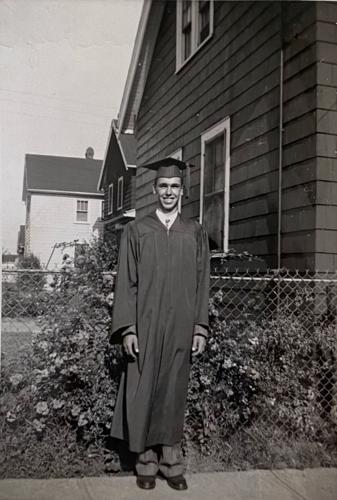
Jim Roach in Kenmore, 1949, as a graduate of Kenmore High School.
“It kind of follows you for your life,” Roach said of how he was affected by Pearl Harbor.
Jeannine Doucette, one of his six children, said her father routinely underplays his own significance.
“He’s a man of true value, a man you really want to emulate in life,” she said.

Only if you press Ted Yochum will he describe how he swam toward a weakened man in deep water, a guy who had been clinging to an empty can of gasoline for at least 45 minutes.
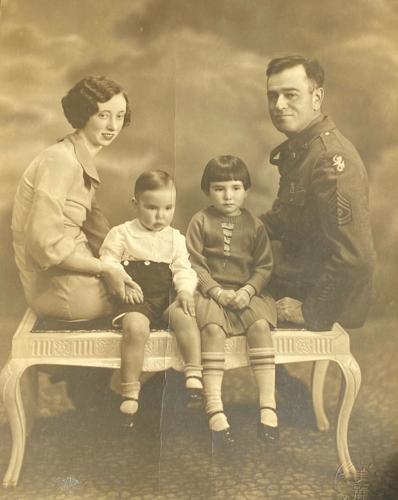
Born in Georgia, Roach spent his early childhood in China, where his dad – also named James – served with the U.S. Army. Roach's father was soon transferred to Hawaii, stationed near Pearl, where he and his wife were living when they divorced. Roach's mother, Georgia Ellie Sandberg, remarried a soldier from Buffalo named Wolfram. She ran a hairdressing salon in Wahiawa, not far from Schofield Barracks, while her husband was part of the 35th infantry regiment.
They were there in 1941, when the attack began. Roach remembers how he and June, staring through a bedroom window, heard explosions and saw smoke and flashes as Japanese planes attacked Wheeler Airfield, only two miles away. His stepfather, who had separated his shoulder playing football a day or two before, struggled into his uniform and hurried off to join his regiment. They would not see him again for two weeks.

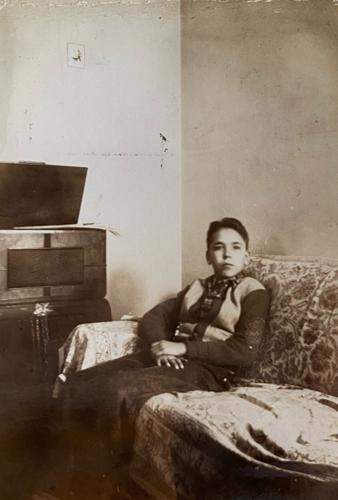
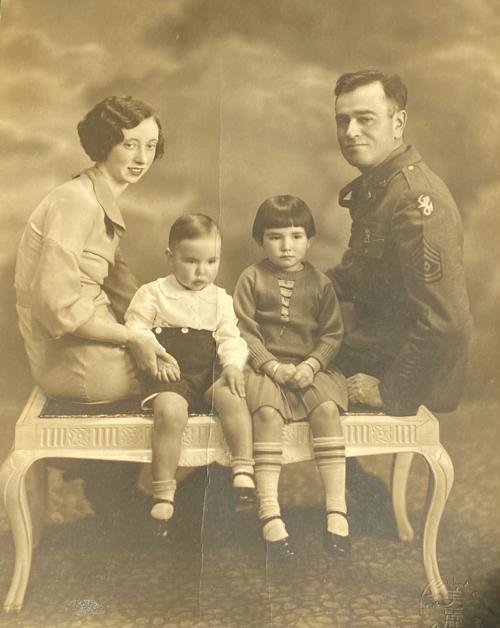
Jim Roach as a child, an image he believes was taken in Hawaii, near Pearl Harbor.

Throughout Western New York, the pandemic only intensifies the crisis for those who have the least. But St. Luke's Mission of Mercy remains a beacon in the community for those in need.
As for Ellie – which is what everyone called Roach's mother – she grabbed her children and fled toward the home of “some friends in the Navy,” a few blocks away. A Japanese plane flew low and strafed the street as they ran. His mother pulled the kids onto a porch, and Roach said one of his most enduring memories of the day is the way a Japanese-American neighbor welcomed them in tears, then embraced their mother.
Once they went back, they found bullet holes in the garbage cans.
Before long, to guarantee their safety, Ellie took the children to her husband’s home in Buffalo. They settled in Kenmore, where Roach’s stepfather joined them after serving in Europe. He stayed a while, re-enlisted and then sent a “Dear John” letter breaking off the marriage, Roach said.
It was Roach's mother who taught him the meaning of commitment, working as a hair stylist to pay the bills. As a kid who had seen only sun and sand in Hawaii, “you fall in love with the snow in Buffalo,” Roach said. He built a close and lasting group of friends, including the late Ted Yochum and George Tolhurst, a teammate on a dynastic Kenmore track team and a guy who now resides in Saranac Lake.

George and Corrine Klein of Amherst make annual pilgrimages to remember their high school friend who was killed in the siege of Iwo Jima.
Roach expressed grief about the death last March of Yochum, who earned the prestigious Soldier's Medal in the Army by saving the life of a drowning man – and who told me about Roach and the connection to Pearl Harbor during an interview 11 months ago. As for Tolhurst, he spoke Saturday by telephone of Roach's "colorful life" and said they are “almost as close as we were in high school,” a tribute to the lasting power of teenage friendship.
Once Roach graduated, he enlisted in the Air Force. While he had gone by “Wolfram” for much of his childhood, “Roach” was his legal name and the one he embraced in the service – though he never saw his biological dad after Hawaii.
Maybe because of years of loss and struggle, “I think he always wanted to prove he could do it on his own,” said Roach's son Michael.
Once he completed his service, Roach graduated from Michigan State University and became an accountant. He worked for a few years for what is now the Ernst & Young accounting firm in Syracuse, where his roommates included former Syracuse University football player Paul Rolincik. Still, Roach was restless. He had been a Saturday regular at Shea's Kenmore Theatre matinees as a kid, with a dream of somehow breaking into show business. Despite having no connections in the industry, he drove West and "never looked back,” Roach said.
After becoming a certified public accountant in California, he began working on the financial side of such series as “Rawhide,” “Have Gun - Will Travel” and “The Twilight Zone,” where he knew such icons as Clint Eastwood and Rod Serling. Roach, remembering his initial awe at Hollywood celebrities, laughed about what happened to that reverence once he got involved in the day-to-day business.

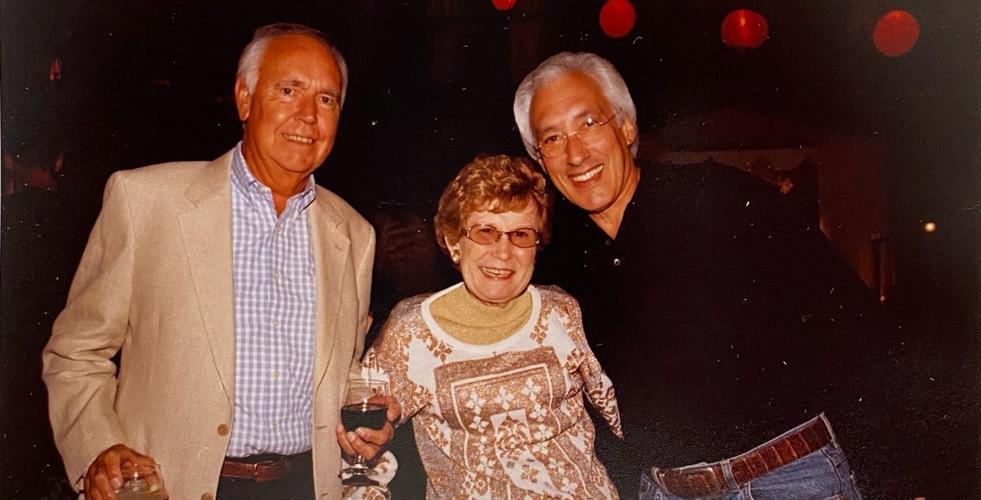
Jim and Diane Roach with the late Steven Bochco, a television legend whose firm Jim served as chief financial officer.
“It wore off,” he said. They were just people, like himself.
In Hollywood, he met the two women he describes as the great loves of his life. He and his first wife, Jane Cusick Roach, had two sons in the 1960s before Jane died as a young woman from breast cancer. In 1969, he remarried. Diane Marie Degnan Roach had three children from an earlier marriage, and their family of five grew by one when the couple had another boy.
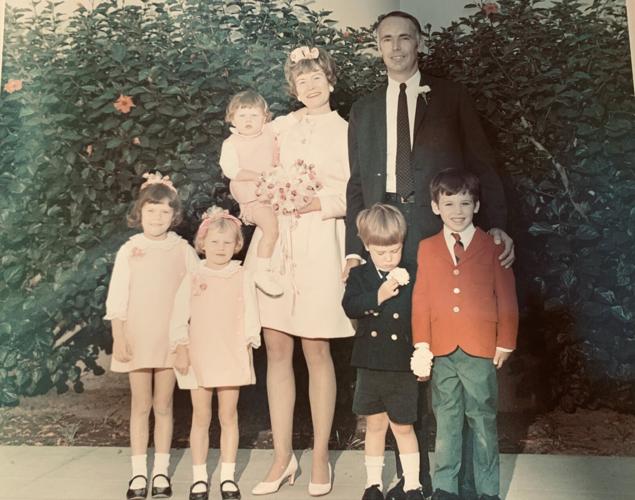
Three girls, three boys. Jeannine remembers how her dad was involved at the time with Paramount and “The Brady Bunch” television show – and how Roach's kids were allowed to watch the live filming of a series whose account of two remarried parents and their blended family mirrored the Roach reality at home.

Diane and Jim Roach with their "Brady Bunchesque" family at the same time Jim was working with the show.
Roach would go on to spend much of his career with Bochco, eventually retiring as the top financial guy for a producer known for a sequence of groundbreaking shows. He and David Milch, who became executive producer of "Hill Street Blues," often shot the breeze about their roots in Buffalo – where Roach's sister stayed until her husband died while shoveling snow, and she decided to join her brother in California. Their mom later remarried and moved to Jamestown, where she is buried.
As for Diane, Roach lost her last year after almost 50 years of marriage. He decided to move into the Motion Pictures home, hardly guessing that a pandemic would soon equate to long periods of separation from his family.
Told of Yochum's death in Amherst, a wistful Roach spoke of outliving so many of his contemporaries, which only amplifies the nature of his increasingly precious narrative. Within the Motion Pictures home, where he is routinely tested for Covid-19, he has the rare perspective of someone who has witnessed both the tumult of this pandemic and who was there for a Hawaiian morning that changed the world.

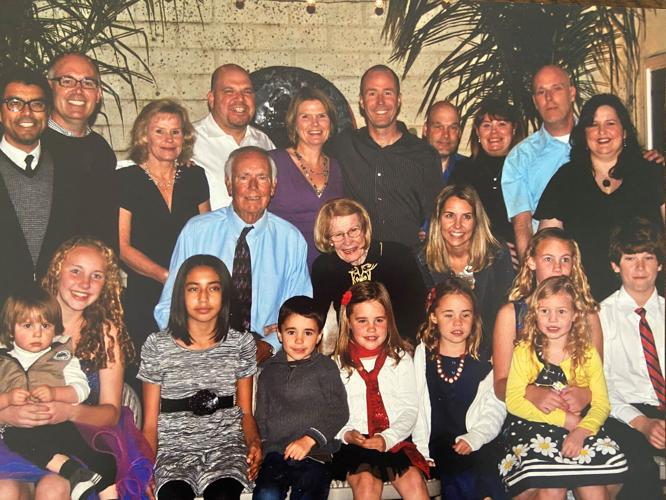
Jim Roach and his late wife Diane (center) with their children and extended family.
“When you talk to a young person today,” Roach said, “I think it’s hard for them to really know what you mean when you say, 'Pearl Harbor.' ”