
Milovan Savic
Montana has made an unprecedented move to become the first U.S. state to ban TikTok.
But doubts have been raised over the decision’s legal foundation, enforcement mechanisms and underlying motives. While the move draws attention to data security on social media, banning TikTok alone may not provide a comprehensive solution to this problem.
For one, the move risks alienating the many young people who have come to rely on the app for meaningful connection, and in some cases their income. It also does little in the way of ensuring better future data privacy and protection for users.
Since its meteoric rise in 2020, TikTok has been caught in geopolitical tensions between the U.S. and China. These tensions peaked in late 2020 when then-president Donald Trump signed an executive order directing ByteDance -- the Chinese media giant and parent company of TikTok -- to divest from its U.S. operations, or face being banned. In response, TikTok partnered with Oracle on Project Texas: a $1.5 billion initiative to relocate all U.S. user data to servers outside China.
People are also reading…

Chew
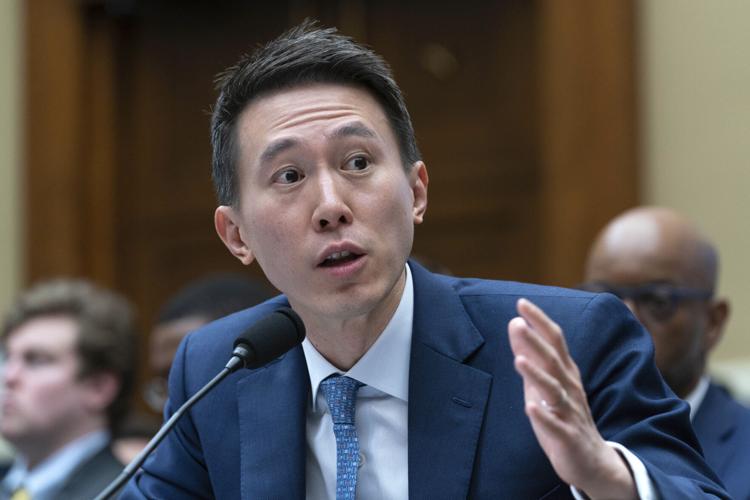
Allegations that China-based employees at ByteDance had accessed the TikTok user data led to TikTok CEO Shou Zi Chew appearing before Congress in March amid yet more calls for it to be banned, and reports of the Biden administration pushing for its sale.
Throughout these controversies, TikTok has denied sharing user data with the Chinese government, and said it wouldn’t do so even if asked. Nonetheless, governments worldwide have banned TikTok on government devices, citing concerns over data protection.
Montana’s new law will make downloading TikTok within state lines illegal on Jan. 1. The law imposes fines of up to $10,000 per day for entities offering access to or downloads of the app within the state. Users themselves will not incur penalties.
The current legislation places responsibility for blocking access on Apple and Google -- the operators of app stores on iOS and Android devices. These companies would be held liable for violations. But they lack the capacity to enforce geofencing at the state level, making it difficult for them to prevent Montana residents from downloading TikTok.
As a result, it may ultimately fall on TikTok itself to block usage by Montana residents by collecting geolocation data. But this raises the privacy concerns driving the ban in the first place.
For now, the ban’s enforceability remains to be seen. How will the government of Montana prevent users from using virtual private networks (VPNs) to access TikTok? VPNs encrypt data traffic and allow users to present themselves as being in another location, making it possible for tech-savvy users to bypass bans. Residents also could cross state lines to download the app.
Montana may become a testing ground for the "TikTok-free America" that some national lawmakers envision. Apart from TikTok, the ban also targets messaging apps including Chinese-owned WeChat and Russian-founded Telegram -- highlighting growing apprehensions over data security and privacy.
But it’s unclear if such a ban is an effective solution for lawmakers’ concerns about American users’ privacy and data security.
Even if the ban in Montana is successful, its national impact will be limited. The state has a population of just over 1 million, whereas the U.S. has more than 100 million monthly TikTok users. As such, the ban in Montana will likely affect a few hundred thousand prospective users at best.
While TikTok’s popularity in the U.S. continues to soar, nearly half of all U.S.-based users are the digital-native teens and 20-somethings of Generation Z. TikTok is Gen Z’s playground.
Young people have protested potential bans by flooding the app with videos mocking lawmakers they see as out of touch with modern technology, further magnifying their disdain for such regulation.
Congresswoman Alexandria Ocasio-Cortez supported young protesters, highlighting the unprecedented nature of banning an app that would stifle free speech while raising questions about digital rights in the U.S.
Gen Z users express their political views, entertain themselves and interact with their peers on TikTok. Where other platforms might feel saturated with older generations, TikTok provides an environment where young people can safely lower the barriers to meaningful online participation.
And it’s not just a quirky app for dance videos. TikTok has become a golden goose for millions of content creators who rely on the app as their stage to showcase their talents, build their brands and connect with fans and customers. Many local small businesses also rely on TikTok to reach potential customers.
With the app now under threat, the future livelihoods of these creators and small businesses are in jeopardy, too.
A successfully implemented TikTok ban may drive users to Silicon Valley’s big tech platforms. But the security of user data with these companies, including Meta (which owns Facebook and Instagram) and Google, can’t be assumed to be more secure than TikTok. They also collect significant amounts of user data that can be shared or sold to third-party entities, including those with connections to China.
If data security really is the main concern, policymakers should address the problem comprehensively and systematically across social media platforms.
Tackling the root cause is essential. Until that’s done, snapping off the branches -- TikTok or otherwise -- will do little to keep users’ data safe.
Savic is a research fellow at the ARC Centre of Excellence for Automated Decision-Making and Society at the Swinburne University of Technology in Australia.