

The following is the opinion and analysis of the writer:
As school is in full swing in Arizona, I hope educators are thinking about the accessibility of course content and delivery.
When I attended college, I was just off the heels of an event that resulted in a traumatic brain injury. I had significant challenges that affected my cognition, perception, and physical mobility. Yet I succeeded in college due to the accommodations provided by the University of Arizona, which had been mandated by the Americans with Disabilities Act since 1990.
I would not be where I am today without the passing of the ADA. My disabled friends would not be nearly as successful as they are today without the ADA. Yet statistics show that disabled people — a demographic that cuts across racial, cultural, and gender lines–are among the most impoverished people in our country.
People are also reading…
So what can we do about it? Some people are abled, so they work and make money. Some people are disabled, so they can’t work and live on governmental assistance. Right?
That sentiment is just not true. We can work. My late friend, John Olson, a quadriplegic with muscular dystrophy, was one of the top engineers at IBM. The fact is that most of the world treats us like we don’t belong, and unless we have someone to advocate on our behalf, we let that dire sentiment seep in.
Creating a more inclusive world where all people feel like they belong starts with education, of course, and it shouldn’t take the high court’s decree to ensure that disabled students succeed. Educators can make their courses accessible with a few tweaks to their pedagogy:
First, educators should post worksheets and reading materials in a sans serif font like Ariel. My TBI resulted in double vision and I struggled to read Times New Roman, which seemed to be education’s golden child. Worst of all, because many texts were written in that font, or some other decoratively obtrusive style, I felt like I didn’t deserve to pursue an education. After all, materials were not designed for me, so I thought I shouldn’t be there.
But disabled people can be stubborn, or in other words, resilient and resourceful — we have to be to live in a world that pretends we don’t exist. My colleagues with reading disabilities have told me how they use a special software to convert material in serif font into something more legible. In my case, many times I pored over an article with one eye closed in order to read a text that I couldn’t understand in the first place.
Which brings me to my second tip, educators should communicate as simply as possible. I know it’s fun to spew hundred-dollar words, especially if you’re like me and you’ve worked incredibly hard to learn them. I thought the phrase “decoratively obtrusive style” above was cool, it would be better in plain language: “pretty, but hard to read.”
Lastly, if educators are watching a video in class or posting one to the LMS, they should make sure it is captioned by default. A lot of times the closed captioning button is difficult to locate for people like me with perception difficulties. At the very least, make sure viewers can enable captions because we know that captioning benefits many, if not all, learners.
Here I must caution myself against promoting what Disability Studies scholar Jay Dolmage calls “interest convergence”: “the idea that conditions change for minorities only when the changes can be seen as positive for the majority group as well.”
But let’s get real here: Teachers are underpaid and overworked and (so I’ve read) regularly disrespected and harassed by students’ parents. They are probably only going to do something if it will benefit the majority of their students. And the good news is that these are simple changes that will not only do so, but they will also make the classroom more welcoming for disabled students.
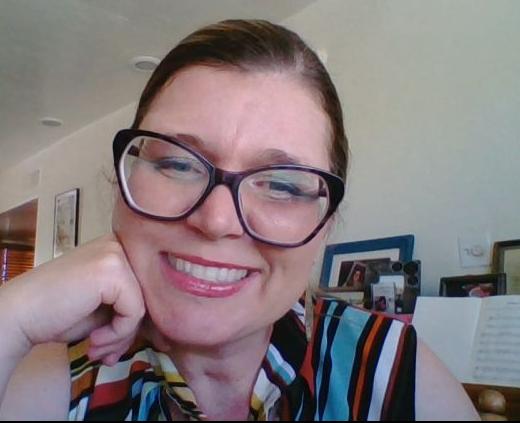
Kristen Hoggatt-Abader is a senior lecturer in the Writing Program and a third-year Ph.D. candidate in rhetoric and composition at the University of Arizona. More of her work can be found at khoggattabader.com.