The following is the opinion and analysis of the writers:
Arizona Board of Regents Chair-Elect Fred DuVal’s Jan. 8 op-ed suggested President Robert C. Robbins is one of the University of Arizona’s most “consequential” presidents in recent history. We agree he’s been consequential, but in adverse ways.
Speaking for United Campus Workers, Arizona — student, staff, and faculty workers who make the UA work — we envision a university that prioritizes the wellbeing of our students, campus employees, and public purposes. President Robbins has compromised those. The “successes” DuVal identified are outcomes continuous with patterns preceding Robbins, or are based on misleading data.
Students’ wellbeing is not reducible to enrollments and graduation rates, especially amidst a pandemic. But let’s place those metrics in context, with UA Institutional Research data.
People are also reading…
Enrollments were neither “crushed” by the pandemic, nor have they come “roaring back,” as DuVal claimed. Enrollments were increasing prior to Robbins, between 0.4% and 3.9% annually from 2014-2017, then grew slowly, between 0.6% and 2.3% annually from 2018-2022.
Nor can Robbins be credited for a “record” graduation rate, which is low compared to peers. The rate DuVal cited is for students who started before Robbins, and rates gradually increased prior to Robbins. DuVal does not address tuition, which increased during Robbins’ tenure, by $1,500 for residents and $4,500 for nonresidents, at an institution that Business Insider reported in 2016 as second nationally in highest increases since 2000 by a public university.
What has President Robbins done regarding students’ wellbeing? Did he dramatically expand need-based aid, mental health services, and adequately fund the Campus Pantry, a place food-insecure students go to? No.
Did he expand Internet access for lower-income students needing it for remote courses? No.
And sadly, the Native grant program DuVal touted does not “ensure all undergraduates from Arizona’s tribal nations attend the university for free,” though that’s how Robbins promotes it. It merely provides gap funding beyond expected family contribution. So, when students find their tuition is not free, they’re unhappy. That is consequential, broken trust.
What about the wellbeing of campus employees, whose working conditions are students’ learning conditions? Staff and faculty were furloughed at the highest levels nationally by far among peer institutions (8%), according to a 2020 UA Faculty Senate report. Most universities had no furloughs (Northern Arizona University reimbursed employees’ furloughed monies). Additionally, hundreds of staff, career-track faculty, and graduate assistants’ contracts were “nonrenewed.”
There are fewer staff and graduate students than before the pandemic — support programs for underserved students were particularly hit. There are fewer tenure-stream faculty. And management refuses to substantially increase the proportion of career-track faculty on multiyear contracts, meaning less continuity of care for students. More students are paying more for less access to the people who make a difference in their lives.
What employee category has expanded? Senior administrators, whose numbers have ballooned 19.5% under Robbins, according to UA Institutional Research data. Those broken priorities do not serve our students.
And, as the Feb. 1 UA faculty committee report indicated, UA has failed to address safety needs leading up to, during, and after Professor Meixner’s murder. That’s consequential, broken trust.
What of the wellbeing of UA’s public, educational purposes? The UA bailed out the Athletic Department for $53.3 million in 2021, the Arizona Republic reported. That came on top of tens of millions of dollars of subsidies from main campus in recent years. That’s the “talent” management seems to care about, reflecting its broken priorities.
As for the online, for-profit university DuVal mentions, intended to enhance UA’s online presence and generate revenues, it was acquired against the advice of faculty and many deans. Its decade-long enrollment declines continue, and it’s under an accreditor’s “Notice of Concern” for abysmal student outcomes. That’s bad business and violates our public trust. Why not invest in our already successful UAOnline?
The state of our university reflects management’s #BrokenPriorities. It’s time to prioritize the wellbeing of our students, employees, and public mission.
Follow these steps to easily submit a letter to the editor or guest opinion to the Arizona Daily Star.

Jeremy Bernick

Gary Rhoades
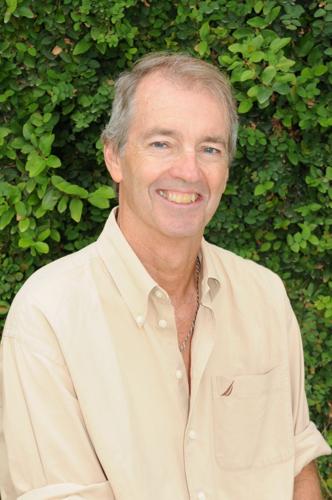
Gary Rhoades is a professor at the University of Arizona’s Center for the Study of Higher Education. Jeremy Bernick is a first-year JD candidate at the UA’s James A. Rogers College of Law. Both are members of United Campus Workers, Arizona and Bernick is on the Executive Commitee of UCWAZ. They can be reached at jeremybernick98@gmail.com and grhoades@arizona.edu.