

The following is the opinion and analysis of the writer:
Think about all the times you received a call from the nurse at your child’s school. Was it because your child was sick? Did the school need updated immunization records?
I received a call from the nurse at my child’s school when they were in third grade. It turns out my child was not sick and their immunizations were fine.
The school nurse called to tell me they had called the police on my child.
A feeling of terror sank in at the thought of my 8-year-old child encountering an armed police officer. My heart was full of fear, questioning my parenting — had I told my kids enough times how to behave in a way that minimized harm to them when engaging with police? Would I be able to get there in time? Was my black and brown child about to be another statistic?
People are also reading…
The school was small. I was a known person. My kids were known. I had a job I could leave without penalty. Our privileges were plenty, and I reminded my kids every day. I was able to communicate with the nurse that under no circumstances was my child to be in police presence without me being there.
Part of my terror was knowing the level of trust between the school and my family was irrevocably broken. Would the school ever be willing to recognize the harm and trauma they caused? Would my tiny child who wore their emotions on their sleeve ever fully understand that it was not due to the nature of their actions, but a system that did not value them?
I should mention here that the school nurse called TPD to the school due to an interaction between my child, another child, and a pencil.
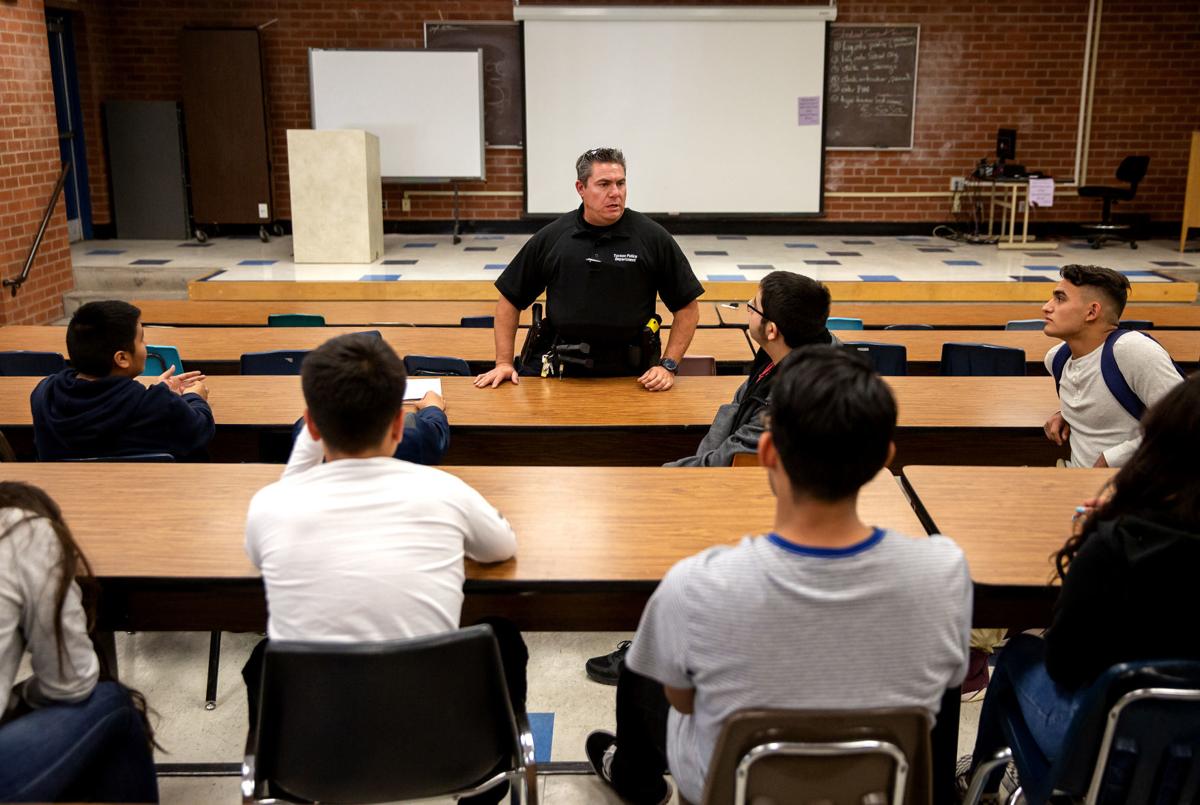
Police do not belong in schools. The use and practice of school resource officers (SROs) is not in fact, a resource. Police and SROs are armed and in positions of incredible power. We know that the use of SROs and police on campus do not actually create a safer environment for our youth.
They are not teachers. They are not counselors. They are not social workers. They are not what we need. The institutionalized policing of our youth normalizes the idea that brown and black youth are a threat; that our youth with disabilities are a hassle the system will not support.
The city of Tucson currently funds the use of SROs in our public schools. Over $220,000 is invested each year by the city in staffing the SRO program, a program that disproportionately impacts black, indigenous, brown and disabled students. The city of Tucson cannot directly fund smaller class sizes, books or facilities for its school districts, yet they can fund SROs on our campuses.
We need to prioritize relationships between students and their places of learning over relationships between law enforcement and schools. Learning cannot take place in an environment where there is fear. Give our youth the opportunity for a childhood and an educational experience they deserve.
Our city and school districts have some truth to own and some policy to shift. Here’s a start:
Tell our districts and city to end the practice of SROs, of allowing police on school campuses.
Invest in our youth and families by providing desperately needed city and school partnerships, mentorship programs, investment in libraries, and parks.
Stop funding the false and dangerous narrative that SROs are safe for our brown and black youth.
Stop participating in the school-to-prison pipeline and start practicing transformative justice.
Rebecca Zapien is an educator and parent of two Tucson Unified School District students.
