

Qualified buyers can get low-interest, no-money-down loans for new homes built around Tucson if they're willing to live in a "rural" area.
Houses in Marana and around the southern edge of Tucson are eligible for financing backed by the U.S. Department of Agriculture meant to spur homeownership in rural areas.
But that may not be the case for much longer.
The USDA uses census data to draw lines that divide rural areas from urban ones. Right now, homes north of West Tangerine Road are eligible for the USDA rural development financing, while those that lie south are not.
With new data from the U.S. Census Bureau, homes in areas like Marana - which has seen significant urban growth in the last 10 years - will likely lose their rural classification, said Katie Yager, a single-family-housing specialist in the USDA's Arizona office.
People are also reading…
"Marana at this time is eligible," Yager said. "But it will be removed."
When that will happen isn't clear, because states take direction from the national office, Yager said. Officials will publicize the new urban and rural boundaries once they emerge, she said.
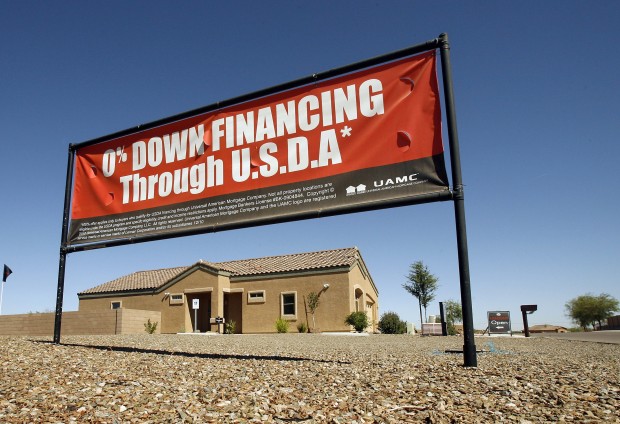
In the Tucson area, national home builder Lennar is advertising the zero-down loans to lure potential buyers to its projects.
"A person does have to qualify, but at the same time, you look at it and you can buy a home today with no money down," said Alan Jones, Lennar's Arizona division president. "And we've got a situation where rates today are fantastic."
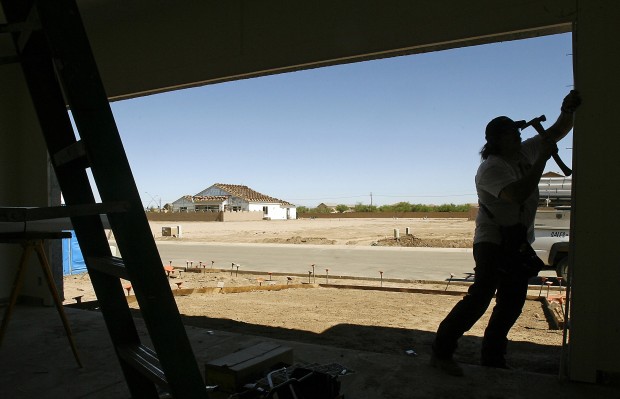
Lennar's promotional effort comes at a time when new-home sales in the Tucson area have languished.
In April, there were 93 completed sales of new homes, about half the amount as in the same month in 2010, according to local housing consultant John L. Strobeck of Bright Future Business Consultants.
In contrast, during April 2006 there were 606 new-home sales.
The median sales price for new homes has also fallen considerably from the peak, though it has increased slightly from last year. In April, the median sales price - the point where half of homes sell for less and half sell for more - was $185,640.
In April 2006, it was $266,275, according to Strobeck.
Still, Jones said Lennar has garnered interest in its projects around Tucson, most of which are eligible for the USDA-backed financing. In the Phoenix area, few Lennar projects qualify, Jones said.
A banner at Suncrest at Gladden Farms, a Lennar project near West Moore and North Tangerine Farms roads, reads "0% down financing through USDA." Lennar is also promoting the loans at subdivisions at Star Valley, southeast of Tucson near West Valencia Road and Ajo Highway.
In most cases, the USDA guarantees the lender's interest if a homeowner were to default on the loan, said Matthew Wolf, a division manager at Universal American Mortgage Co. The program isn't targeted at home buyers who can afford to make a larger down payment.
"It's geared more toward the first-time home buyer or the lower-income-type borrower," Wolf said.
The house also must be the buyer's primary residence.
While economists and housing experts have argued that putting low-income buyers into homes they can't afford contributed to the housing meltdown, Wolf said the stringent credit requirements of the USDA program distinguish it from more troublesome financing methods.
According to the USDA Rural Development program's website, a credit score of 680, which is generally considered good credit, is preferred. The idea, says the website, is to assist moderate-income families who can afford market interest rates but can't qualify for conventional financing because they haven't saved enough for a down payment.
As such, the USDA loans aren't riskier than any other form of government-backed financing, such as Federal Housing Administration or Veterans Affairs loans, Wolf said.
Contact reporter Dale Quinn at dquinn@azstarnet.com or 573-4197.