
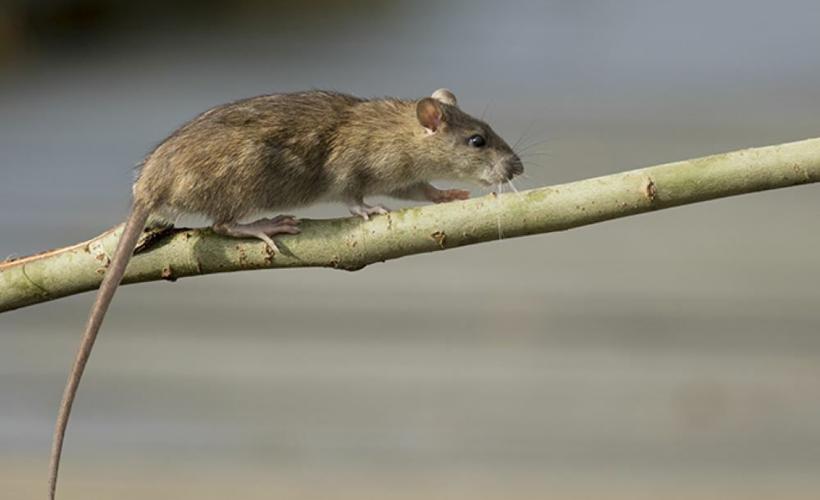

As Winter continues, temperatures remain low, which in turn provides perfect conditions for roof rats to make their presence known here in SaddleBrooke.
Roof rats typically weigh 5 to 10 ounces. They have light black to grey smooth fur on their bodies with off white to grey underbellies. They are usually about 15 inches long, have a pointed nose and have a long hairless tail that can be about 14½ inches long.
As their name indicates, roof rats usually nest high above ground in trees, tall overgrown shrubs, or dense vegetation such as ivy. Roof rats are excellent climbers and often access homes by running along tree branches, cables or wires. In fact, when it comes to these plumbing lines and storm drains, they have been known to swim up through the sewer lines and come up through people’s toilets.
In buildings, they typically nest in the upper part of structures in enclosed or elevated spaces such as attics, walls, false ceilings and cabinets. They are very agile and can squeeze through openings that are only ½-inch wide. Roof rats can climb down to a food source.
Roof rats routinely travel up to 300-feet for food. They often can be seen at night running along overhead utility lines or fence tops. They have an excellent sense of balance and use their long tails to steady themselves while traveling along overhead utility lines. They are very agile climbers, which enables them to quickly escape predators.
Given their history of causing damage (gnawing through wiring, food contamination, etc.) and health problems (vectors for salmonella, murine typhus, etc.), it is important that homeowners understand how to identify and businesses protect themselves from these costly pests.
If bitten by a roof rat, keep in mind that symptoms of Rat Bite Fever may appear as much as 10 days after the bite . If you come down with fever, rash, or swollen joints, see a doctor immediately.
Some preventative measures you can take to try and keep roof rats at bay include the following:
Seal openings greater than ¼-inch to exclude mice and ½-inch to exclude rats.
Use hardware cloth to seal open vents, especially in crawl spaces, attics and roofs.
Eliminate waste piles outside of home.
Make sure garbage containers are sealed tightly.
Eliminate potential food sources like left over pet food and grains from bird feeders.
Trim vegetation to prevent from becoming overly dense.
However, roof rat populations can grow very quickly so time is of the essence. It is best to target them when populations are small before it becomes a full-blown infestation. At that point, you may need professional assistance.
 Chip Hale among Arizona baseball coaching legends to fall on hard times | Greg Hansen


