

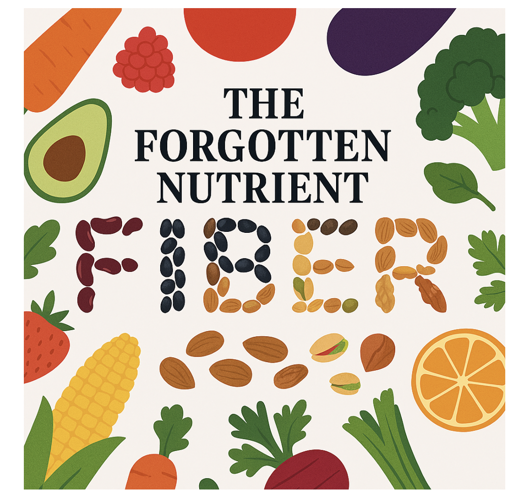

Last month, I wrote about protein needs, but another essential nutrient is quietly falling short: fiber. Most Americans consume less than half the amount they need—a gap that is taking a toll on long‑term health.
Daily fiber needs vary by age and sex, but experts generally recommend:
Women: 21–25 grams a day
Men: 30–38 grams a day
Confusion about fiber remains widespread. A February 2026 survey by the International Food Information Council found that some respondents believed fiber comes from meat, seafood, or dairy—foods that contain no fiber at all.
What Fiber Is—and Why It Matters
Fiber is a type of carbohydrate found only in plant foods. Unlike other carbohydrates, it is not digested. Instead, it moves through the digestive system, supporting gut function and overall health. There are two types—soluble and insoluble—and both are important.
Fiber does much more than prevent constipation. A fiber‑rich diet helps lower cholesterol, supports heart health, steadies blood sugar levels, and promotes a healthy weight by increasing feelings of fullness. Research also links adequate fiber intake to a lower risk of chronic diseases, including heart disease, type 2 diabetes, and possibly colorectal cancer.
Where to Find Fiber
Fiber is easy to find when meals are built around plant foods. Good sources include:
- Whole grains such as barley, oatmeal, brown rice, quinoa, and whole‑wheat bread
- Fruits, including apples, berries, pears, and avocados
- Vegetables such as broccoli, carrots, bell peppers, spinach, tomatoes, and sweet potatoes
- Legumes, including beans, lentils, and chickpeas
- Nuts and seeds such as almonds, walnuts, pistachios, chia, and ground flaxseed
A balanced meal that fills about three‑quarters of the plate with fiber‑containing foods can provide 12 to 15 grams of fiber while still meeting protein needs.
Simple Ways to Close the Fiber Gap
Adding more fiber does not require a complete diet overhaul. Small changes can help:
- Choose whole‑grain bread, pasta, and rice instead of refined versions
- Include fruits or vegetables at every meal—fresh or cooked, both count
- Add beans to soups, salads, and grain bowls
- Snack on nuts, seeds, or raw vegetables with hummus
- Select cereals with at least 5 grams of fiber and minimal added sugar
- Keep edible skins on fruits and vegetables when possible
- Increase fiber gradually and drink plenty of water
Cooking, chilling, and reheating foods such as rice, pasta, or potatoes can also increase resistant starch, which functions like fiber and supports healthy gut bacteria.
The Bottom Line
Fiber may not be trendy, but it is one of the most powerful nutrients for long‑term health. With a few simple shifts toward fiber‑rich foods, most people can close the gap—and their bodies will benefit.
Do You Know?
All my past articles are available in the Health and Fitness section on the SaddleBag Notes website.
Nancy Teeter is a registered dietitian and a SaddleBrooke resident. Although retired, she remains passionate about sharing nutrition education. Always consult your medical provider before making lifestyle changes.
 Analysis: These 9 TUSD schools are at highest risk of merging or closing


