

Our world today is filled with amazing technology, from medical devices to interactive games that run on an iPod. Being able to invent such cool stuff requires knowing math.
In the AnimalWatch project, my team at the University of Arizona is helping students master the math skills they need to be ready for algebra. The AnimalWatch software we've developed connects math with environmental science.
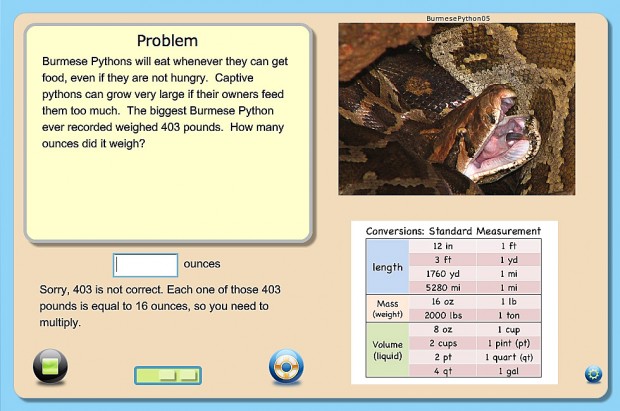
Students log on to AnimalWatch, www.animalwatch.org, to solve colorful word problems about endangered species such as the white shark, the Komodo dragon and the snow leopard as they practice key algebra-readiness math skills.
Other problems focus on invasive species such as the Burmese python, many of which have been released illegally in the Florida Everglades by nervous owners who discovered that these snakes grow to be 25 feet long. Facts about unusual creatures from around the world keep students engaged as they practice math problem-solving.
People are also reading…
The AnimalWatch website uses technology to let students watch video demonstrations of how to solve math problems. They can slice virtual blocks into pieces to learn how to find common denominators in fractions problems. When they complete a unit, they can enjoy watching a video clip of the animal that they've learned about by solving math problems.
The program we've designed lets teachers have immediate access to detailed information about students' performance.
The teachers can see which problems students solved correctly on their own, which ones they figured out by using the multimedia resources and which ones were just too difficult. That allows the teachers to quickly adjust their teaching to focus on the things that students didn't understand. The results have been impressive: Students show better math skills after working with our program.
AnimalWatch is especially good at helping students who are not doing well with traditional classroom instruction. It's hard for a student who does not understand to keep raising his or her hand while other students in the room roll their eyes.
By comparison, the computer is endlessly patient. The student can review a lesson several times, and if one example doesn't quite work, there is usually a different approach to try.
One teacher e-mailed to tell us about a student who was shy and didn't like to ask questions in class. The teacher had done a class lesson about averages (mean, median and mode) from the textbook, but the student had not done well on the spot quiz. Then he worked with AnimalWatch. The teacher said, "He lit up. He pulled me over and said, 'Mrs. Patty! This is how you do it!' It is all worth it for a moment like that."
Experience science
AnimalWatch is available without charge to schools and districts in Arizona.
About the scientist
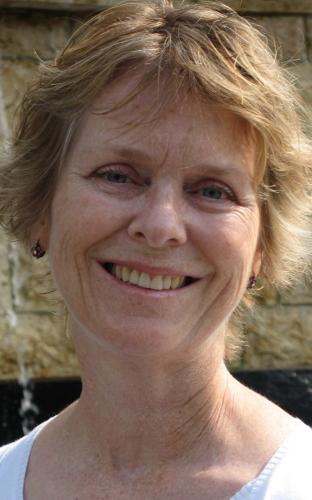
Carole R. Beal is UA professor of cognitive science and research professor in the School of Information: Science, Technology, and Arts (SISTA). She studies how technology can support math and science learning for K-12 students, especially students who are not doing well with traditional approaches to instruction. She studied art history before switching to educational psychology in graduate school. She draws on both her art and psychology training to help the Education Informatics effort in SISTA.
About the school
The School of Information: Science, Technology, and Arts promotes research in computational methods across disciplines and teaches students to understand the computational aspects of any discipline. Computing is rapidly becoming a foundation for research in the sciences, engineering, humanities and arts. SISTA teaches a curriculum that ensures future generations of scholars master the methods of the Information Age. More online at sista.arizona.edu