

BEIJING — A few hours after marathoner Meb Keflezighi won a silver medal for the United States in the final event of the 2004 Olympics, Clay Stanley woke up in an Athens jail with no memory of what had put him there.
To this day, the U.S. volleyballer only knows what others have told him. Apparently he lost his temper leaving a nightclub and pushed over a moped with two people on it, one a pregnant woman. Charged with assaulting a police officer and resisting arrest, he wound up with a suspended 15-month sentence and had to pay "a large amount of money" to the woman on the moped.
"Too much alcohol consumption and some personal issues," Stanley recalled here Tuesday. "Just a bad story and a bad ending for what I thought was a pretty good Olympic tournament for our team."
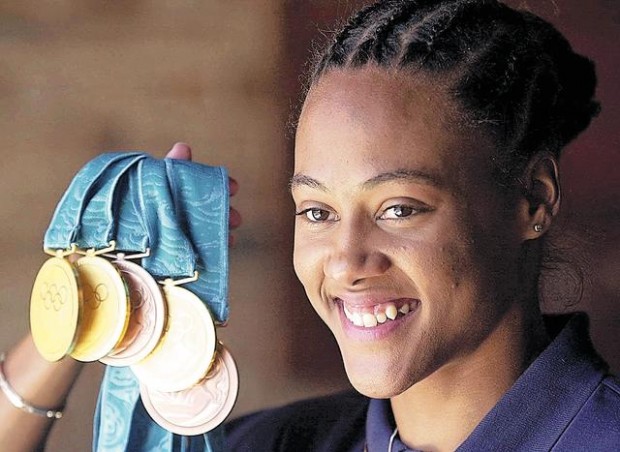
Team USA's image has taken its lumps in recent Olympics, from skier Bode Miller making news for partying "at an Olympic level," to track stars such as Marion Jones and Justin Gatlin being nailed in doping investigations. Embarrassments like those have U.S. Olympic Committee officials setting a different list of priorities four years after openly touting their top priority in Athens was winning 100 medals.
People are also reading…
Heading into the Beijing Games, USOC officials say winning medals is third on their list of priorities behind fielding a "clean" team free of positive doping tests and having a team that behaves with honor.
At the behest of chairman Peter Ueberroth and chief executive Jim Scherr, the USOC instituted a series of two-day, sensitivity-training sessions for Beijing-bound athletes called the Olympic Ambassador program. The idea was to make athletes think twice about conduct that could embarrass the team.
"They want to put out a good image," said Stanley, who will compete in his second Olympics here. "They're right, we shouldn't be behaving (badly). It is a big event, and it's us representing our country. It puts us in a bad light."
A skeptic might wonder if de-emphasizing the medal count is a ploy to reduce pressure on U.S. athletes faced with the rising challenge of China, which fought neck-and-neck with the Americans for the lead in the gold-medal count four years ago. Scherr disagrees.
"We always believed that behavior and competing drug-free is at the core of what we're about as an Olympic movement," he said. "We are taking much stronger measures to emphasize that to our athletes."
There was an uproar at the 2000 Sydney Games when U.S. sprinters preened and posed like bodybuilders after winning the 400-meter relay.
As a former Olympic wrestler, Scherr often quotes from the Olympic Creed: "The most important thing in the Olympic Games is not to win but to take part, just as the most important thing in life is not the triumph but the struggle. The essential thing is not to have conquered but to have fought well."
Scherr believes most of the U.S. athletes already understand that, but he wanted to reinforce the concept.
Past Olympians John Naber and Brandi Chastain participated in the sessions, which included media training and tips on Chinese culture.
"The message is that there is winning and there is winning correctly," said Steve Roush, USOC chief of sport performance. "You don't want to be viewed as, 'Winner take all, and I don't care about anybody else.' "

 Lloyd to get clarity on Arizona basketball future this week | Greg Hansen


