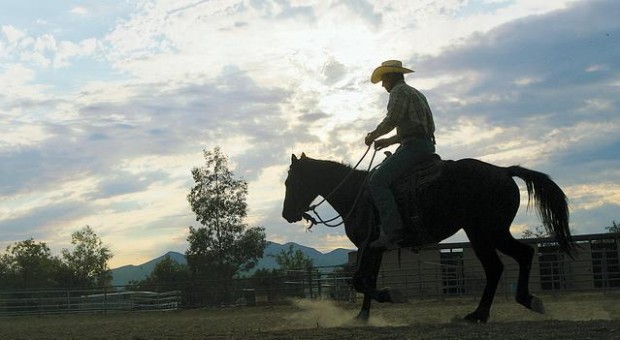
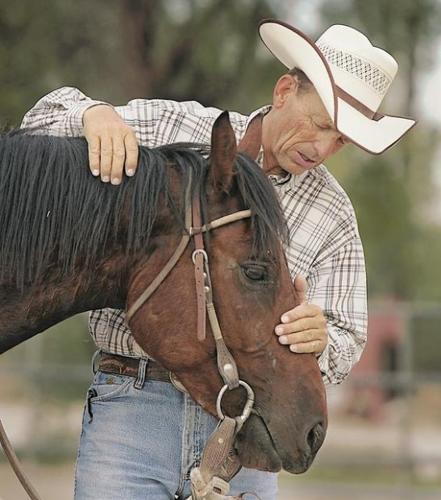
Lanny Leach didn't need to think too hard when it came time to name his newest horse.
"I spent 15 hours going to Reno, Nev., to get him and bring him back here. I've got to go show him the third week of September in Fort Worth, Texas," Leach said. "I figured he's already done a lot of traveling. So … Traveler."
Leach, 52, is one of 200 horse trainers — and the only Tucsonan — competing in Extreme Mustang Makeover, a program run by the Mustang Heritage Foundation and the Bureau of Land Management.
Leach has three months to train Traveler, a 4-year-old mustang, and get him ready for competition. Competitors will show their horses at the Sept. 19-20 finals in Fort Worth, with the winners taking home $70,000 in prizes.
The Star talked with Leach, the manager of Tanque Verde Stables, about the Extreme Mustang contest and the pressures of training a wild horse:
People are also reading…
Q: So is the old adage about wild horses true?
A: Wild horses are really set in their way some, but all the horses in the contest are 3, 4 years old, and that's a good age. They're full grown, but mentally, they're not too far set in their ways. They call him a wild horse, but I'm already able to saddle him pretty good.
I'm really pleased with this horse overall: He's really catching on to the concepts of what I'm trying to do with him. I wouldn't change him any.
Q: But, at the end of the day, he's a wild horse …
A: Mustangs have been humanized some — people feed them — but they haven't really been caught. In four years (Traveler), has been caught maybe twice. You have to have safe, high fences, because they won't respect barbed wire.
It's important in the first week or two that you get him gentled-down some.
On a number from 1 to 10 — 1 being dog-gentle and 10 being high-energy or high-scared — he's probably a five. By the end of all this, he'll be a three, which is where you want him.
Q: You raise horses for a living. What will your training program include?
A: You have a 30-day period to build a foundation on, and I have my own steps that I do with him each day. By the end of the 30 days, I'll have him doing the basic things: forward-backward, left-right. We'll go from there.
Q: Does that take a special approach?
A: Really, they only bite or strike you if they feel threatened. Working with mustangs, you learn where not to be. They're pretty good teachers when it comes to that. You can't be scared — the horse will feed off that. You have to be confident, but remember that they'll protect themselves — not because they're mean horses, but because they're a wild horses.
Once they figure out that you're not going to hurt them, and that there's going to be a purpose in their lives, they start to really figure it out. They won't melt in your lap, but they'll conform to what it is you want them to do.

 Lloyd to get clarity on Arizona basketball future this week | Greg Hansen