I drove past Sahlen Field the other night while the New York Yankees and Toronto Blue Jays were playing on the far side of the ballpark walls. Except for a few idling police cars, Washington and Swan streets were empty and quiet.
It was another reminder from the strangest of years: The most storied team in baseball history was playing an important late-season series against an American League rival based in the heart of Buffalo, and it was all but impossible to tell.
The lonesome scene left me thinking of my one small link to a powerful Buffalo connection to the Yankees. I have told or written this story many times, to the point where I am sure my grown kids will wince at hearing it, but I hope you have the patience to endure it once again.
People are also reading…
Forty-five years ago, the tale was powerful enough to bring my father – typically not the kind of guy to do such things – into the old Cardinal Mindszenty High School in Dunkirk to pull me out for the day.
It was a social studies class on a drowsy afternoon, and there was a knock on the big wooden door in the front. The teacher opened it and in stepped my dad, who worked at the steam station but was home while recovering from bypass surgery. The sight touched off teenage alarm. He said he needed me for something involving the timing of my road test.
I got my stuff together and left with him, mind whirling. I was barely 16. What I knew was that I had not signed up for any road test, which narrowed the options to someone in my family being sick or worse or – more likely – that I was in hot water for something for which I had better think of a way out, and fast.
Wrong on all counts. My dad was not a talker. We got into the car and he lighted the cigarette that always dangled from his mouth while I waited for news I feared might carry the weight of a piano. Instead, he simply said:
“Joe McCarthy called. He’s calling back in 15 minutes.”

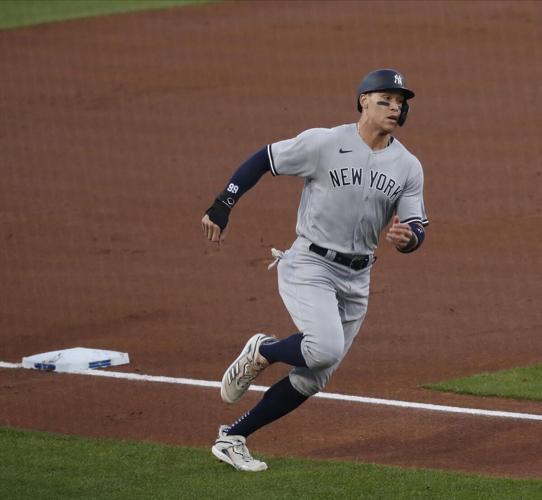
Aaron Judge of the New York Yankees rounds third base at Sahlen Field.
There it was. My father was a baseball guy, and Joe McCarthy was one of the most successful managers in baseball history. His greatest years of all were with the Yankees, when he won four consecutive world championships from 1936 through 1939, a managing feat exceeded only by Casey Stengel.
McCarthy was there to to witness Lou Gehrig at his peak, and then watched as one of the game’s immortals was claimed by amyotrophic lateral sclerosis, the disease forever linked to Gehrig's name. McCarthy was managing when Joe DiMaggio broke into the majors, and he was in charge in 1941 when DiMaggio hit safely in 56 consecutive games.
Away from baseball, McCarthy lived in Western New York. He never played an inning in the major leagues, but he had made it to the Buffalo Bisons when he was in the minors. His wife, Elizabeth, grew up around here and the couple settled into a 61-acre farm in Tonawanda. As a kid, long after McCarthy retired, I learned about his presence through the writing of Cy Kritzer, a legendary sportswriter for the old Buffalo Evening News.

No one had any idea what happened to the ball hit by the baseball legend in an epic 1957 home run – until
In the same way as so many families of the time, baseball carried outsize importance in our house. My dad went from baseball to playing softball into middle-age – indeed, the heart attack that knocked him out of work happened after he played shortstop on a hot day in a tournament.
My siblings, too, were all drawn to the game, which led my mother to use a trick she found effective: Leave enough books around on subjects kids care about, and sometimes they might actually pick them up and read.
So we had a house filled with books like “My Greatest Day in Baseball” or “Greatest World Series Thrillers,” and I would sprawl on the living room floor and learn of Jackie Robinson and all he endured, or Willie Mays and his unforgettable running catch against Cleveland, or the day in 1932, in Chicago, when Babe Ruth stood at home during the World Series and – at least as legend had it – “called his shot,” essentially predicting he would hit a home run against the Cubs.
The Yankee manager as Ruth dug in: Joe McCarthy.
We live in a digital age where everything and everyone is about as close as tapping a screen, access that has a way of stripping away wonder. In the mid-1970s, we had newspapers, dial phones and three television stations, which meant big-league baseball existed mainly in the imagination. Somehow it seemed awe-inspiring to a kid who had never been more than a few hours from home to learn McCarthy, this guy directly linked to baseball’s Valhalla moments, was living maybe 45 minutes away.
I do not remember exactly how it happened – I guess maybe by paging through the then-giant Buffalo phone book until I found the right McCarthy – but somehow I came up with an address and wrote a letter, asking if I could interview him for a high school paper called “The Lion’s Tale.”
The whole thing was essentially a teenage "Hail Mary," and I assumed there would be no response.
Yet there was my dad, at the classroom door.
We went home and straight to the kitchen, where the coffee perked and my mother ironed and the one phone in the house hung on the wall. To my parents, skipping school was a major offense, and we were all aware of the hell we would face if we tried, but a Hall of Fame manager calling the house?
They pulled me out of class.
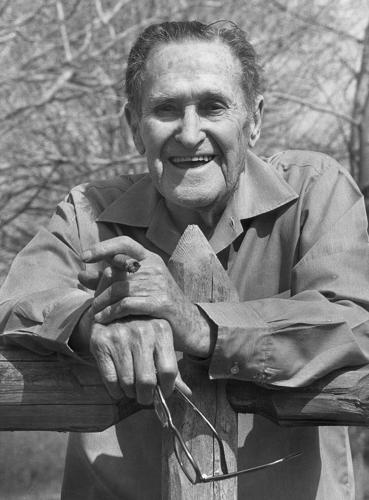
I found a notebook and waited until the phone rang exactly when it was supposed to ring, and I picked it up to hear the frail and faraway voice of Joe McCarthy, already deep into his 80s.
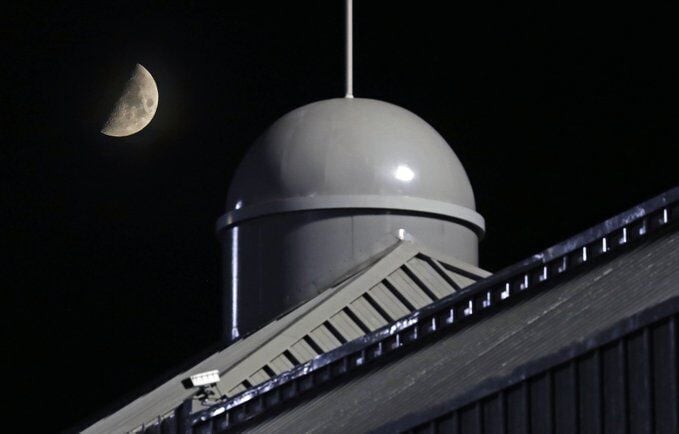
The moon over Sahlen Field this week as the Blue Jays played the Yankees in Buffalo.
For reasons that will remain a mystery, he called me “Peter,” my middle name, instead of Sean. His first point was advice I still practice: Peter, he said, if you want a response, you ought to send a stamped, self-addressed envelope.
McCarthy, who would die at 90 in 1978, explained he no longer did in-person interviews because he sometimes struggled with his memory. I had this sudden feeling the whole call was an act of remarkable kindness to say thanks, kid, but no thanks. I was a high school student grasping for a way to respond when all of a sudden, out of the blue, he told a story that amounted to a gift.
Babe Ruth, he told me, did not really call his shot.
McCarthy went back to that October day in 1932 when the Yankees were locked in a bitter World Series showdown with the Chicago Cubs, a club that had let McCarthy go in 1930. Vicious taunts were going back and forth, McCarthy said, when Ruth stepped to the plate and gestured angrily at the Cubs – rather than specifically pointing out the destination for the ball - just before he hit a monster home run off Charlie Root that ascended into hallowed baseball legend.
That was McCarthy’s take on an event that will be rehashed for as long as storytelling endures. As for me, a kid who could only daydream of such moments, I thanked him and turned to recount the word-by-word to my parents, though to them I think what had been said hardly mattered.
My folks simply understood that one of the great managers in baseball had found the time to make a call to our kitchen phone, which must have seemed every bit as sweetly and wildly improbable as, well, the Yankees someday playing games that matter before an empty house in downtown Buffalo.