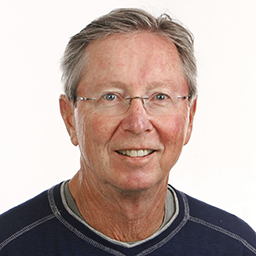
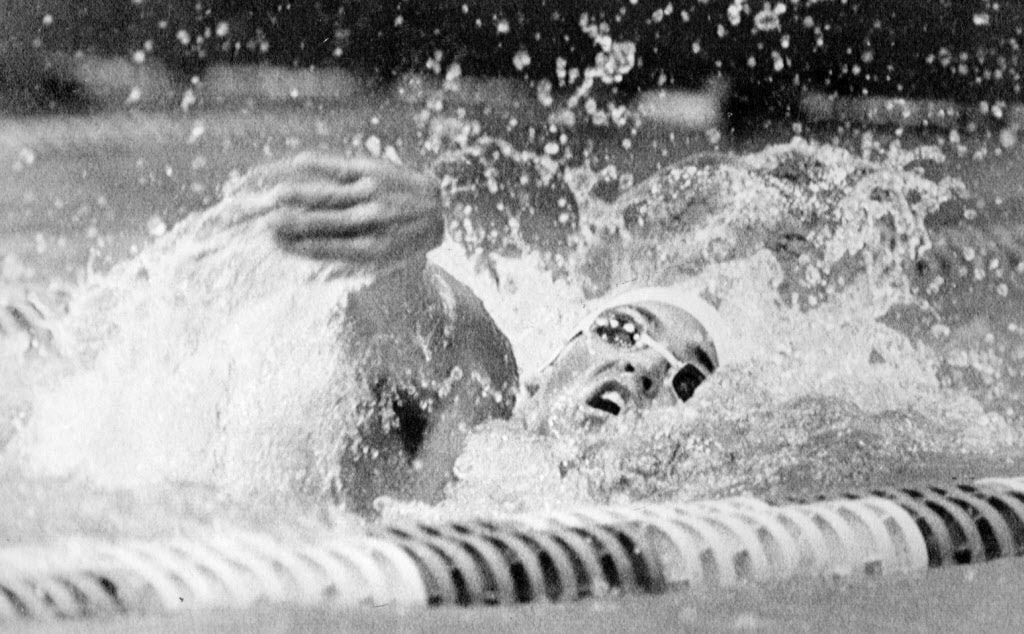
I ask the UA’s first Olympic gold medalist where he wants to eat lunch.
“Some hole in the wall that serves good Mexican food,” George DiCarlo says.
That shrinks the list of potential lunch spots to 20 or 30, which hasn’t changed much since DiCarlo won the 1984 Los Angeles Olympics gold medal for swimming 400 meters faster than anyone in previous American history.
“I really like Tucson,” he says. “I ask my girls where they want to go to college and they both say, ‘University of Arizona.’ ”
On this day, DiCarlo, now 52, walks into a midtown hole in the wall and is not even the most recognizable person in the building. That would be his UA classmate, 1986 All-Pac-10 tailback David Adams, a Sunnyside High School grad and a Tucson lifer.
DiCarlo grew up in Denver, still lives in Denver, and returns to Tucson periodically in his role for Jazz Pharmaceuticals, a business in which he consults with physicians and medical researchers about hematology and oncology.
People are also reading…
“I always wondered what I’d do for a living after swimming ended,” he says. “I finally figured it out.”
George DiCarlo renews your faith in college athletics. The champion swimmer became a chemist.
After earning his UA degree in finance, after working on a cruise ship, after selling real estate in Denver, after posing for Olympic-related photographs with Hugh Hefner at the Playboy Mansion, after buying a red Porsche, and accompanying America’s 1984 gold medalists to visit president Ronald Reagan at the White House — after earning a doctorate in pharmacy from the University of Florida, getting married and having two kids — George DiCarlo figured it out and then some.
His face might not be familiar outside Hillenbrand Aquatic Center, where he greeted UA coach Rick DeMont early Wednesday morning, but it is George DiCarlo more than anyone who triggered Arizona’s emergence as a national swimming power over the last three decades.
Modestly, he defers to a handful of elite swimmers who arrived before his first day on campus, August 1981, but it remains DiCarlo who anchors the list of prominent UA swimmers.
“When I swam here we had a board above the pool that listed the school’s Olympians; I think there were five,” he says, accurately. “Now you can’t count them all. It’s what, 40? Maybe 50?”
It is 41. DiCarlo was the first Wildcat to win a gold medal in any sport.
In an Olympic year, DiCarlo’s name always surfaces, as it should. He was a torchbearer for the 1996 Atlanta Olympics and even was involved in the torch relay for the 2002 Winter Olympics in Salt Lake City, swimming a lap at a heated mineral springs in western Colorado.
He and his family attended the 2012 London Olympics and, ironically, did not acquire tickets to the swimming competition.
“We went to volleyball and some other things,” he says, “but when we got to the swimming arena, it was for water polo. Pretty funny.”
DiCarlo isn’t the hey-look-at-me-type who uses his name to impress anyone, or to get Olympics tickets. Once, while sitting with a group of business partners, someone learned that he won a gold medal, but they weren’t sure of the details.
“So they went around the table guessing what sport I was in,” he says with a laugh. “One guy guessed archery. Another said shooting. Someone even said synchronized swimming.”
DiCarlo’s back story got a lot of play during the Summer of ’84. His mother, Marta, grew up in Hungary and, at 18, fled her homeland, in danger, crossing the Danube river into Austria at night, seeking freedom in an uprising against Soviet tyranny. Marta ultimately achieved American citizenship, in St. Petersburg, Florida, where George was born and learned to swim at, of all places, the St. Pete Bath Club.
He was not your typical blue-chip high school swimmer — “we only had two swimmers on our team qualify for the state meet,” he says — but UA coach Dick Jochums liked DiCarlo’s work ethic and offered him a partial scholarship. After that, ASU, Stanford, Texas and Cal also offered scholarships.
DiCarlo became a franchise swimmer at Arizona, becoming a 10-time All-American and, in what might be as impressive as his gold medal, winning a silver medal in 1,500 meters at the ’84 Olympics, setting an American record that stood for 16 years.
Unlike today’s Olympic medalists, from Arizona volunteer coach Matt Grevers to Sahuaro High grad Caitlin Leverenz, an Olympic medal did not equal a big paycheck, a considerable monthly stipend from USA Swimming or sponsorship loot and healthy income from regular swimming clinics and public appearances.
“I once got a check in the mail for $2,500 because I was used in a likeness for a commercial about Olympic paintings,” he says. “That’s about it. Did I get rich? Ha, ha, ha, ha. Not a chance.”
But he did become happy and successful. Can’t beat that.