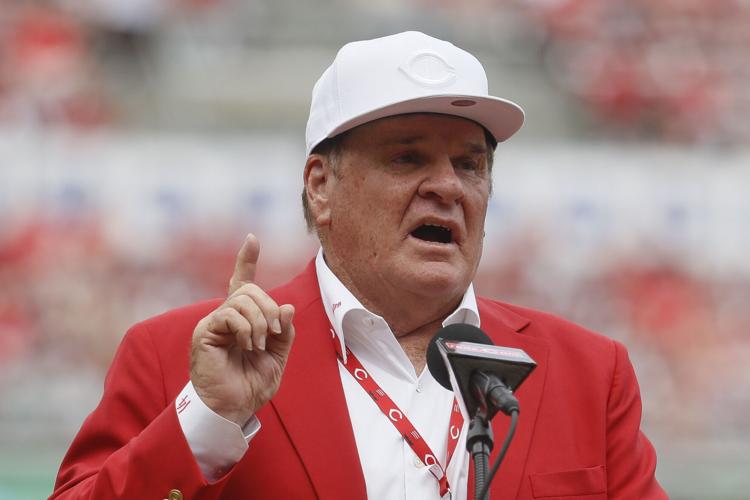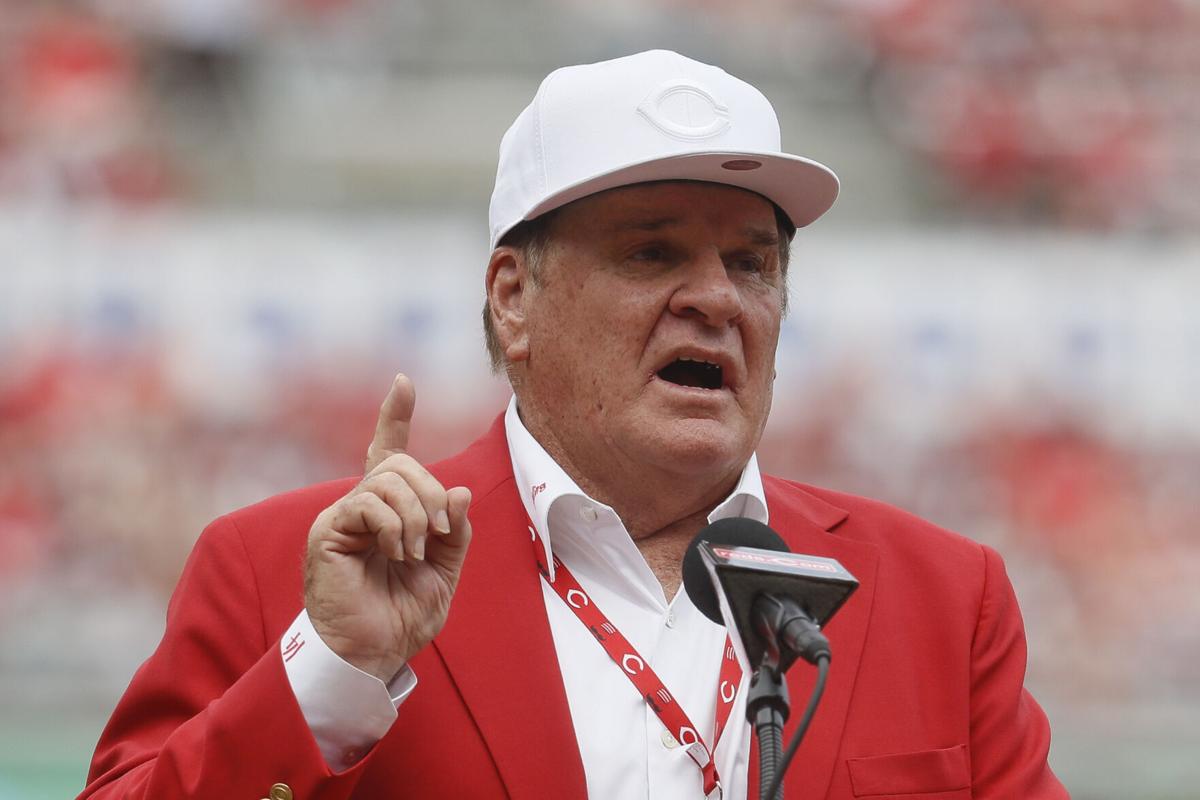
NEW YORK — Pete Rose, baseball’s career hits leader and fallen idol who undermined his historic achievements and Hall of Fame dreams by gambling on the game he loved and once embodied, has died. He was 83.
Stephanie Wheatley, a spokesperson for Clark County in Nevada, confirmed on behalf of the medical examiner that Rose died Monday. Wheatley said his cause and manner of death had not yet been determined.
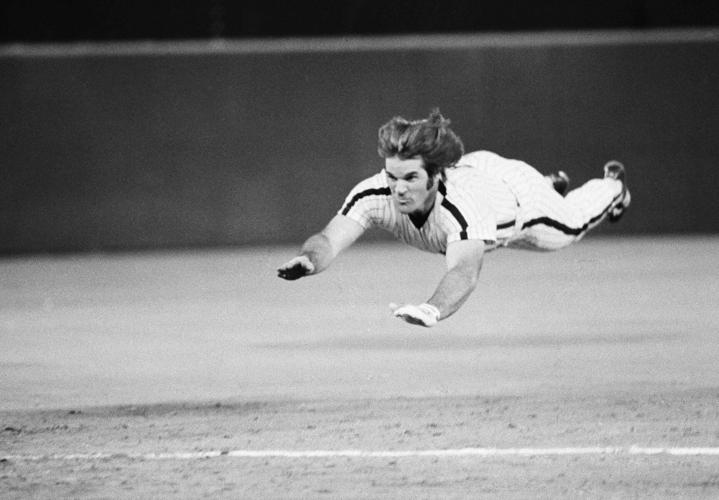
For fans who came of age in the 1960s and ‘70s, no player was more exciting than the Cincinnati Reds’ No. 14, “Charlie Hustle,” the brash superstar with shaggy hair and muscular forearms. At the dawn of artificial surfaces, divisional play and free agency, Rose was old school, a conscious throwback to baseball’s early days. Millions could never forget him crouched and scowling at the plate, running full speed to first even after drawing a walk, or sprinting for the next base and diving headfirst into the bag.
People are also reading…
Major League Baseball, which banished him in 1989, issued a brief statement expressing condolences and noting his “greatness, grit and determination on the field of play.” Reds principal owner and managing partner Bob Castellini said in a statement that Rose was “one of the fiercest competitors the game has ever seen” and added: “We must never forget what he accomplished.”
A 17-time All-Star, the switch-hitting Rose played on three World Series winners. He was the National League MVP in 1973 and World Series MVP two years later. He holds the major league record for games played (3,562) and plate appearances (15,890) and the NL record for the longest hitting streak (44). He was the leadoff man for one of baseball’s most formidable lineups with the Reds’ championship teams of 1975 and 1976, with teammates that included Hall of Famers Johnny Bench, Tony Perez and Joe Morgan.
But no milestone approached his 4,256 hits, breaking his hero Ty Cobb’s 4,191 and signifying his excellence no matter the notoriety which followed. It was a total so extraordinary that you could average 200 hits for 20 years and still come up short. Rose’s secret was consistency, and longevity. Over 24 seasons, all but six played entirely with the Reds, Rose had 200 hits or more 10 times, and more than 180 four other times. He batted .303 overall, even while switching from second base to outfield to third to first, and he led the league in hits seven times.
“Every summer, three things are going to happen,” Rose liked to say, “the grass is going to get green, the weather is going to get hot, and Pete Rose is going to get 200 hits and bat .300.”
Rose reached 1,000 hits in 1968, 2,000 just five years later and 3,000 just five years after that. He moved into second place, ahead of Hank Aaron, with hit No. 3,772, in 1982. No. 4,000 was off the Phillies’ Jerry Koosman in 1984, exactly 21 years to the day after his first hit. He caught up with Cobb on Sept. 8, 1985, and surpassed him three days later, in Cincinnati, with Rose’s mother and teenage son, Pete Jr., among those in attendance.

FILE - In this June 3, 1981 file photo, The Philadelphia Phillies' Pete Rose slides to third base during a 1981 game against the New York Mets in Philadelphia.
Rose was 44 and the team’s player-manager. Batting left-handed against the San Diego Padres’ Eric Show in the first inning, he smacked a 2-1 slider into left field, a clean single. The crowd of 47,000-plus stood and yelled. The game was halted to celebrate. Rose was given the ball and the first base bag, then wept openly on the shoulder of first base coach and former teammate, Tommy Helms. He told Pete Jr., who would later play briefly for the Reds: “I love you, and I hope you pass me.” He thought of his late father, a star athlete himself who had pushed him to play sports since childhood. And he thought of Cobb, the dead-ball era slasher whom Rose so emulated that he named another son Tyler.
Baseball Commissioner Peter Ueberroth, watching from New York, declared that Rose had “reserved a prominent spot in Cooperstown.” After the game, a 2-0 win for the Reds in which Rose scored both runs, he received a phone call from President Ronald Reagan.
“Your reputation and legacy are secure,” Reagan told him. “It will be a long time before anyone is standing in the spot where you’re standing now.”
Four years later, he was gone.
On March 20, 1989, Ueberroth (who would soon be succeeded by A. Bartlett Giamatti) announced that his office was conducting a “full inquiry into serious allegations” about Rose. Reports emerged that he had been relying on a network of bookies and friends and others in the gambling world to place bets on baseball games, including some with the Reds. Rose denied any wrongdoing, but the investigation found that the “accumulated testimony of witnesses, together with the documentary evidence and telephone records reveal extensive betting activity by Pete Rose in connection with professional baseball and, in particular, Cincinnati Reds games, during the 1985, 1986, and 1987 baseball seasons.”
In August 1989, at a New York press conference, Giamatti spoke some of the saddest words in baseball history: “One of the game’s greatest players has engaged in a variety of acts which have stained the game, and he must now live with the consequences of those acts.” Giamatti announced that Rose had agreed to a lifetime ban from baseball, a decision that in 1991 the Hall of Fame would rule left him ineligible for induction. Rose attempted to downplay the news, insisting that he had never bet on baseball and that he would eventually be reinstated.
In the beginning, it was all about the game. He was a Cincinnati native from a working-class neighborhood whose father, Harry Francis Rose, like the father of Mickey Mantle, taught his son to be a switch hitter. Rose mastered his skills with a broom handle and a rubber ball, thrown to him by his younger brother, Dave.

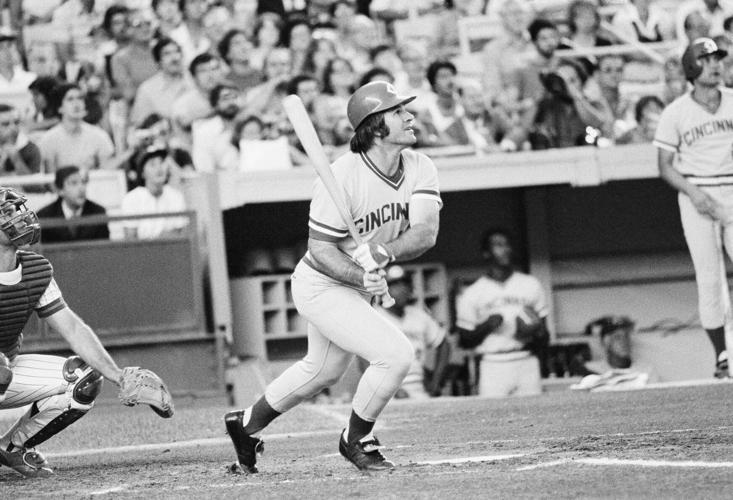
The Cincinnati Reds' Pete Rose flies out during a 1978 game against the New York Mets at Shea Stadium. Rose agreed to a lifetime ban in 1989 after an investigation for MLB by lawyer John Dowd found the all-time hit leader placed bets on the Reds to win from 1985-87 while playing for and managing the team.
Pete Rose graduated from high school in June 1960. He flew to Rochester, New York, two days later, and then rode a bus some 45 miles to Geneva, home of the Reds’ level D minor league team. By 1962, he had been promoted to level A, in Macon, Georgia. He batted .330 and vowed to displace Reds second baseman Don Blasingame in 1963, telling a reporter “I’m going to be on his heels.”
Blasingame was with the Washington Senators by midseason and Rose was a phenomenon: “Charlie Hustle,” Yankees pitcher Whitey Ford reportedly called him, mockingly, after watching him hurry to first upon drawing a walk in spring training. Rose hit .273 as a rookie and, starting in 1965, batted .300 or higher 14 out of 15 seasons. He was so dependable that in 1968, the “Year of the Pitcher,” he led the league with a .335 average, one of three batting titles.
In his post-baseball life, he did make it to a few honorary associations. The Reds voted him into the team’s Hall of Fame in 2016, the year before a bronze sculpture of Rose’s iconic slide was unveiled outside of Cincinnati’s Great American Ball Park.
Rose the man was never inducted into Cooperstown, but his career was well-represented. Items at the Baseball Hall include his helmet from his MVP 1973 season, the bat he used in 1978 when his hitting streak reached 44 and the cleats he wore, in 1985, on the day he became the game’s hits king.