



Arizona’s biggest celebration of contemporary art is back.
The Tucson Museum of Art and Historic Block officially opened the Arizona Biennial 2026 on May 22, inviting visitors into a vibrant showcase of creativity, identity and Southwestern storytelling from artists across the state.

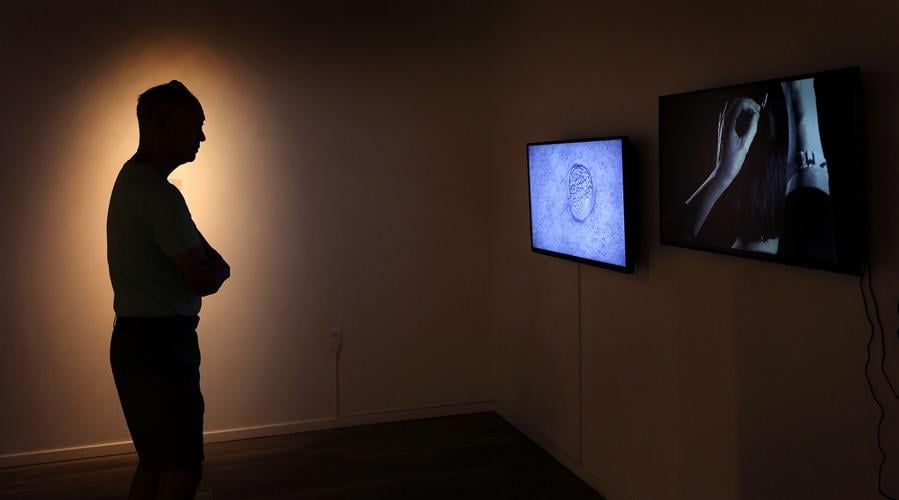
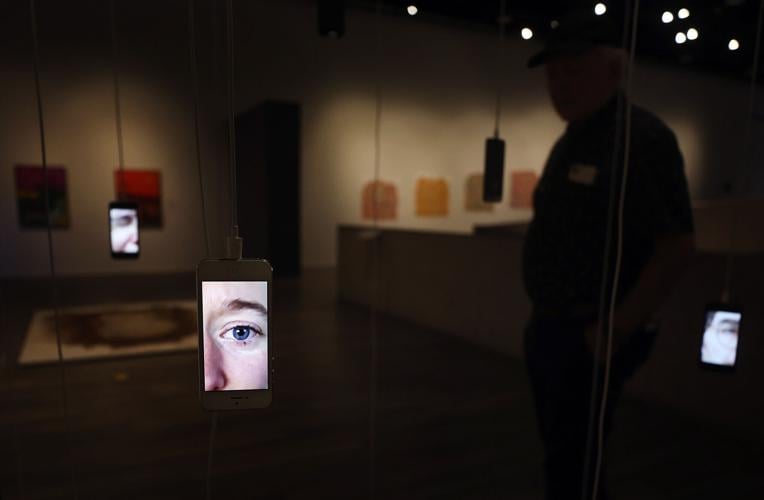
Leo Shen watches a video made by Anh-Thuy Nguyen, which is part of the Arizona Biennial 2026 show at the Tucson Museum of Art and Historic Block. The exhibit showcases contemporary artists from around the state. The show is on view through Sept. 27.
Now in its 78th year, the Arizona Biennial is the longest-running juried exhibition in the state, transforming the museum’s James and Louise R. Glasser and Earl Kai Chan galleries into a sweeping snapshot of contemporary Arizona art. The exhibition runs through Sept. 27 and is included with general admission.
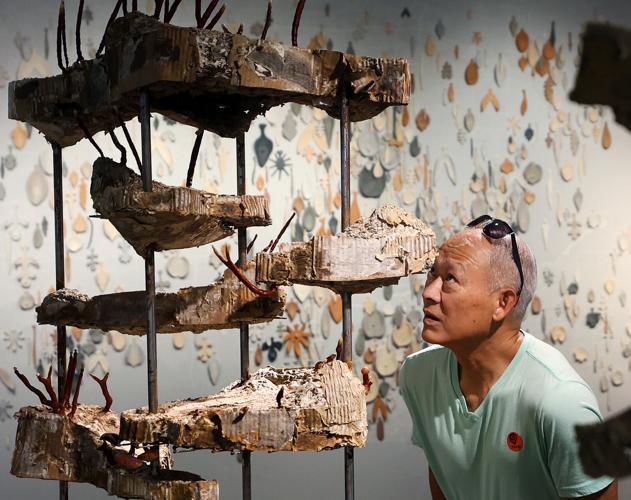
This year’s biennial features work from 31 contemporary Arizona artists working across a wide range of media, from fiber art and photography to large-scale sculpture and mixed media installations. Rooted in themes of place, landscape and heritage, the exhibition highlights how artists continue to interpret and reimagine the Southwest through deeply personal lenses.
Juried by Julia Rodriguez Widholm, executive director of the Berkeley Museum of Art and Pacific Film Archive at UC Berkeley, the exhibition was curated entirely from artist submissions made earlier this year. All selected works were required to be completed within the last two years and created by Arizona-based artists.
“I typically come to curatorial decisions with deep familiarity with the work, the artists, and the venue, so being asked to respond to the work on its own visual terms brought a focus and freedom I found invigorating,” Rodriguez Widholm said on TMA’s website.
For participating artist Michael Afsa, being included in the exhibition feels significant.
“Every other year, it’s a sampling of some of the most interesting and thoughtful work in the state, and so it’s an honor to be included in it,” Afsa said.
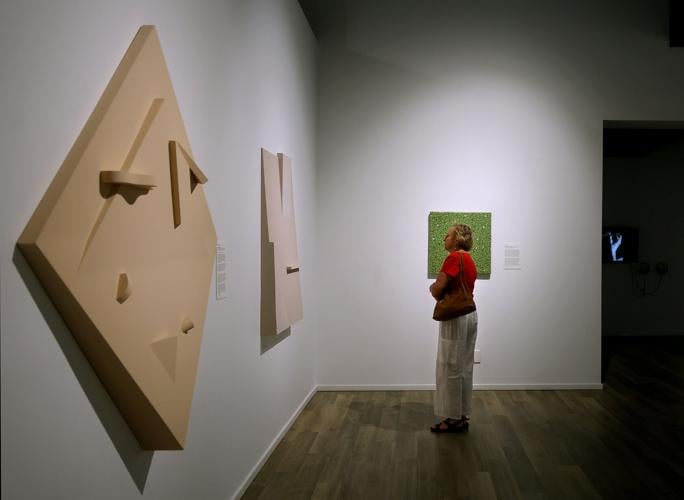
Afsa’s minimalist sculptures and photography are heavily influenced by the architecture and landscapes of the American Southwest. Two of his larger works in the biennial reinterpret desert scenery through abstract forms made from basic construction materials.
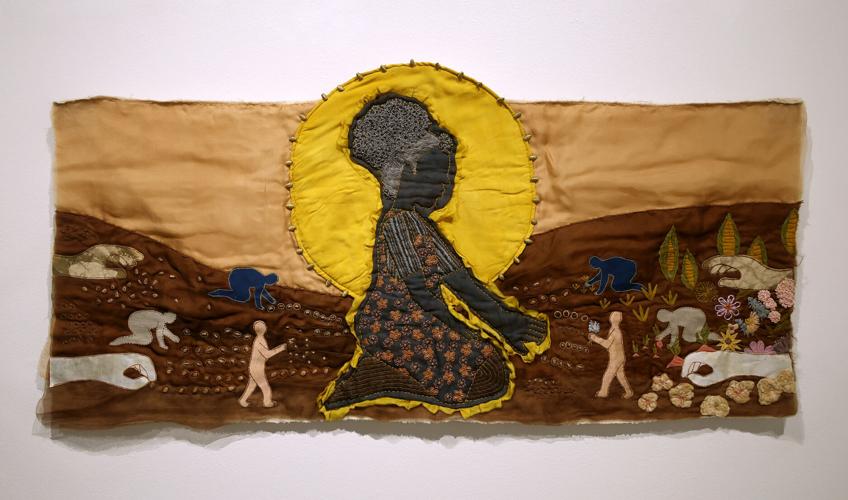
The exhibition also marks another milestone for Tucson fiber artist Adia Jamille, who is participating in the Arizona Biennial for the second time after first being featured in 2023.
“I still kind of can’t believe I’m in a biennial that’s been going on for so long,” Jamille said. “It feels like I’m stepping into something bigger than me.”
Jamille’s work incorporates natural dyes and pigments, often exploring themes tied to landscape and environmental connection.
“I feel like my work sometimes is a little bit specific, and there aren’t always a lot of places for it,” Jamille said. “So, it’s always nice when there are places that see what I’m doing and feel the messages and themes are important enough to share in a setting like this.”
The Arizona Biennial has served as a platform for artists across the state since it first launched in 1948, offering both emerging and established creators an opportunity to present their work to wider audiences.
Alongside the exhibition, TMA will host a series of public programs and events designed to connect visitors more deeply with the artists and themes featured in the show.
Through the biennial, the museum continues its mission of spotlighting the evolving artistic voices of the Southwest while celebrating the diversity of creative work being made across Arizona today.

