

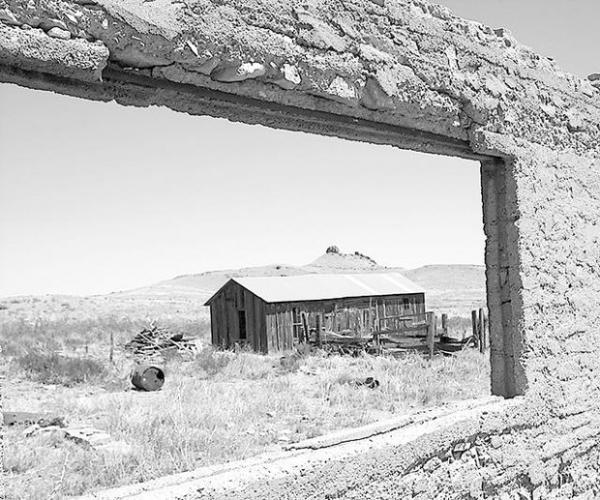
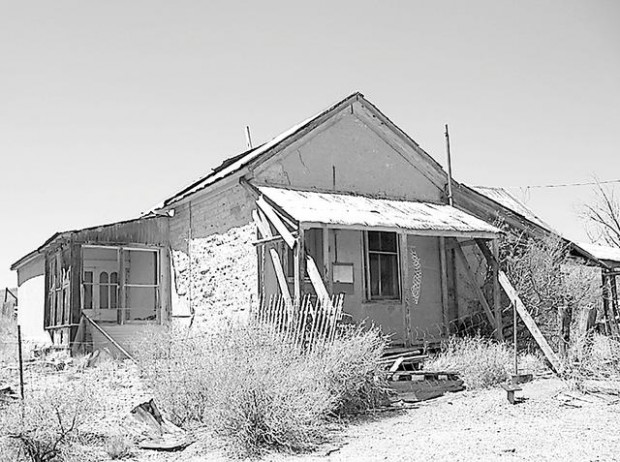
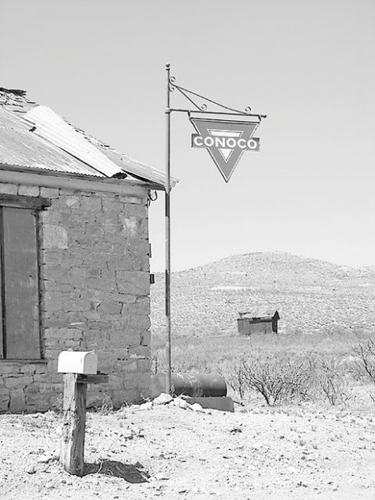
LAKE VALLEY, N.M. — The howling wind across a remote landscape, a creaky metal gate or a run-in with a rattlesnake or gun-toting local are the things that attract ghost towners. They are history buffs who take their outdoor adventures with a dash of mystery.
Just as traditional outdoors enthusiasts enjoy mountaineering or hiking, and tech-minded gadget lovers enjoy geocaching, ghost towners have their own agenda: seeking out, documenting and photographing towns that one day will cease to exist.
"We are a subset of the outdoors culture," said Clint Thomsen of Stansbury Park, Utah, who writes newspaper columns about the ghost towns he visits. "If you're willing to drive around 200 miles along dirt roads and find something that's definitely crumbled, you're definitely part of the breed."
Ghost towns are prevalent in the West, with 100 to more than 200 per state, but even states in the Midwest and several Eastern states have between 10 and 100 ghost towns apiece, said Todd Underwood of Prescott, who hosts a Web site for ghost towners, www.ghosttowns.com.
People are also reading…
Underwood, a chemistry professor turned pilot who estimates he has visited about a thousand ghost towns, said the site has helped coalesce ghost towners into a group that logs millions of Web site visits a month.
And for those who think ghost towning is only a Western phenomenon, ghost towners are quick to say that even New York has 14 ghost towns. Pennsylvania has what one ghost towner calls a ghost highway, a 13-mile stretch of Pennsylvania Turnpike complete with overpasses and tunnels near Breezewood that was bypassed in 1968.
A ghost town is a place that is a shadow of its past glory. This can include everything from accessible historical towns — like Arizona's hillside town of Jerome, or Calico, Calif. — to the ruins of forgotten mining towns, abandoned farm settlements or railroad stops that disappeared when the trains stopped coming. Towns that are remote, hard to gain access to and have very little remaining are known as "true ghosts," Underwood said.
Underwood said he began ghost towning in 1976 with his father.
"We were really fascinated as to how and why people would just up and leave towns. We were steeped in the mystery of that," he said.
A typical ghost town visit usually begins with an offhand remark from an old-timer or a mention on a Web site, ghost towners say.
Before leaving home, they try to solve the mystery of why the town disappeared and, more important, how to get there by hitting the history books and topographical maps.
Ghost towners give only vague directions to newbies. They figure those who are willing to unravel their hints and work to find these places are more likely to respect them.
The ghost towners motto is to "take nothing but photographs, leave nothing but footprints."
If You Go
Ghost town Web sites
• Todd Underwood's site: www.ghosttowns.com.
• New Mexico ghost towns: www.vivanewmexico.com/ ghosts.
• Clint Thomsen's site (click on Ghost Town link): bonnevillemariner. wordpress.com.
Ghost towns
• Lake Valley in southern New Mexico is a quintessential ghost town, said David Pike, who hosts a Web site that rates New Mexico ghost towns. The old mining town sits on Bureau of Land Management property and has several standing buildings, including a school house, general store and small church. "If a town is going to aspire to be a ghost town, that's the town that they should emulate," he said.
• Carson, Colo., is an abandoned mining camp that sits on the Continental Divide at about 12,000 feet elevation. "It's very remote. It's covered most of the year with snow. All of the buildings are left intact. It's almost like somebody just upped and walked away," said Todd Underwood, host of ghosttowns.com.
• Frisco, Utah, is a favorite of ghost towner Clint Thomsen. The old silver mining town in southwestern Utah has several outdoor charcoal ovens that were used to make fuel for the smelter. There's also a cemetery and standing structures, according to ghosttowns.com.


