

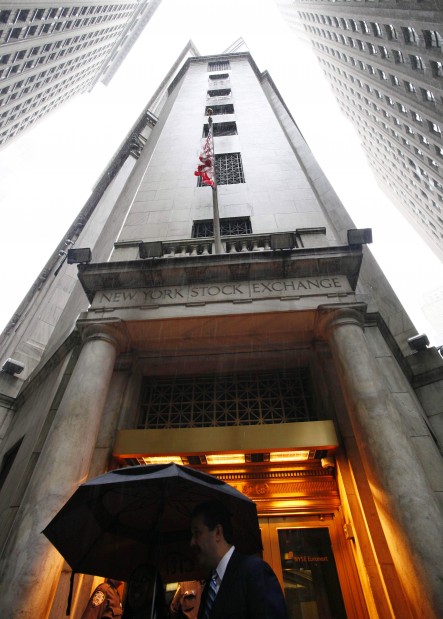
The economy is weakening; home sales are plunging; and stocks are on a long slide. Now comes something even scarier for investors - the beginning of what is traditionally the worst month in the market.
Could stocks be headed for another September swoon?
"If history is any guide, for it's never gospel, we may be in for another rough ride," says Sam Stovall, chief investment strategist at Standard & Poor's.
Mutual fund managers tend to clean house after Labor Day, taking profits on winning stocks and weeding out portfolios before putting out the rosiest possible end-of-quarter reports for their clients.
Workers coming back from summer breaks are also inclined to sell stocks as they get their financial affairs in order. Any festering issues with the economy or stocks during the summer, when trading volume is light, tend to get put off until fall.
People are also reading…
The result: September is usually a dog of a month for the market. It typically starts with solid market increases, then tails off, says Jeffrey Hirsch, editor of the Stock Trader's Almanac. "There's just a general selling bias in the month of September," he says.
Four times in the past decade alone, the S&P 500 shed at least 5 percent in September. The average September decline since 1950 is 0.6 percent, says the Stock Trader's Almanac. February is the next worst, with an average 0.2 percent loss, and December and November are the best, averaging 1.6 percent gains.
Of course, investors haven't forgotten that the financial world collapsed in September just two years ago. And the Sept. 11 attacks, which delivered a devastating blow to the stock market, remain a painful memory.
This year, there's a lot to frown about. The S&P 500 index is down 14 percent from its high in April, and was down 5 percent for the month of August.
The economy has slowed to anemic growth; home sales the last three months are the worst on record (although existing-home prices were up in June); consumer spending is lackluster; and unemployment is stuck near 10 percent.
The weak data sapped the market of what little midsummer momentum it had. "The collective psyche is on edge," says Mark Zandi, chief economist at Moody's Economy.com.
Federal Reserve Chairman Ben Bernanke said last week that the central bank is ready to take additional steps to boost the economy.
But with the benchmark interest rate already near zero, any Fed action is unlikely to provide the oomph of past measures. Congress doesn't appear to have an appetite for another stimulus package.
Also hanging over the market is an air of heightened uncertainty because the November elections will determine which party controls Congress for the next two years.
Some experienced market participants, however, dismiss the significance of the trend and say it would be a mistake to try to time market decisions based on seasonal data from past years.
Investors ultimately should be guided by the financial health of the companies they're considering investing in, they say. And, after all, the S&P 500 advanced 4 percent last September.
AT A GLANCE
SEPTEMBER SLUMP: September is historically the worst month in the market.
2010 OVERHANG: Pessimism about the faltering economic recovery and a sagging stock market have investors on edge going into this September, although no one foresees a market collapse like the one of September 2008.