


Surveillance cameras have been around for decades, helping police look for trouble.
A Tucson-based company is adding acoustic gunshot-detection technology to listen for trouble as well - with "brains" to make sense of it all.
Safety Dynamics Inc. makes a gunfire-detection system that can recognize the sounds of 22 different ammunition rounds.
Gunshot-detection systems have existed for more than a decade, but Safety Dynamics' Sensor Enabled Neural Threat Recognition and Identification (SENTRI) system can be linked to common surveillance cameras to zoom in on the source of gunshots, helping police nab shooters.
Such systems are in use in such including Chicago; Memphis; Compton and Richmond, Calif.; Memphis; and Baton Rouge, La.
But that's just one use for the company's smart technology.
People are also reading…
Safety Dynamics is adapting its patented "temporal pattern recognition" technology to homeland-security applications including a pilot system at a Florida airport that uses ground-based sensors to detect footsteps in high-security areas.
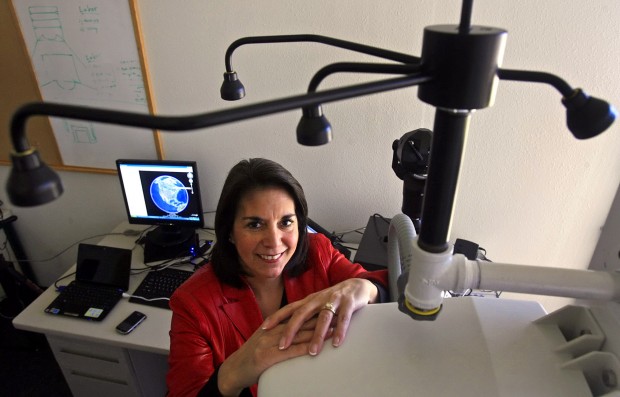
"We pride ourselves on making things smarter," said Sally Fernandez, president of Safety Dynamics and a familiar face in the local high-tech business community. "Just trying to take things that already exist and just adding our brains to them and making them do things they couldn't do before or making them better."
an "angel" investor
The company was founded near Chicago in 2003 based on pattern recognition technology pioneered by Ted Berger, director of the Center for Neural Engineering at the University of Southern California.
The company's headquarters moved to Tucson in 2006, when Fernandez became an "angel" investor in the privately held company.
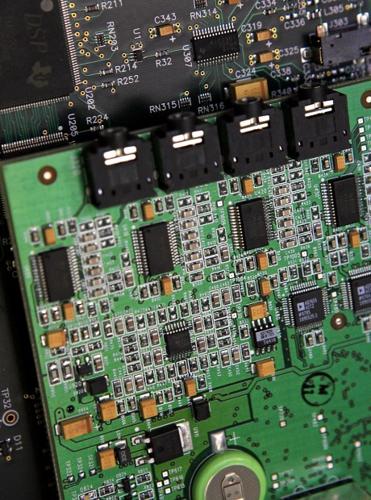
At the time, Fernandez said, the company was essentially selling the electronic guts of the system, the circuit board and associated software, and advising customers on how to set up their own systems.
"I said, 'No one's going to buy that. We need a real product,' " recalled Fernandez, a marketing and business development veteran of several large and small high-tech businesses.
Working with a local company, Catalina Technology Management (formerly Catalina Tool & Mold) and its then-President Wayne Lundeberg, the company created a modular system with its own electronics and microphone arrays.
The company refined the system's software to improve its detection accuracy from about 80 percent to more than 90 percent, and to enable it to be used with off-the-shelf security systems.
Such technology doesn't come cheap - each SENTRI acoustical unit costs between $5,000 and $7,500, and camera systems can run more than $10,000 each.
But the company offers custom systems adapted to existing cameras, said Lundeberg, who became Safety Dynamics' chief operating officer after Fernandez wooed him away from his longtime position with Catalina.
"That's big, because we're not asking people to change existing infrastructure," Lundeberg said, noting that major cities like Baltimore have hundreds of cameras already in place.
The system also works with common video and mapping software, including Milestone surveillance video software, Google Earth and Google Maps and geographic information systems (GIS) software, Lundeberg noted.
"No one else can do this"
While other gunshot-detection systems can pinpoint sounds on a map and alert authorities, SENTRI can direct a camera to zoom in on an area where a shot was heard.
In a demonstration at the company's office, Lundeberg clapped his hands loudly. The system not only zoomed in on Lundeberg - it zoomed in on his hands.
"We've found a place in the marketplace where there's not anyone else that can do this," Fernandez said.
A system installed in a housing development in Richmond, Calif., a crime-plagued area across the bay from San Francisco north of Berkeley, has worked mainly as a deterrent, an official said.
A SENTRI system costing about $100,000 was installed in Richmond Village, a recently redeveloped area with 82 homes and about 240 apartment units, in 2007, said Lokesh Bali, special projects manager with the Richmond Police Department.
The system has detected only two gunshots in that time, both out of video view, Bali said.
But police believe the publicized presence of the smart-camera system has been a major deterrence to gun crime in the area, he said.
"The deterrent effect is much more than we anticipated," Bali said. "It's not the end-all, but it works together with other mitigations that we already have."
"We've had people ask us, 'Does it shoot back? (and) "Does it see through walls?' " Lundeberg said. "The mystery of it remains, so I think (the attitude of) the general population is, 'Let's not do stupid things anywhere near that thing.'"
The SENTRI system also has been installed in Compton, Calif., where it was funded with a public-safety grant from retailer Target Corp.
The system also is in use at power plants in Ohio, parks in New Mexico and atop mobile units used for special events in Baton Rouge, La.
systems have their critics, too
But not everyone welcomes such technology, including privacy advocates who oppose public video surveillance.
In 2007, the Tucson City Council turned down a $100,000 grant from Target that was proposed for a security camera system downtown. Council members opposing the project cited privacy concerns.
"They turned it down based on privacy factors, making a lot of assumptions about what the system does or doesn't do," Fernandez said.
A security expert said the jury is still out on the effectiveness of gunshot-detection systems.
"Detecting the shot is one thing, getting the police in busy places to make a rapid, effective response can be quite another," said Eugene O'Donnell, a former New York policeman and a lecturer with the John Jay College of Criminal Justice at the City University of New York.
The popularity of such crime-fighting technologies is being driven partly by concerns over profiling and other abusive practices, O'Donnell said in an e-mail.
"Stopping and frisking people is controversial and a thorny area to navigate," he said. "Relying on a machine is less problematic."
Additional markets
Meanwhile, Safety Dynamics is turning to other markets.
Working under a $2.6 million small-business grant through the Office of Naval Research, the company has adapted its electronic brains to ground-based sensors to create a wireless alert system for airports for the Transportation Safety Administration.
The company has installed a pilot "smart fence" system at the Panama City, Fla., airport, where officials fret about unauthorized access from nearby public lands.
That system uses ground sensors called geophones that have long been used in mining, with Safety Dynamics software that is fine-tuned to distinguish footsteps from hopping bunnies, for example.
The TSA plans to expand that pilot program to other small and medium-sized airports, including Yuma, Fernandez said.
Military markets are another target.
While Fernandez said the company has had no military sales so far, it is partnering with defense giant L3 Communications on a system unveiled at an Army conference this summer.
COMPANY AT A GLANCE
Safety Dynamics
• Address: 3845 N. Business Center Drive, Suite 115.
• Employees: 5.
• Top executive: Sally Fernandez, president.
• Business: Gunshot-detection systems and other applications of "temporal pattern recognition" technologies.
Contact Assistant Business Editor David Wichner at dwichner@azstarnet.com or 573-4181.