PHOENIX — A state board has blocked construction of a controversial copper leaching operation beneath Florence — at least in the form it was proposed.
The Arizona Water Quality Appeals Board accepted the findings of an administrative law judge, who concluded that the state Department of Environmental Quality’s permit allowing Curis Resources to pump acid into the ground would not adequately protect water quality. The judge’s report found a series of shortcomings.
But board members did not kill the project outright. They rejected Diane Mihalsky’s recommendation that the permit for Florence Copper Inc. be entirely voided, concluding that would place an “unnecessary burden” on both the company and the DEQ. Instead, they agreed to give the state and Curis a chance to change the operating plan — and the conditions DEQ is imposing — to put the proposed mining operation in compliance with state laws and regulations.
People are also reading…
DEQ spokesman Mark Shafer defended his agency’s original decision as justified.
“We issued an environmentally protective permit,” he said, but acknowledged the judge disagreed. “Given that, we think the appeals board made the correct decision in remanding the case back to DEQ to take a look at it again.”
In its order, the board concluded that Curis has the ability to make the necessary changes to its plans to allow the mine to operate in a legal fashion. But how extensive those changes will have to be to get final approval remains unclear.
Rita Maguire, the firm’s general counsel for its Florence operation, said Saturday that she is convinced Curis can meet any new permit requirements and that the mining operation eventually will be approved.
“This is not an insurmountable hurdle,” she said.
But Larry Crown, an attorney who represents those who challenged the permit, said he believes Curis never will be able to deal with all of the problems the review board wants resolved.
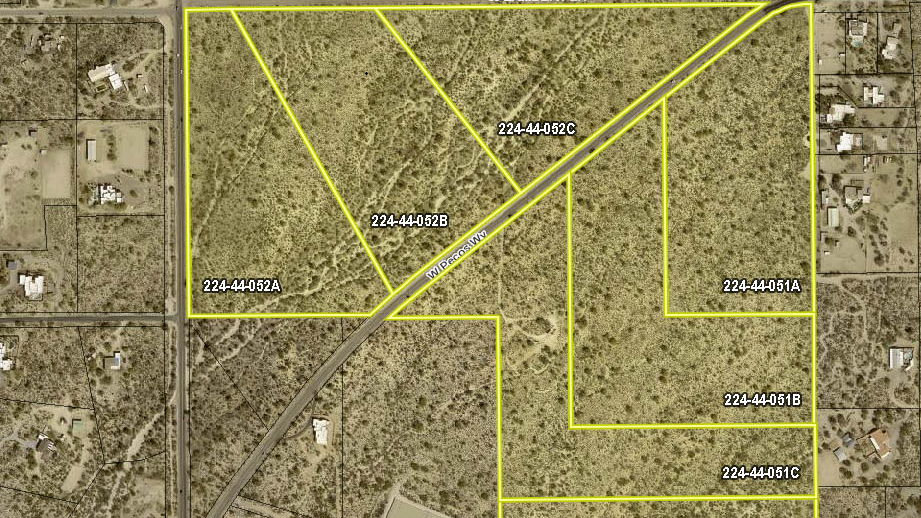
At the heart of the issue is property Curis obtained in 2010 from BHP, another company that had wanted to do copper mining on the same site. That includes 1,182 acres it owns outright as well as 160 acres of state mineral leases.
Curis plans to pump a sulfuric acid solution into the ground.
In essence, the idea is to have the acid dissolve the underground copper compounds. When the solution is pumped back to the surface, the copper is extracted and the acid is reused.
Two years ago DEQ denied the company’s request for a permit to conduct full-scale commercial operations. But the agency did agree to a smaller-scale test operation on a temporary basis.
That, however, never got off the ground as foes, including the town of Florence, nearby property owners and the operator of a water company appealed.
In her findings, Mihalsky detailed a series of flaws in that temporary permit.
She said the monitoring wells that DEQ wants installed are too far to provide “meaningful monitoring of pollutants” that may escape from the site.
And she said DEQ would create a “pollution management area” — a zone where the pollutants could spread — nearly 100 times the size of the area where the chemicals actually will be injected. Mihalsky said that is contrary to requirements in the law that the company “ensure the greatest discharge reduction achievable” in operating the facility.
Maguire said she thinks the problems that Mihalsky — and the review board — had with the permit can be boiled down to just five issues. And three of those, she said, have to do with paperwork.
“We’ll go back to DEQ and they’ll make a decision as to what they believe is compliant with state law,” Maguire said. She said that Mihalsky “may not have fully understood what the statutory requirements are.”
Still, Maguire is not dismissing the review board’s action as meaningless.
“We’ve got more homework to do,” she said, including providing better documentation about how the facility will operate.
Crown, the attorney who represents those opposed to the project, said he believes Curis may never be able to adequately address some issues.
For example, he said that once a proper-sized pollution zone is established, then Curis cannot allow contaminants past those boundaries.
“And the geology in this area is very distinct and very complex,” making it difficult to keep liquids from migrating.
He said plans to pump acid at least 400 feet into the ground, below the aquifer used by the community, does not guarantee the water supply will not be affected. He said there is evidence that pollutants can spread not only sideways but also upward.
Even if the company changes its procedures and incorporates them into the permit, that does not guarantee it will finally be able to start operations.
In its order, the board said the revised permit will require a new round of public hearings. And if those opposed to the facility remain in opposition, they have a new right to appeal.
Follow Howard Fischer on Twitter at @azcapmedia.


 Tucson to get a Teso Life store