

Story and photos by Reyes Suarez
I woke up to a stinging, burning sensation in my nose: a sour, cheesy smell. I got up from the bed that my mother and I shared in the back of my grandfather's house and started looking for the source of the stench — nothing in the bathroom, nothing outside. But then I got to the kitchen and saw my grandfather hunched over the stove, shuffling food in a pan with a spatula. On the table behind him was an empty, wet packet of Little Smokies. I recognized those Little Smokies — they'd been sitting at the bottom of the fridge for longer than I could remember! That bag of tiny sausages had become a joke in my family. My mother and I were sure they'd gone bad, and we refused to touch them. But my grandfather insisted on eating them. "They're still good!" he replied to our protests.
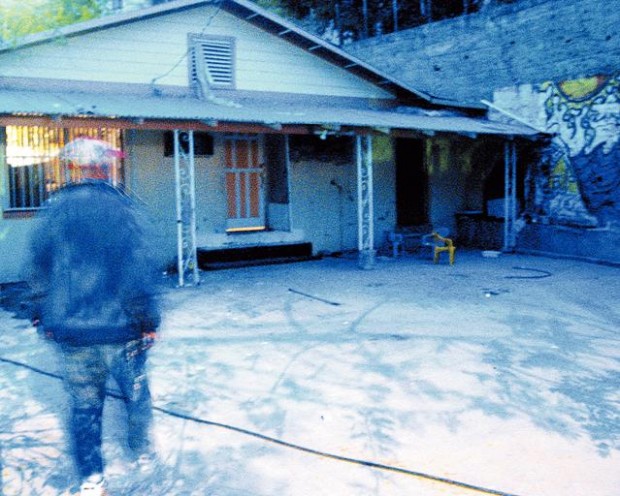
My grandfather, who I call Tata, used to keep a yellow freezer outside against the back wall of his house: frozen meat, frozen vegetables, frozen milk. He would never eat out, and he always bought my family's food in bulk from Costco. We wouldn't just get a bag of chips, we would get boxes. For better or worse, the fridge was always full.
People are also reading…
I asked my mom once why he keeps old food and doesn't throw it away. She told me that when he grew up in Mexico in the 1930s, he didn't have food to throw away, and his family didn't waste the few things they could afford. She told me that he didn't even have shoes to wear to school — he had to go in his socks.
I never felt so ungrateful in my life. But the worst part is, he never told me any of this.
* * *
I basically grew up with my grandparents; they were a very stable presence in my life. Every time I needed money, a ride or help with homework, I could always ask them. When I chose which schools to attend, I always chose the ones closest to my grandparents' house.
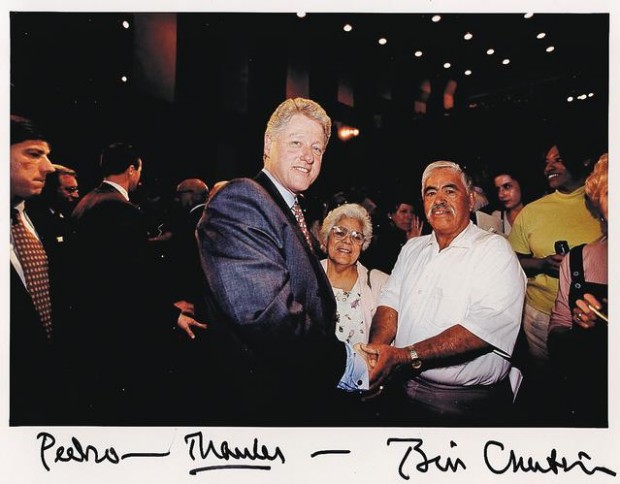
A couple of years ago, I was at my grandparents' house sitting at the dining room table. Hanging next to the doorway was a photo of my Nana, my Tata and Bill Clinton. I had stared at that photo for my whole life, but after my mom started telling me about how little my grandfather had while he was growing up, I became curious about how he got his picture taken with the president. I always thought my grandparents had simply run into Clinton at a local political event, were star-struck and asked for an autograph. But when I asked my mom later about the photo, all she said was: "Your grandfather's a hard-core Democrat. Why don't you ask him?" From that point on, I knew he was more than just my grandfather.
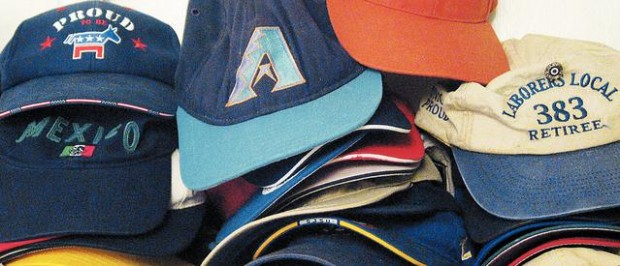
I started paying more attention to the political signs my grandfather places in his yard and the bumper stickers he puts on his cars. Signs like "Proud Democrat," "Pastor for Congress" and "Raúl Grijalva for Congress." I thought he was just one of the many silent supporters who didn't do much more than vote, but over time I found out he has helped numerous political groups organize. Looking back, it's funny that even I — one of my grandfather's most trusted relatives — didn't know about his political commitments and successes.
I know that my grandfather is such an important figure not only in my life but in other people's as well. I also realize that if my grandfather is an immigrant from Mexico who sought to better his life and has helped so many others in his process, then couldn't there be other older immigrants who do the same thing but just don't draw any attention to themselves?
* * *
In order to raise awareness of older immigrants' contributions to our community, I decided to investigate my grandfather's service. But because my grandfather, like so many immigrants of his generation, is so modest, I knew I'd have to learn about his contributions from the people he served most. So I met with local Democratic Congressman Raúl Grijalva and asked about my grandfather's service:
"He showed up. He just showed up. We talked a lot about how we see the world, the issues that are important, the community. I never really went and solicited your grandfather, like 'Hey, come and help me with this campaign.' But he really got involved: He helped me to put up signs. When we ran the first time for Congress, he showed up, like many people showed up. We were collecting signatures — how many petitions! We had lists of people. We were all going door to door, and [Pedro] just took a whole bunch of petitions and left. [He] came back three days later, and they were all full. And he took some more — two days later they were all full."
As a result of my grandfather's hard work, Grijalva told me, "when Clinton comes to talk, we always make sure that Mr. Davis has a front-row seat right there."
* * *
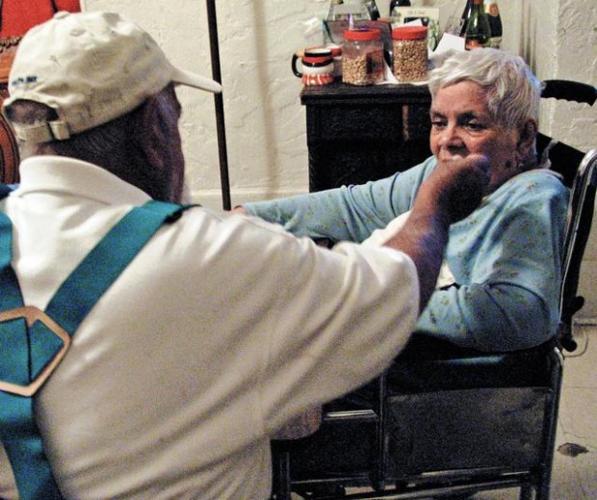
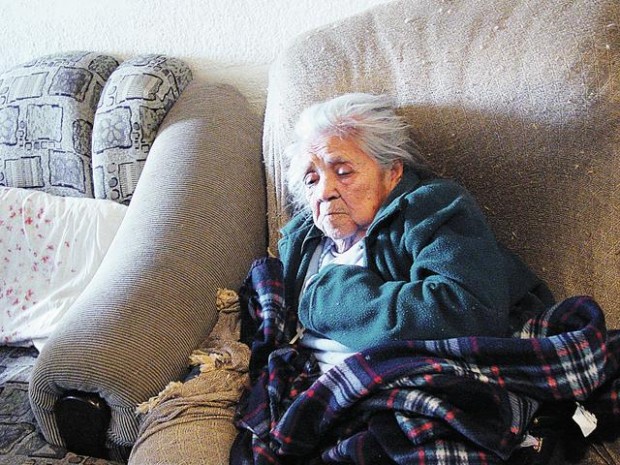
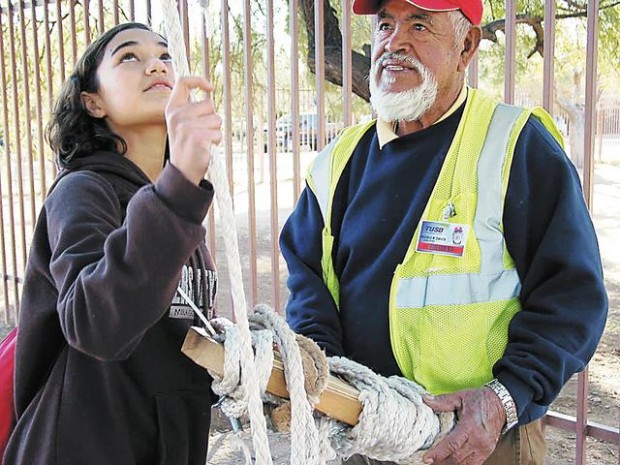
At 78 years old, my grandfather still contributes to my family and the community. Though he may not be as politically active as he once was, he still does what he can. Every once in a while, he goes down to Mexico to help relatives by giving them clothes, cooking utensils and even food. When he's not taking care of family, he's working as a crossing guard for Safford Magnet Middle School. My grandfather takes his duties as a crossing guard very seriously: He cares for the people he helps cross the road just like he cares for his own family. One day a few years ago, my cousins told me Tata was in the newspaper. During a bad rainstorm, my grandfather spotted an elderly man struggling to cross the flooded street. My grandfather took him in his arms and carried him across the water.
My grandfather has taught me to work hard, to stay true to my responsibilities, to do more than what's asked, and to be involved in the community. He is someone who embodies the American and immigrant spirit at the same time. But perhaps it's because he's an immigrant that he doesn't get the credit he deserves. In my opinion, when immigrants are mentioned in the media, the stories are usually about how they are draining our economy. But the hardworking immigrants — the ones who come here to support their families, who have no other way to better themselves except by coming to the U.S. — are rarely met with sympathy or gratitude.
While I think my grandfather is the closest thing there is to an ideal immigrant, I know that he's not the only one. There are others out there who are working hard to help themselves and their communities. But their voices aren't often heard. Maybe they feel like their work isn't significant enough to mention, or maybe they're afraid to speak up because their English isn't as good as they'd like it to be.
Being a true American shouldn't just mean being born in America. It means having American ideals and values: putting family first, having a strong work ethic and being a benefactor to the community. Being an American means not only having strong opinions on political issues, but also acting on those opinions. My grandfather is just one example of the millions of immigrants who show how they put family first by moving to America.
* * *
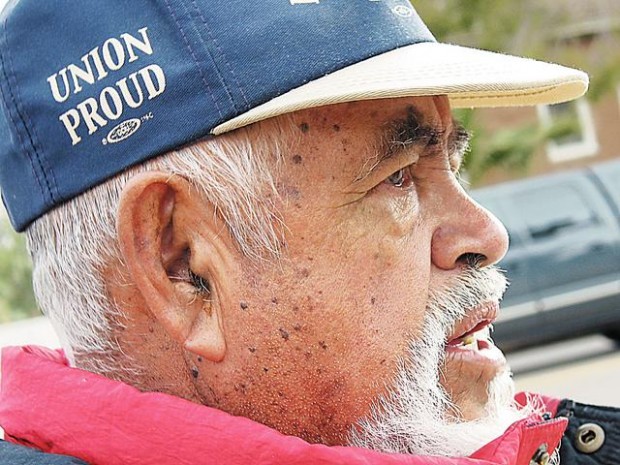
If you walk near the Safford Magnet Middle School gates in the afternoons, you might hear a faint humming, or the soft clacking of plastic utensils in the afternoon sun. If you walk a little closer to the corner of South Fourth Avenue and East 14th Street, you'll see an old crossing guard sitting in a handmade wooden swing. Thin white hairs peek out from the baseball hat on top of his head. He's eating a late lunch — fruit salad in a Tupperware container. This man is my grandfather.
If you want to cross, my grandfather will notice. He might greet you with a smile or a polite hello. He'll grab at the ropes of the swing with his calloused, wrinkled hands and ease himself off the seat. With a slight bend in his stature, he'll reach for his bright red stop sign, walk out to the corner and, holding the sign up as high as he can, walk to the middle of the crosswalk to signal that it is safe to cross. As you walk by, he will wave goodbye and return to his swinging post where he'll sit, waiting to ensure others' safe passage.

Reyes Suarez, 18, Tucson High Magnet School
This is my first year at VOICES and I hope it's not my last. Here it doesn't matter where you come from or what you believe in, you still get treated as equal as the next person. It's something that isn't found everywhere and I'm going to miss it.


 Former Sam Levitz building sells for $8.6 million