

A devastating drought had destined this spring's bloom to be a monumental bust - and then the rains came.
Experts say perennial wildflowers "could be great," thanks to more than 2 inches of rain in January, and annuals such as poppies might manage at least a modest bloom.
"We were looking at an absolute loser of a year, with nothing in the way of wildflowers," says Russ Buhrow, curator of plants at Tohono Chul Park. "Now, with the rains we've had, we could have something pretty nice."
We asked Buhrow and Mark Dimmitt, director of natural history at the Arizona-Sonora Desert Museum, to brief us on our blooming future. Our report also includes a quick-look guide to germination, ideal conditions for wildflowers, and places where you could find some color this year.
To learn where wildflowers are showing up in Arizona, go to www.desertusa.com and click on "Wildflower Reports 2010."
People are also reading…
Find the flowers
• Picacho Peak State Park northwest of Tucson is known for dazzling displays of poppies, lupines and other flowers in good years. Blooms of those annuals, if they develop, might show up in April. See them while you can. The park is scheduled to close in June.
• King Canyon at Saguaro National Park West excels in floral diversity. Dimmitt says he has spotted sprouts of delphinium, desert hyacinth, wild onion and windflower - along with some lupine seedlings - in the canyon this year. A trail begins near the Desert Museum.
• Canyons of the Catalina Mountains - Sabino, Esperero, Ventana, Finger Rock and Pima - always manage to show some wildflower color, even in average years.
Best bets for blooms
Perennial wildflowers are most likely to benefit from our recent rains and put on a colorful show. Among some of the possible stars this spring:
• Desert hyacinths, also known as blue dicks, produce pretty pinkish-purple to blue flowers.
• Mariposa lilies show off red-orange colors against a backdrop of grayish-green leaves.
• Delphiniums, also known as larkspurs, grace desert hillsides with intense, royal-blue blooms.
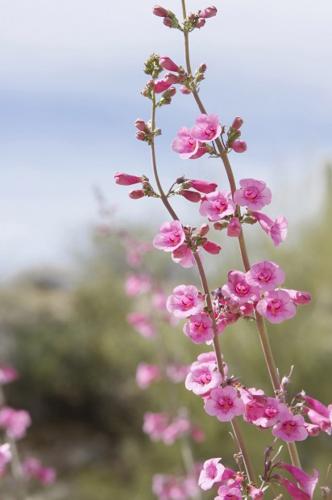
• Penstemons brighten the landscape with pink and red hues.
Some annual wildflowers could also make a fair to good showing, even though they bloom best with the benefit of autumn rains. "If we get annual wildflowers in any kind of quantity, expect them to be late," Buhrow advises. "If their peak is normally about March 20, I would expect them to be a week or two or even three weeks later this year."
Some annuals you might see:
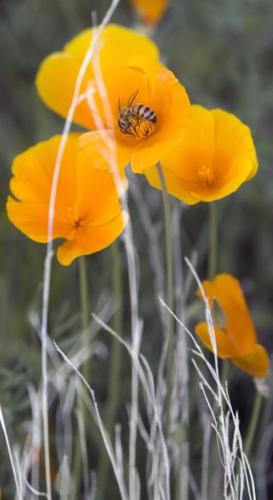
• Poppies, those yellow-gold superstars of the desert wildflower clan, could show their brilliant color in limited areas, but don't expect dazzling carpets.
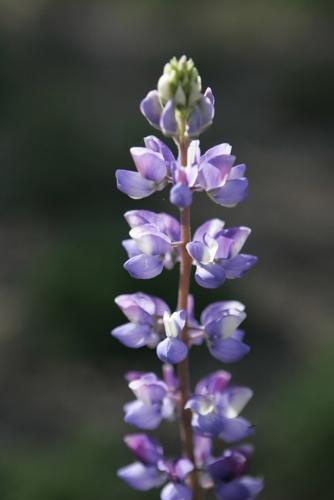
• Lupines in shades of pinkish-purple to blue could blossom nicely, especially if we continue to get rain in the next few weeks.
Our January rains "guarantee a good bloom" of desert trees, Dimmitt says. Two species of trees that could go all out:
• Paloverdes are likely to produce lavish displays of their bright yellow flowers.
• Ironwoods "could be spectacular," Buhrow says, with flowers ranging from purplish-lavender to pink or white.
Contact reporter Doug Kreutz at dkreutz@azstarnet.com or at 573-4192.


