

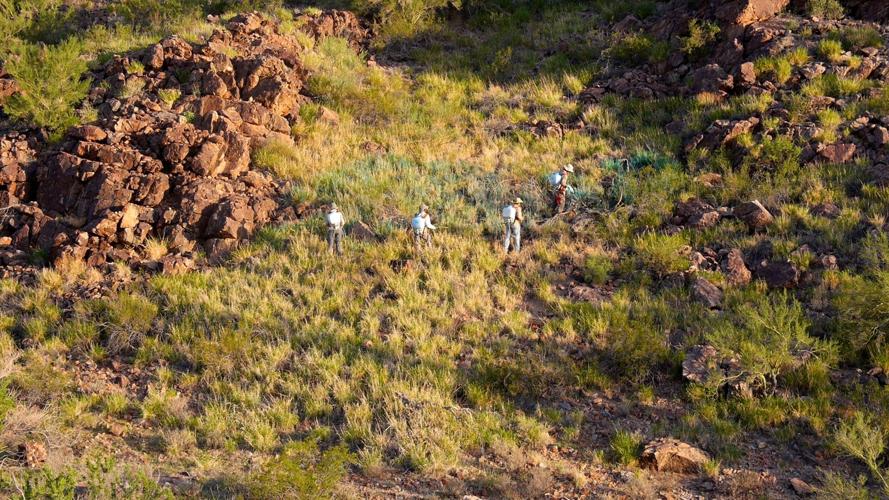
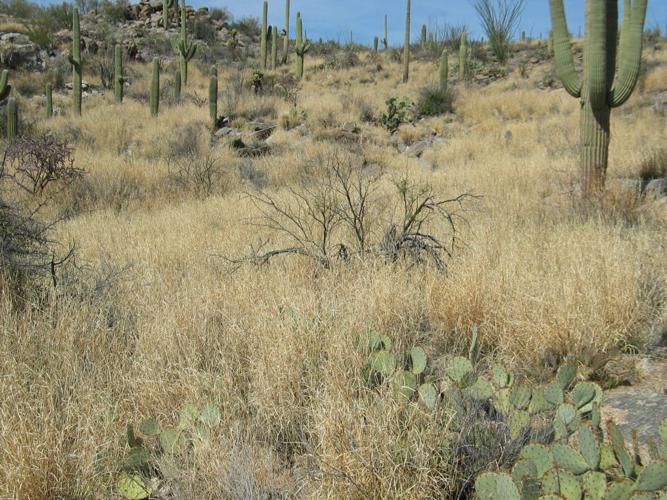
The Coronado National Forest and Saguaro National Park are getting a boost in their battle against invasive, destructive buffelgrass.
A U.S. Department of the Interior program is providing $150,750 to help combat buffelgrass in Southern Arizona, where it out-competes native vegetation and fuels hot, intense fires that can permanently alter desert landscapes. The funding is from a source called the Wildland Fire Resilient Landscapes Program.
Secretary of the Interior Sally Jewell designated the Southern Arizona buffelgrass battle as one of 10 projects around the nation to receive funding from the program.
PUTTING FUNDS TO USE
Park and forest officials described funding allocations and outlined ways in which they’ll use the money.
The Southern Arizona funding of $150,750 includes $110,750 for the Coronado National Forest, $33,000 for Saguaro Park and $7,000 for the Southern Arizona Buffelgrass Coordination Center, said Michelle Fidler, fire communication and education specialist with the National Park Service.
People are also reading…
The work in Southern Arizona “will protect native plant and animal communities from being displaced by the aggressive invader buffelgrass, protect the natural fire regime, and prevent large, intense wildfires from converting a biologically rich, fire-sensitive habitat into a near-monoculture and highly flammable grassland,” Fidler said. “This project will help prevent damage to private property, utility corridors, and the area’s tourism based economy.”
Heidi Schewel, spokeswoman for the Coronado Forest, said the forest “will use the funds to conduct herbicide treatments on buffelgrass and fountain grass using ground crews. Associated costs will include helicopter delivery of supplies.”
She said forest lands receiving treatments will include the southwest-facing slopes of Tanque Verde Canyon in Redington Pass and Soldier Canyon, Bear Canyon, Sabino Canyon, Finger Rock Canyon, Pima Canyon, Romero Canyon and Montrose Canyon in the Catalina Mountains north of Tucson.
“Sites to be treated range in size from approximately 100 acres to 500 acres and were selected for their unique vegetation, wildlife, recreation and wilderness values, as well as contributing to potential fire hazards at the wildland-urban interface,” Schewel said.


 U of A’s fall enrollment down more than 20%, sources say


