

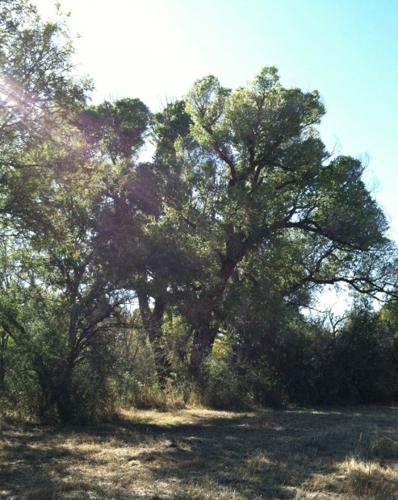
PATAGONIA - Walk down Sonoita Creek through The Nature Conservancy's preserve there and you'll see dozens of huge, stately cottonwoods, towering 75 feet and up. Thick, robust trunks. Broad spreads of bright green leaves, with autumn's yellows slowly blending in.
What you won't see on the Patagonia-Sonoita Creek Preserve is many little cottonwoods, just starting to spread their leaves. The same goes for willows, which along with cottonwoods symbolize to many the value of the Southwest's rare, riparian habitats.
Preserve manager Matt Killeen calls the absence of these younger trees on the conservancy's 921-acre preserve "decadal voids," a loss of entire generations.
"If we were to go out and search for seedlings that emerged in the last 10 years, I'd have a hard time finding one," said Killeen, manager for seven years. As he walked the preserve's Creek Trail, he observed that if you took tree ring samples of the big cottonwoods, "you would find they were all established in the same flood event."
People are also reading…
So when the older trees die - as did the country's largest known cottonwood tree just outside the preserve last month - there may not be much of a cottonwood-willow forest left here, Killeen says.
Factors behind the decline of baby trees are complex. But one key cause centers on the alteration of the stream back in 1881 to accommodate a new rail line. The construction - for a freight line that was abandoned in 1939 - brought a much straighter creek, much less hospitable to seedlings.
Now, the conservancy wants to restore the creek's ability to nurture baby trees. Early next year, it will start mapping cottonwoods to get a feel for their numbers. By March, it will start planting young willows, to rejigger the stream's behavior to restore some of the meanders the railroad took away.
This has worked elsewhere, but there's no guarantee it will work here. One key factor, says Killeen and a former preserve manager, will be winter rains, which slowly deposit sand and silt for trees to grow on - and which have dropped dramatically in recent years due to drought and possibly climate change.
Old rail line
The rail line, which ran from Guaymas, Sonora, to Benson, was built by the long-gone New Mexico & Arizona Railroad Co. It was later incorporated into the Southern Pacific Railroad Co., and carried copper and other minerals to the main SP line at Benson.
Before tracks could be laid, the creekbed had to be built up. That constricted the stream channel's naturally meandering course, and "any kind of meander was straitjacketed," Killeen said. Sandbars - where young trees are most likely to germinate - generally decrease in such circumstances. The seeds do best inside the river bends, where water moves the slowest and deposits sand.
The effects of the stream alteration become clear downstream, below the conservancy property, said Jeffrey Cooper, a former preserve manager who still lives in Patagonia. There, two major tributaries pour additional water into Sonoita Creek - and they've washed out the bridge abutments that held up the rail line and kept the straightened stream in place, he said. In those areas are significant stands of 20-year-old trees, dating back to the last big winter flood in this area of 1993, Cooper said.
When Cooper was manager back then, the conservancy wanted to blow up all four major abutments in the preserve to make the stream more natural. But it could remove only one because the state ruled them historic structures, Killeen said. Today, the large concrete bulwarks can be seen from the preserve's Railroad Trail.
some hopes
The baby trees' plight is not hopeless, Killeen said. The creek area is largely undeveloped besides the old railbed. Monsoon rains have been good in recent years, and last summer brought 14 inches.
If you plant willow thickets in the stream, they can do a great job of catching sediment and plant debris that can re-create sandbars and coax the stream into meandering once more, he said.
If the young trees return, that will be good news for the 300 or so bird species known to frequent the preserve - and that draw about 10,000 human visitors yearly. By drawing in more leaves and other organic material, "the cottonwoods draw bugs, and the bugs draw birds," Killeen said.
A more natural river course will also make the creek more attractive to the creek's four native fish species.
"The limiting factor for fish numbers is habitat," Killeen said.
But if winter floods stay low as they have in recent years, you won't get more baby cottonwoods, observed Cooper, who now is Patagonia High School's librarian but remains a naturalist. Winter floods are critical to preparing seedbeds for baby cottonwoods, he said.
The lack of winter floods is obvious from the stream itself. Its 30-year average flow ranges from 3 to 5 cubic feet per second, but this year's flows are stuck at about 1 cfs despite the big monsoons.
It would be sad if cottonwoods don't regenerate, he added, but it may be that the creek's future will be a more diverse forest, with more of the ash, walnuts and hackberries that already are there in smaller numbers.
"What we're really trying to protect are the natural processes," Cooper said, that will allow nature to find "a new normal," in climate and stream conditions.
Did you know?
Popular birds at the Patagonia-Sonoita Creek Preserve
• Thick-billed kingbirds, which nest in cottonwoods and sycamores
• Vermillion flycatchers, which hop from branch to branch
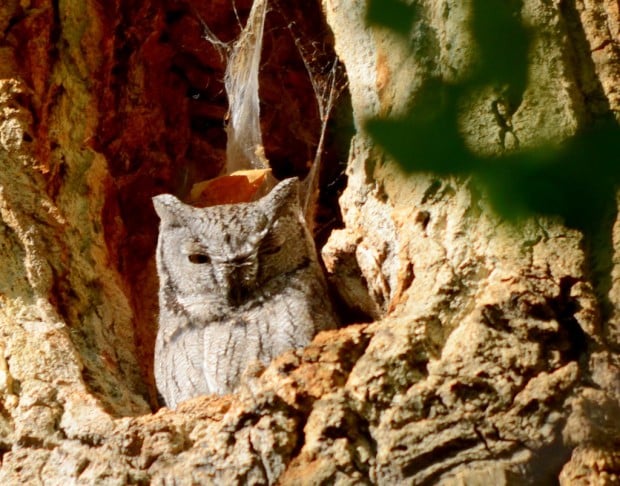
• Western screech owls, which nest in cottonwoods
• Gray hawks, whose "keer" call rings every summer
• Black phoebes, which routinely dart across the stream
• Wilson's, Lucy's and yellow warblers, which flit through cottonwoods
Contact reporter Tony Davis at tdavis@azstarnet.com or 806-7746.


