

The United States has long held a leadership position in astronomy and the related technology it takes to make new discoveries about the cosmos. Astronomy is a key industry in Tucson, as seen by the observatories on our mountaintops, the Richard F. Caris Mirror Laboratory at the University of Arizona, the large University of Arizona astronomy and planetary science programs and the headquarters of the National Optical Astronomy Observatory.
Continued success is unfortunately in jeopardy.
The White House budget that was released last month includes a drastic cut to the NASA astrophysics budget. This cut would force NASA to abandon their flagship mission for the next decade: the Wide Field Infrared Survey Telescope, or WFIRST.
Every 10 years, the astrophysics community recommends what they believe to be the most important mission of the decade. For four decades running, these highest priority recommendations have been completed, resulting in the great observatories, such as the Hubble and Spitzer space telescopes.
People are also reading…
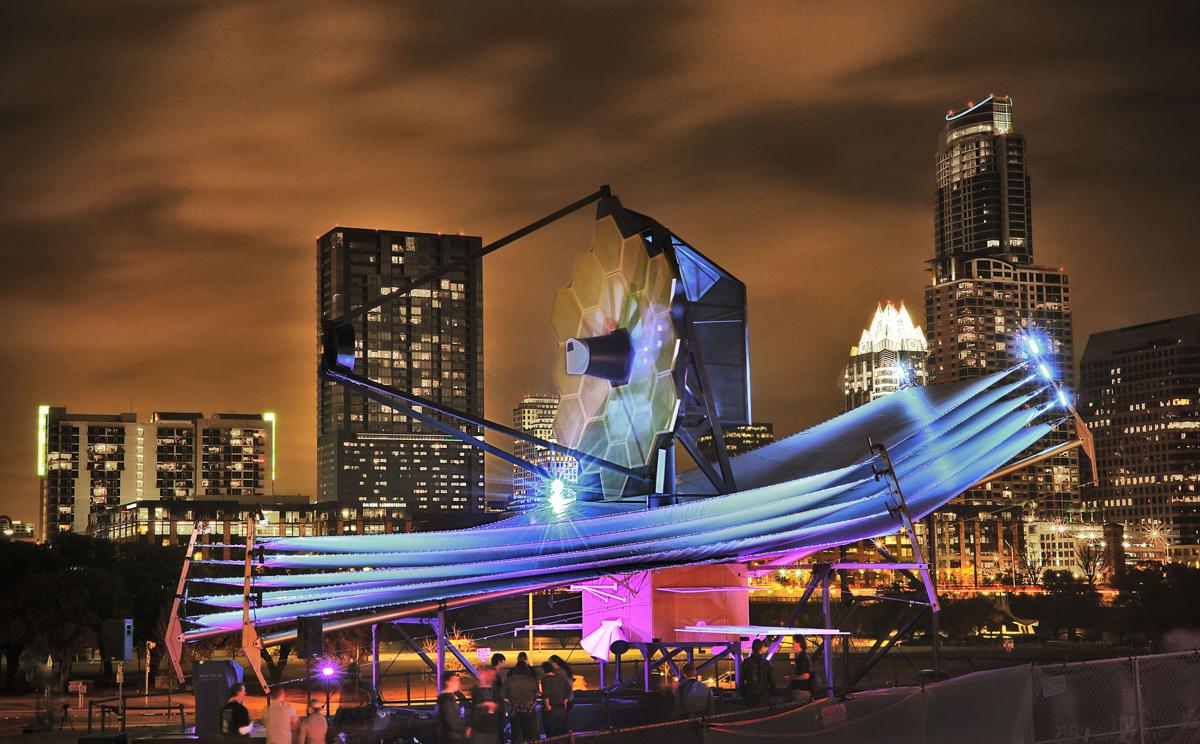
These observatories have transformed our knowledge of the formation of structure in the universe, the process by which stars and planets form, and our ability to study planets outside of the solar system. Next year, the latest mission, the James Webb Space Telescope, will detect the first stars ever formed in the universe through exquisite images of very small patches of sky, a fulfillment of the decadal recommendation from the 2000s.
WFIRST, the current decade’s recommendation, is the natural mission to follow. One of the most astounding mysteries in astrophysics is that the expansion of the universe is accelerating despite the universal force of gravity. This discovery, made in part by UA alum Brian Schmidt, won the 2011 Nobel Prize in physics.
With its extremely wide field of view and sensitive detectors, WFIRST will allow us to determine why the cosmic expansion is accelerating, map the structure of the early universe, and make observations critical to searches for evidence of life on planets outside of the solar system. As a result, this mission was chosen by the U.S. astrophysics community to be the most important space mission of the coming decade.
The president’s budget plan puts the entire U.S. astrophysics industry at risk in the coming decade by telling the world that we have given up on creating any additional transformative observatories. Doing big things in space science, such as uncovering the origin of the universe and finding evidence for life outside of the solar system, requires the budget and the support of the president and Congress.
There is still hope for the U.S. to retain its leadership role in space-based astrophysics. Support of NASA astrophysics by Congress has been bipartisan for decades, and has withstood many administrations.
WFIRST is a mission with well-tested and dependable technology, and as a result has a very well determined and affordable cost. Any other such mission would require a significantly larger investment.
The Wide Field Infrared Survey Telescope is the way forward for NASA and the United States to stay on top in space-based astrophysics in the coming decades. Please join us in urging Congress to put the NASA budget back into order and keep the U.S. at the leading edge of our visions of the universe.
Dr. David Sand is an assistant professor at the University of Arizona. Dr. Benjamin Williams is a research professor at the University of Washington.
