

When Washington, D.C.’s NFL team dropped the offensive reference to Native Americans from its name last month after decades of resistance, activist Frances Danger knew why: the Black Lives Matter movement.
Danger said the change would never have happened without the massive marches to protest the death of an African American man under the knee of a white police officer in Minneapolis.
“Unfortunately, George Floyd had to lose his life for this to happen,” Danger said. “That is too big a price, but I will forever be thankful to him because my grandkids are going to wake up in a world and maybe never hear the word ‘redskin’ in their life.”
Kenosha, Wisconsin, became the latest flashpoint this week with the police shooting of Jacob Blake, apparently in the back, as he leaned into his SUV while his three children sat in the vehicle.
People are also reading…
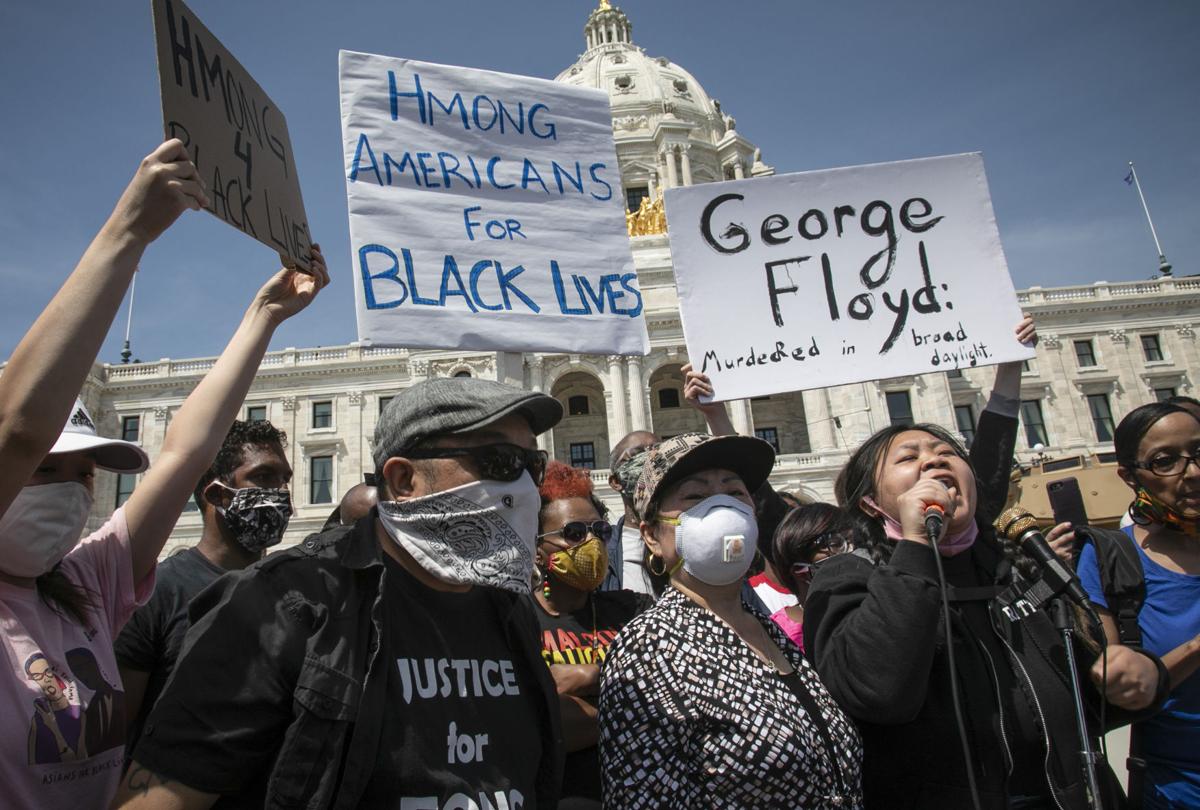
The climate of racial reckoning that has emerged in the United States since Floyd’s death has reinvigorated Native Americans, Asian Americans, Latinos and other people of color to fight back against the racism and discrimination they also have experienced for decades.
“I feel like the conversation has been more accepted,” said Jessica Rodriguez, 38, a Chicana who lives in Southern California. “For the first time I feel like a lot of people who gave me pushback are saying, ‘Hey, you’re right, this is systemic. I can’t believe I haven’t noticed it.’”
But the movement has also forced minority communities to come to terms with their own internal biases and the conflicts that exist among them. Solidarity among people of color has never been a given in the U.S., notes Claire Jean Kim, professor of political science and Asian American studies at the University of California-Irvine.
“There are enduring tensions and conflict among all groups, including among groups of color, communities of color, because they’re not, in fact, comparably situated,” Kim said. “We tend to think, yes, they’re all subjected to white supremacy, but there are also differences in how they’re positioned, with Blacks clearly being positioned at the bottom of the racial order.”
The largest ethnic or racial group in the U.S. after whites are Latinos, who make up 18% of the population. Black Americans are next with 13% of the population. Asian Americans are nearly 6% of the U.S., while Native Americans are barely 2% and often aren’t counted among statistics for social indicators.
Competing economic interests, whitewashed American history classes and, in some cases, a fight for daily survival that leaves no time to reflect on the state of race relations, have traditionally made it difficult for people of color to unite.
Some Asian Americans for example, see affirmative action programs that favor African American and Latino students as an attack on Asian students, who may test higher but could be passed over.
Frank Xu, a 42-year-old software engineer from San Diego who emigrated from China 15 years ago, is among those fighting to defeat an affirmative action measure on the California ballot that supporters say is essential to dismantling decades of systemic racism.
“We are not the majority and we are not the minority,” he said of Asian Americans, who have also been the target of anti-China attacks during the coronavirus pandemic.
Steven Tauber, professor of political science at the University of South Florida in Tampa, who studies race in politics, said one of the barriers to minority groups coming together is a lack of knowledge about each other’s histories in the U.S.: slavery and Jim Crow laws for Black Americans; the colonization of Latinos when large swaths of Mexico became part of the U.S.; immigration laws that excluded Asian Americans; and the Native American struggle to maintain sovereignty.
“I think a lot of it is ignorance,” Tauber said. “Groups understand their own history but not the other group’s history.”
That might be changing, with a younger, savvier generation that is more aware of racial dynamics and the shared history of discrimination.
Rodriguez said when she was growing up, her generation felt powerless to fight back against the police officers who seemed to always be pulling over cars driven by people of color for seemingly no reason. But she said her niece, who is in eighth grade, is not only protesting racial discrimination on social media but also sharing information with classmates about how to become an ally to other minority groups.
“New generations are understanding this is not right,” she said. “Black Lives Matter conversations are happening with younger kids: ‘It’s OK to push back, to fend for yourself.’”
