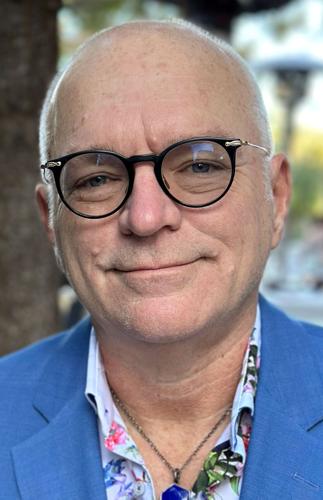
By the time a missile, likely made in Tucson, struck a girls' school in southern Iran, Stephen Schaefer had already quit.
The electrical engineer who grew up in Oro Valley resigned from Raytheon in January, he said in an interview, largely over ethical concerns about the products made there and the people in government deciding how to use them.
Arizona Daily Star columnist Tim Steller
The U.S. attacks on Venezuela and later Iran confirmed his decision, Schaefer said, by undermining the normal arguments people make for producing such weapons.
"The stuff that they're making here is 100% now being used in an offensive way — in an unprovoked, offensive way," said Schaefer, who worked at Raytheon for about seven months after returning to Tucson from Colorado. "That whole, let's say, ethical defense that I had working there, of thinking that these are defensive weapons, is completely shattered."
People are also reading…

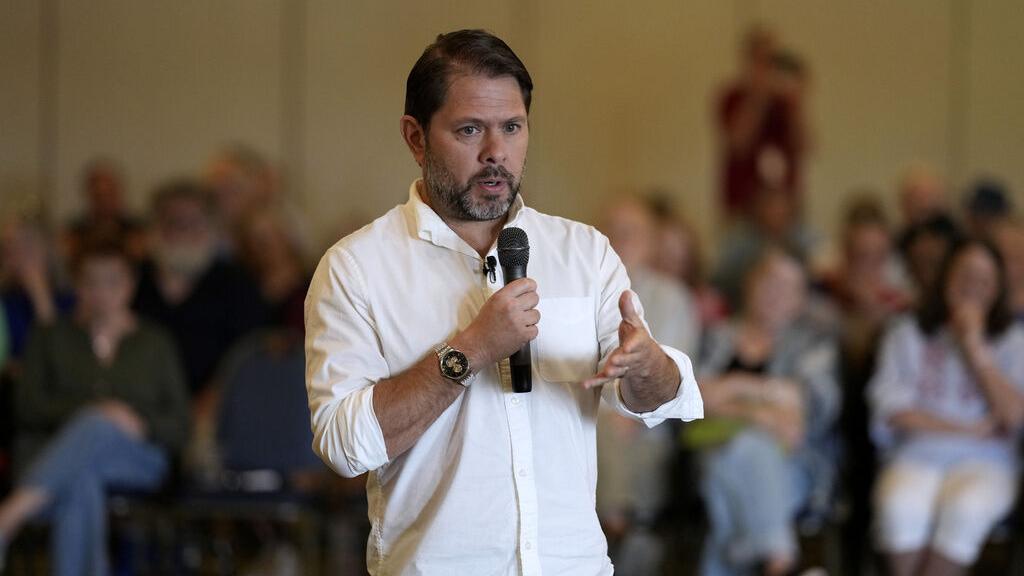
Stephen Schaefer, former Raytheon engineer: "That whole ... ethical defense that I had working there, of thinking that these are defensive weapons, is completely shattered."
After that Feb. 28 Tomahawk missile strike on the school killed about 168 people, mostly young girls, I began asking around to see how Raytheon retirees, as well as former and current employees, feel about the ethics of working at the huge weapons complex near Tucson International Airport.
My interest grew as I heard Secretary of Defense (known unofficially as "Secretary of War") Pete Hegseth denounce "stupid rules of engagement," while celebrating "maximum lethality" and destruction of civilian infrastructure.
"Back to the Stone Age," Hegseth tweeted Wednesday, echoing President Trump's threat against Iran in a speech that day.
The bloodthirsty bravado is not necessarily rallying the thousands of Americans working in defense companies llke Raytheon to supply our military. Some are veterans themselves who see their role as helping prevent wars like the ones they've fought in, or reducing unintended casualties and damage through ever-improved weaponry.
Others are employees like Donna Treadaway, who has worked in finance at Raytheon since 2004. She has relied on a global and national system of checks, balances and alliances to make her feel her work supporting weapons production is ethical, because that system has helped ensure those weapons will be used judiciously.

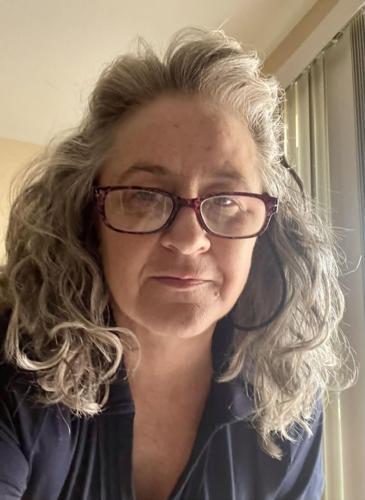
Donna Treadaway: "What are you doing with the systems we made?"
"I have trusted the military and our political leaders and our intelligence community to prevent us from needing to use these (except) as the last resort," said Treadaway, who grew up an Air Force child in Tucson. Now she's asking: "What are you doing with the systems that we made?"
Politically neutral employer
The half-dozen people I've spoken with probably are not representative of the sprawling workplace as a whole, where more than 12,000 people work. But there were some consistencies to their description of working there. They described Raytheon as a politically neutral employer, not a "rah-rah war environment," as Treadaway put it.
"What I thought was going to be this conservative, tight, right-wing company, I didn’t find that at all," said former Tucsonan Tony Spada, who retired in 2025.
Raytheon retiree Jim Burroway told me that Raytheon was the first workplace where he felt comfortable coming out as gay.
It's a place where thousands of people work on small details of weapons systems, often in figurative silos that prevent them from getting a good view of the bigger picture or end product. Occasionally, though, opportunities arise in which members of the military show Raytheon employees how their products helped them when in danger, or how the products need improvement.
Spada, who said he worked eight years at Raytheon in logistics software, told me that taking a tour of the assembly floor where missiles and bombs were being made opened his eyes.
"This was my first foray into working for a defense contractor," Spada said. As to the ethics of working for a missile-maker, he said, "I anticipated more of an issue than I encountered when I worked there."
"You get compartmentalized, you get a good paycheck."
But then things happen like the missile strike on the Iranian school, which occurred on the first day of the U.S.-Israeli attacks on Iran, and remind people of what can go wrong. It was apparently the result of outdated targeting information.
The Tomahawk missile used in the attack almost certainly was assembled by Tucson workers. Research by the London-based group Action on Armed Violence shows the missile was part of a 2014 contract for 231 Tomahawks to be made by Raytheon in Tucson.
'The main game in town'
For Schaefer, Raytheon was the one place he was likely to get a job in his field when he decided to move back to Tucson in February 2025. Schaefer, 35, has a Ph.D. in electrical engineering and most recently worked at the National Renewable Energy Laboratory in Colorado.
"Raytheon is kind of the main game in town for engineers," he said.
And at Raytheon, he found, most of the work is on missiles. His own role: Power design engineer "in the trenches of design, test, and verification."
"Initially, I think I felt OK with it in the sense that, these are, at least in name only, primarily defensive armaments. And I thought about the role that Raytheon products played in the defense of Ukraine.
"This is not an inherently ethically troubling thing to work on, but as time went on, that just became more and more indefensible."
Schaefer's passion outside of work is road bicycle racing. In November 2025, he won El Tour de Tucson, but it was a bittersweet day. That same day his father, career Tucson and Oro Valley police officer Edward Schaefer, died.
Now, Schaefer is planning to move to Berlin, Germany, where he's found a job that fits him better, joining a brain drain of American scientists and engineers leaving the country.
'No ethical issues'
Not everyone who works for weapons makers like Raytheon thinks there is any ethical question about making products intended to kill people or destroy things.
Frank Antenori, the former state legislator and current Cochise County supervisor, also worked for Raytheon and previously served in combat as a Green Beret. He told me by message: "I used many Raytheon weapons, as well as many from other companies in actual combat. They are the reason I'm here today."
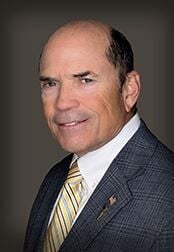
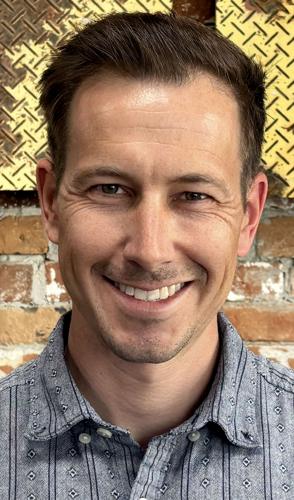
Frank Antenori: "Having a weapon that gives you the advantage helps you come home. To me that's all that matters."
"What does the question of ethics have to do with it?" Antenori went on. "Only someone that has never looked down the barrel of an enemy tank or been shot at by AAA (anti-aircraft artillery) would even consider that perspective. War is binary. It's him or you. Having a weapon that gives you the advantage helps you come home. To me that's all that matters."
Others say that making military weapons comes with ethical issues, but those are traditionally addressed by the people in government and the military being deliberate in their decision-making and cautious about using them. For some, that doesn't feel as dependable anymore, in part because of Hegseth's cavalier attitude about violence and the laws of war.
"These are the last resort," Treadaway said. "And once you start killing people, soldiers or not, you're not having the same political and social and intelligence conversations that you were having before."
How war plays out is always unpredictable.
"Inevitably, things go wrong in war," writes Mathias Risse, director of the Carr-Ryan Center for Human Rights at Harvard University, in a March 15 essay. "There could be no starker illustration of that basic truth than the destruction of an Iranian elementary school during the opening hours of the conflict."
Responsible leadership
Burroway, who retired from Raytheon in 2016, viewed the "robust defense" made possible by companies like Raytheon as one leg of three needed for American security and stability. The others: Vigorous and meaningful diplomacy and strong alliances.
"On top of that, you have to have responsible leadership," said Burroway, who describes himself as a liberal Democrat. "I had a lot of respect for our Defense Department counterparts. Knowing what I know today about things going on with this current administration, I don't know where the professionalism is anymore."

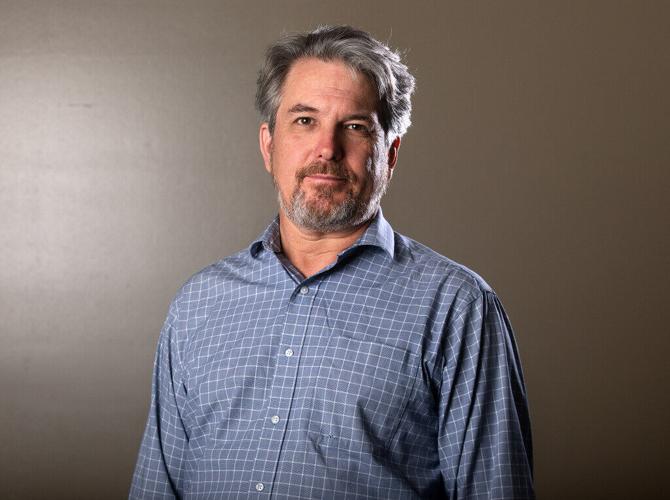
Jim Burroway, Raytheon retiree: "That's the key — responsible leadership. I think we're lacking that today."
"To me that's the key — responsible leadership. I think we're lacking that today."
Risse writes in his recent essay on Hegseth that the secretary seems to miss both the Christian origins of "just war theory," which is the basis for some of today's framework for regulating war, and the fact that fighting fairly is self-interested.
"One fundamental insight from the long history of reflection on the morality of warfare is that this is a domain where ethics and long-term prudence tend to converge," he wrote.
'Defense of the country will matter'
I wrote Risse to ask him about whether a change in administration can change the ethics of weapons making. He wrote back and noted that "the defense of the country will matter beyond this person's (Hegseth's) time in office."
He went on, "I think it is definitely incumbent upon people in the defense sector to strongly articulate their ethical misgivings about where this country is going (assuming that indeed they have them). And in due course, a situation might indeed arise where continued work in the defense sector for a Secretary of Defense who does not believe in ethics does itself become unethical."
It's unclear how many Raytheon employees are thinking about these issues, though Treadaway assured me that she's not alone. After all, the United States has attacked countries abroad with Tomahawk missiles long before President Trump came into office.
But the aggression of our recent wars and attacks, along with the erosion of checks and balances, and the dismissal of ethical concerns in war, could spur more of it. Even if the killing of scores of children in Iran was accidental, the decision to risk the lives of other people abroad by launching a war of choice was not.
And it implicates all of us back home.
Contact columnist Tim Steller at tsteller@tucson.com or 520-807-7789. On Bluesky: @timsteller.bsky.social

Tim Steller
Columnist


 Tim Steller's column: Marana should stop ignoring ICE detention concerns