


Arizona Capacitors, under a couple of names and several owners, has had its ups and downs over 58 years in Tucson. Things are looking up since New Year's Eve.
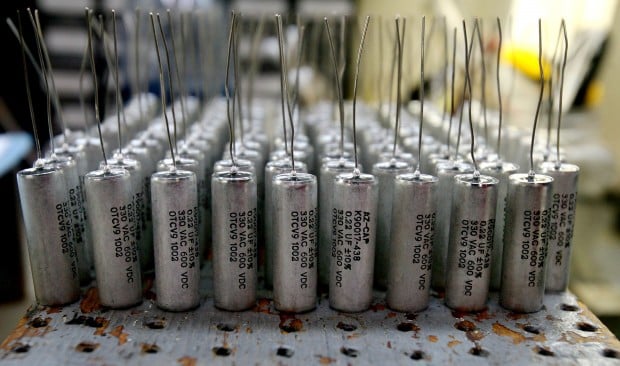
From 400 employees at its peak roughly 20 years ago, to as few as five, the company has done pretty much the same thing - making high-quality capacitors, a key passive electrical component in almost every electrical or electronic device we use.
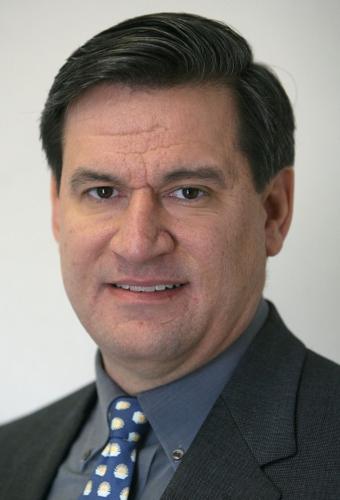
Chief Executive Officer Anne Waisman bought the company near its low, on the last day of 2002, and along with President David Shorey tripled its business. Waisman said that growth was based mostly on "picking the low-hanging fruit." But further growth, she said, would have required serious investment in the company, money they didn't have.
"The kiss of death for David and I was getting shut out of credit markets two years ago," Waisman said.
People are also reading…
Needing money to grow, they set out to find a merger or acquisition candidate.
The financial muscle for that growth has arrived with new ownership. Electro Technik Industries of Florida bought Arizona Capacitors on New Year's Eve.
Arizona Capacitors is the eighth electronic-components company, each with its own speciality, in the ETI group.
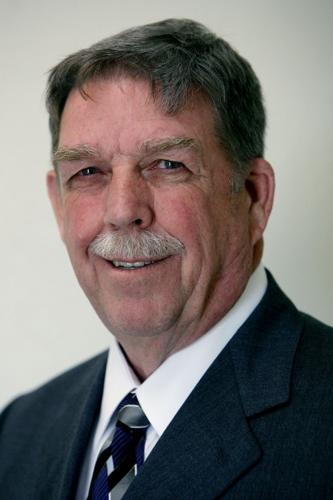
Even though the company has been sold to an out-of-state concern, it's staying here. ETI was looking not only for a company that made capacitors, but one west of the Mississippi to work with West Coast clients, said Darryl Mayo, vice president of ETI.
Capacitors are just one component in another company's device, and Mayo said engineers and designers prefer working with their suppliers in person. Most of Electro Technics' other companies are based in Florida and Pennsylvania.
Mayo said ETI is keeping the current staff of 20 and their benefits, and hopes to double the work force, maybe even rehiring some of the company's former employees.
Better still, Mayo said it hopes to begin manufacturing a second line of electrical products - magnetic products, such as transformers - here, again, with an eye to the West Coast market.
A look around the nondescript building near South Country Club and East Drexel roads doesn't give a hint of what made Arizona Capacitors an acquisition target for a much bigger company.
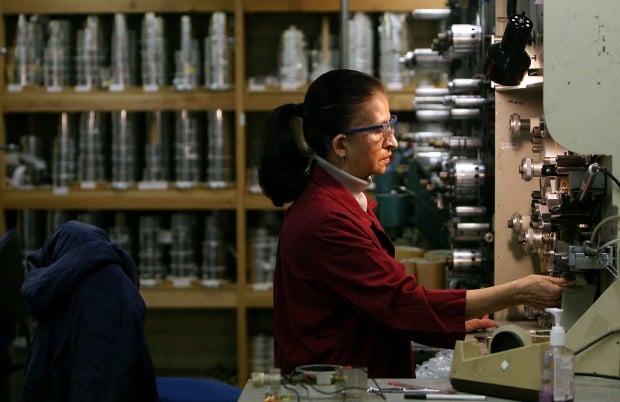
Until a cell phone's goofy personalized ring provides a rude clue, there's nothing to even suggest that it's 2010 and not 1970. On the manufacturing floor there's a scattering of middle-aged or older workers soldering wires and operating winding machines that look older than they are.
Indeed, Shorey, like Waisman staying on during the transition in ownership, said a balky winding machine being used by an employee of 30-plus years is 40-some years old. Not only is the machine not made anymore, Shorey said, neither are replacement parts. When something breaks, they have to fabricate replacement parts for it.
But mass production isn't one of Arizona Capacitors' strengths. You want mass production, said Waisman, you're not just not talking about Arizona Capacitors, you're not talking about the United States.
"The hot button number is about 100,000 pieces," said Shorey. "If you hit that number, you are not in Tucson."
Added Waisman, "You're not in the U.S."
High-volume capacitor production is for the cheap-labor centers. Shorey said South Korea, China and Mexico can't be beat for low-cost, high-volume production.
Much of what Arizona Capacitors makes are components that must maintain very specific performance characteristics under sometimes brutal conditions.
In the case of Milspec (military specification) certified components for weaponry, aircraft and other machinery, they often must test every piece at great length.
Arizona Capacitors makes parts that go into the Patriot Missile System and Tomahawk cruise missiles, among other serious products.
Shorey said a typically demanding military application would be a capacitor for an aircraft application that might experience 85 degrees below zero while miles up in the air and 250-plus while sitting on a runway in Iraq. They are subjected to those temperatures in test chambers.
And that means every piece, not just random samples pulled from a production batch.
Military and other government work makes up about 30 percent of Arizona Capacitors' work. The remainder is industrial, most notably capacitors for railroad locomotive engine controllers. Next comes power companies, utilities and energy divisions of larger companies, Shorey said. All require rugged components capable with very narrow performance tolerances.
That doesn't come cheap.
Their products average over $13 apiece, compared with a fraction of that for mass-produced capacitors that don't meet Milspec or other high-end needs, Shorey said.
Waisman said the company's reputation for quality makes it attractive to other buyers, but price competition from overseas knocks out potential customers who don't require their products' specs.
"They say, 'We love you, but we can't afford to pay $7 more per unit just because we love you,' " said Waisman.
But that also speaks to Arizona Capacitors' strength. Shorey gestures toward a wall of file cabinets with nearly 500,000 pages of capacitor design drawings on paper, some going back to the 1930s. Those who want to buy those parts can get small-batch custom work done at Arizona Capacitors, small runs that a huge Far East manufacturer wouldn't touch.
"It doesn't pay to set up a machine to do even 5,000" units, said Waisman.
The ability to conjure those parts up from drawings is part of the company's attraction.
"It's their expertise that's the key," Mayo said. "Without a company's employees, you're just buying a name and equipment."
ETI is even looking to hire back some of the expertise Arizona Capacitors lost over the years, including some former engineering and high-skill technicians still in Tucson, Mayo said.
Arizona Capacitors lost a considerable amount of work with the housing downturn. Waisman said it was down 12 percent just in 2009, in part due to the loss of capacitor sales to companies making HVAC and pool motors.
In addition to possibly expanding production in Tucson with a new line or products, Mayo said he also hopes to see ETI benefit from Arizona Capacitors' expertise in doing military and government work. And he said ETI's experience in industrial markets could expand Arizona Capacitors' sales in that sector.
Mayo said the transition should be "seamless to the employees" of Arizona Capacitors.
Sales and marketing coordinator Charia Underwood, who has been at Arizona Capacitors for six years, said she wasn't apprehensive about the ownership change.
"It should be an opportunity for the business to grow," Underwood said. "It's very good for us. A perfect match for them. And we needed help growing."
THE SERIES
Made in Tucson is an occasional series about local companies that make things, how they're made and the people who make them.
If you'd like to have your company highlighted as a subject of a Made in Tucson feature, or have a suggestion on a local manufacturer you'd like to see featured, drop us a note to business@azstarnet.com and use "Made in Tucson" in the subject line. Or, call us at 573-4181 or send a fax to 573-4144.
THE COMPANY AT A GLANCE
• Arizona Capacitors just became a subsidiary of Electro Technik Industries of Florida.
The company was founded in 1952 as West Cap of Arizona, a division of San Fernando Electric Manufacturing Co. of Sacramento, Calif., and at one time employed some 400 workers at a plant on Elvira Road near Tucson International Airport.
In 1989, a former employee purchased the company's assets and renamed it Arizona Capacitor Co.
In 1997, the company was sold to New York-based Goguen Industries.
It was purchased by Tucson investor Anne Waisman from Goguen Industries of Arizona in late 2002.
• Employees: 20.
• Business: Arizona Capacitors builds custom capacitors for manufacturers of military, government and industrial equipment. It specializes in making out-of-production capacitors from a massive library of capacitor design drawings dating back to the 1930s.
WHAT'S A CAPACITOR?
A capacitor is an electrical component that stores, and discharges, electrical energy.
One of the most common uses is in electric-motor circuits, where a capacitor provides the surge of power needed to start a motor from a dead stop.
Contact reporter Dan Sorenson at 573-4185 or dsorenson@azstarnet.com