

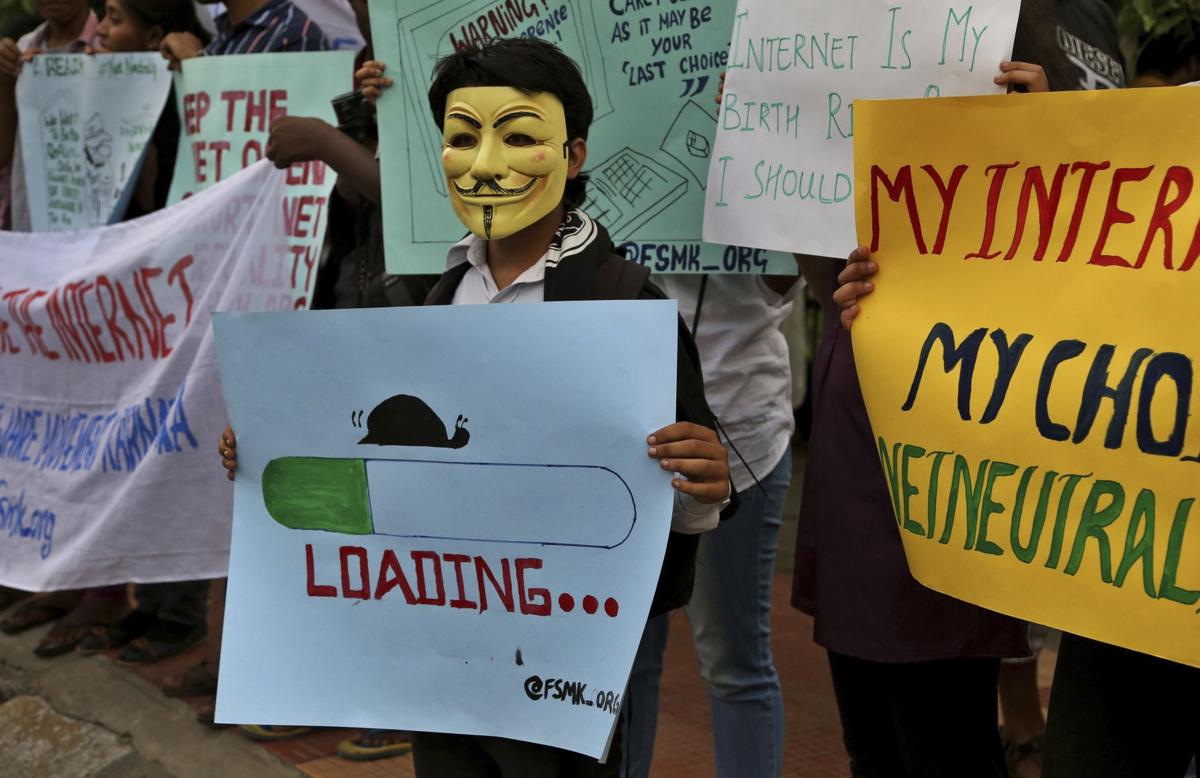
The basic conflict is a result of the history of the internet, and the telecommunications industry more generally, writes internet law scholar Allen Hammond at Santa Clara University:
"Like the telephone, broadcast and cable predecessors from which they evolved, the wire and mobile broadband networks that carry internet traffic travel over public property. The spectrum and land over which these broadband networks travel are known as rights of way. Congress allowed each network technology to be privately owned. However, the explicit arrangement has been that private owner access to the publicly owned spectrum and rights of way necessary to exploit the technology is exchanged for public access and speech rights."
The government is trying to balance competing interests in how the benefits of those network services. Should people have unfiltered access to any and all data services, or should some internet providers be allowed to charge a premium to let companies reach audiences more widely and more quickly?
People are also reading…
Read the full article from The Conversation.


 As water lifeline evaporates, Arizona faces a cultural change over water use

