

Each year, thousands of Arizona residents email or call Rosie Romero’s radio show with questions about everything from preventing fires in their chimneys to getting rid of tree roots invading their sewer system. His goal is to provide answers that suit the specific lifestyle wherever someone lives in Arizona.
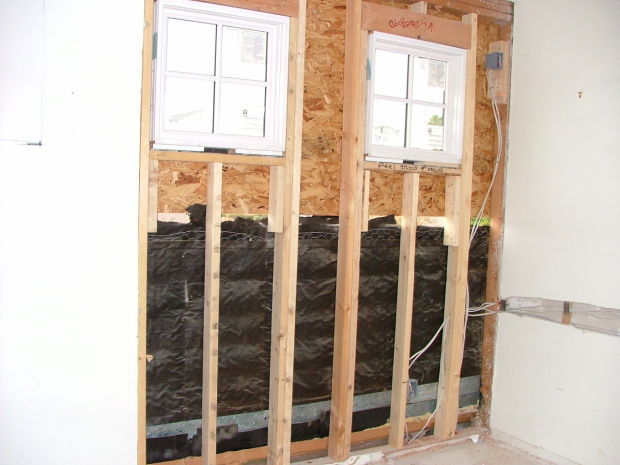
Q: We are planning to build a 2,366 square-foot home in a new home community located in Green Valley. Is it worth paying $3,000 to use two-by-sixes in outer wall construction instead of two-by-fours?
A: Yes, it is desirable to build the exterior wall using 2x6 studs. That extra dimension will hopefully allow for about a 30 percent increase in thickness for the batts of insulation that the builder installs in exterior walls as a result. While 2x4 construction is perfectly acceptable from a structural standpoint, those smaller studs will only allow for a 3.5-inch thickness in insulation. On the other hand, the 2x6s will accommodate a 5.5-inch thickness.
People are also reading…
That increase in insulation may or may not reward you with an equivalent decrease in your heating and cooling utility bills. However, it most definitely will save more money than if you used the thinner insulating material.
Of course, lots of factors enter into calculating energy savings, including the number, size and quality of your windows; the efficiency rating of your heating and cooling equipment; ductwork design and installation; the attic insulation (be sure to opt for a minimum of R38 there); the geographic orientation of your home; the number of recessed light fixtures (each one of them puts a big hole in your ceiling allowing conditioned air to escape into the attic); and the size, number and quality of exterior doors as well as their weather stripping.
Q: We have a smoke detector that is driving us crazy. It started chirping and we put in a new battery, but it kept on chirping. What’s going on?
A: You might try another replacement battery. Perhaps the one you used is old or defective. But it’s also possible that your smoke detector has worn out due to its age. Most detectors need to be replaced every 10 years.
Q: Last summer around the Fourth of July, I had some Bermuda sod laid in my front yard. Then, in winter, I over-seeded the lawn with rye grass. But unfortunately, the rye ended up dying out because I had a broken water line. So now that spring is coming, I want to get my Bermuda to come back. How and when do I do that?
A: First thing to do is fix that water line so you don’t have trouble again. Then as the weather warms up, it’s going to be pretty easy to tell if the Bermuda is coming back because it will start greening up a little bit. At that point, it’s time to start watering, and you’ll be able to get the grass going pretty quickly. Keep watering throughout the spring. Whenever it starts to get a little dry outside, you should water again. And of course, water regularly in the summer.
Q: I bought my wife five miniature roses in pots in January. Now, of course, the flowers are all gone, but can I transplant these minis into a pot to put outside on the patio? And how do I do it?
A: You need a pot that’s big enough for all those roses. The pot should have good drainage as well. Then fill it with good potting soil and put in the rose plants. With pots, I prefer to use time-release fertilizing granules to sprinkle around the plants. It’s easier than using water-soluble fertilizers. You only have to put in more granules every 30 days or so.
For more do-it-yourself tips, go to rosieonthehouse.com. An Arizona home building and remodeling industry expert for 25 years, Rosie Romero is the host of the syndicated Saturday morning Rosie on the House radio program, heard locally from 8-11 a.m. on KNST-AM (790) and -FM (97.1) in Tucson and KGVY-AM (1080) and -FM (100.7) in Green Valley. Call 888-767-4348.