

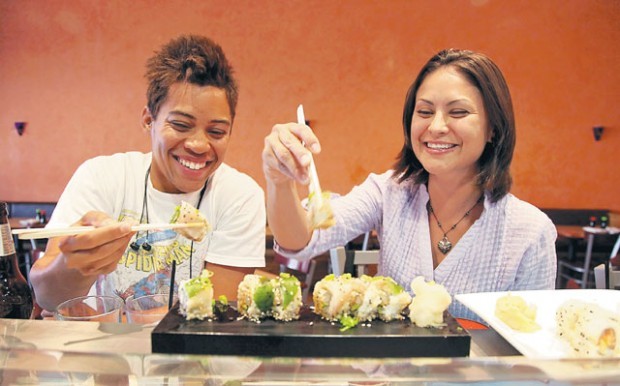
Restaurateur Kwang C. An looked near and far for sushi chefs for his new restaurant, Mr. An's Teppan Steak and Seafood Sushi Bar.
In April, he hired five - three from Tucson and two from Atlanta.
The Atlanta chefs responded to ads An placed in The Korea Times and in a Japanese restaurant trade magazine.
One of the three Tucson chefs came from the now-closed Benihana. Another worked for An years ago at his old restaurant, Sakura.
The third Tucsonan - An's new head sushi chef - is the former owner of Bunbuku Japanese Cuisine, which closed recently.
An says lots of sushi chefs are in Tucson, but it wasn't easy finding his five.
While many workers in Tucson are bracing for layoffs or budget cuts, sushi chefs in Tucson are in demand, thanks to a boom in sushi's popularity.
People are also reading…
Salaries for sushi chefs range from just over minimum wage to about $5,000 a month (not including tips).
There are several ways to learn the art of sushi.
Sue Melton, sushi chef at Sachiko Sushi on East Valencia Road, attended Tokyo Sushi Academy in Los Angeles.
But some sushi chefs, especially in Tucson, have enjoyed a less formal education.
Jun Osawa, the head sushi chef at Sushi Yukari on East River Road at Craycroft Road, learned to prepare sushi from a book while living in Colorado 25 years ago.
"I would look at a picture of a piece of fish and think of the different ways I could make it into something," he says.
Pablo Toscano, one of seven chefs at On a Roll on East Congress Street, had never made sushi before landing his current job. In fact, he'd only eaten it once or twice.
During his training, Toscano was assigned sushi homework.
"I read up on the anatomy of a fish and watched YouTube videos on how to make sushi," Toscano says. "I would then compare the sushi rolls being made in the videos, to the rolls we have here at On a Roll."
Linda Orsini, manager of Takamatsu on East Speedway for the last four years, says sushi chefs in Tucson have a range of experiences and abilities.
"There is a lot of trading chefs among restaurants that goes on," says the 29-year-old Orsini, explaining that owners talk to each other and a chef's reputation spreads quickly.
Takamatsu's owner Peter Koga, for example, frequently swaps info with his counterpart and friend at Sushi Garden, Orsini says.
Both establishments offer all-you-can-eat sushi, which means a high-volume operation where speed is key.
But experience, talent and quickness aren't the only qualities they look for when hiring a new chef, she says.
"What you look for is their friendliness," she says. "Because they work right in front of customers, we need people with some kind of personality, people who are comfortable interacting with customers."
Takamatsu's staff at the sushi bar is a combination of veterans (the head chef has 10 years' experience) and those who worked their way up, learning on the job. The sushi helpers, as they are called, start by learning how to make rice, she says.
Orsini, who is half Italian and half Japanese, said some customers cling to the idea that only a chef of Japanese heritage can be trusted to properly carve and present the tuna, yellowtail and salmon that make up the bulk of sushi orders.
"But I do feel like that is changing," Orsini said, explaining that patrons are coming around to the idea that people of all backgrounds can master the art of making sushi.
Sachiko Sushi's Melton knows of no other female sushi chefs in Tucson, and says she has enjoyed blazing a trail into what has been a man's world for centuries.
"I always wanted to learn how to become a sushi chef because a woman sushi chef is unique and special," she says.
That a woman's hands are too warm to handle raw fish or sushi rice is just one of the age-old beliefs that she's had to overcome.
Melton also relishes the physical and mental challenges of sushi-making, which demands standing for hours and heavy lifting along with speed and precision.
Local chefs agree: Regardless of training or background, the key to making great sushi lies within.
It takes creativity and imagination to turn a piece of fish into a culinary work of art.
Tiffany Kimmell is a University of Arizona student apprenticing at the Star. Contact her at starapprentice@azstarnet.com


