
Pat yourself on the back, Tucson. According to one professional landscaper, we’re more enlightened about how we care for our yards than people in the Phoenix metroplex.
But Tucson-native Eli Nielsen says there still are plenty of chances to educate folks on how to keep plants happy through less manicured yards.
“I cut my teeth in landscaping in Phoenix,” says Nielsen, owner of EcoSense Landscaping in northwest Tucson. “We created whatever geometric shapes we felt like that day on Texas rangers and cassia.”
After studying more about landscape design and plant care, “I realized all this stuff I was doing was completely wrong.”
When Nielsen was ready to start his company in 2006, he felt Tucson instead of the Phoenix area was a better fit for applying the sustainable landscape practices he adopted.
People are also reading…
“Ninety percent of these areas (in Phoenix) are still extremely manicured,” he observes. “These yards in Tucson are natural and beautiful and more sustainable. People are a little bit informed.”
Cut the pruning
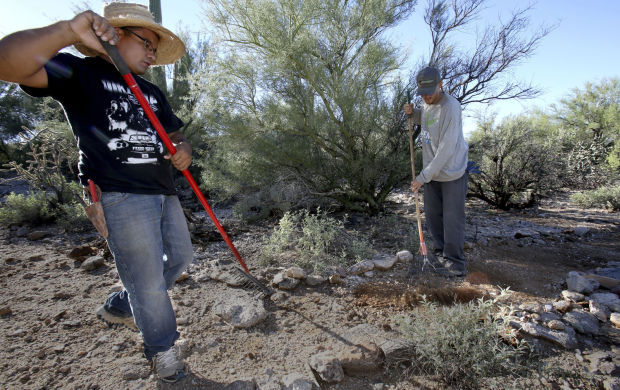
Nielsen and landscapers from 16 other Tucson companies and organizations have been trained in sustainable landscape management through a certification program offered by the Arizona Landscape Contractors’ Association (ALCA).
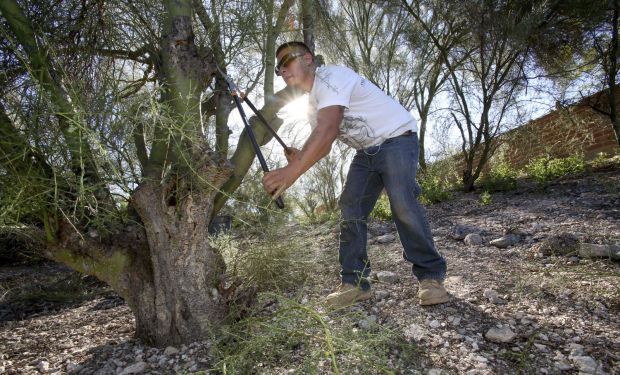
Showing proper pruning techniques on shrubs and trees is a major emphasis of the program.
“We’re trying to explain and educate people on why you shouldn’t prune every two weeks,” says Judy Gausman, chief executive officer of the group, which is headquartered in Scottsdale.
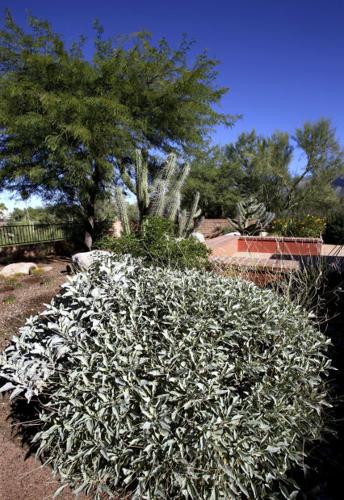
“What we’re trying to do is let the plants bloom into more natural shapes instead of balls.”
This kind of extreme pruning practice riles a lot of landscape professionals.
“I don’t like any lollipops,” declares Cesar D. Castro, owner of 5-year-old Castro Landscape Services in Catalina. He’s referring to the practice of pruning trees into the shape of the candy: single trunk with a rounded leafy top.
The trimming practice may work with some plants grown elsewhere, Castro, says. Native Sonoran Desert trees are a bit wilder.
“I try to explain to customers that plants grow beautifully here,” he adds.
“Pruning is a big issue to me,” adds Christine Hrutkay, Castro’s designer and nursery manager.
Shrubs, in particular, suffer when they’re overly pruned into shapes. The method shades the interior of a shrub so leaves cannot grow. The practice also blunts the plant’s ability to bloom.
“The energy of the plants goes into healing” and not growth, says Hrutkay. Eventually, these plants “die from the inside out.”
A misplaced plant also dooms it to constant pruning to make it fit it a space or keep it from damaging a hardscape, says Hrutkay. “(Owners) want to keep it going, but it’s a plant that will lose its life some day.”
Nielsen’s pet peeve is the practice of putting plants where they will outgrow the space. “People should consider what the mature size is going to be,” he says.
Landscape owners — both residents and commercial property owners — tend to put too many plants in a space in an effort to immediately make it look lush, he says.
When they start crowding each other, landscape owners start drastically pruning. With patience, Nielsen explains, they will see the space fill as plants mature.
By reducing pruning, plants will grow more naturally. That means less time is spent on maintenance, less money is spent on keeping a plant healthy and less waste needs to be disposed of, according to the manual used in ALCA’s certification program.
Other sustainable landscape practices, according to ALCA:
- Do not remove most plant debris that naturally falls on the ground. Instead, keeping this mulch adds nutrients to the soil and better retains water for the plant.
- Combat insects so that the population is reduced, but not eliminated. They are part of a healthy ecosystem.
- Plant specimens that do well in the environment. In Tucson, that means plants that use little water and which are heat- and cold-tolerant.
- Allow volunteers to grow instead of killing them as weeds. Although they weren’t originally planted in a space, this reseeding adds plants to the landscape that will grow well with little maintenance.
Educating the public
While the certification is open only to ALCA members, anyone with landscapes benefits from the program.
“We’re educating our guys so they can educate the customer,” says Hrutkay. “We’re becoming more assertive in that.”
Castro hopes that residents will see the benefits of healthier maintenance practices.
“Keeping their own gardens attractive and healthy is not just good for them, but for the whole community,” says Castro.
Nielsen already is seeing a change. People are installing xeriscapes and focusing on desert-adapted plants and low-density designs.
“Four or five years from now,” he says, “homeowners aren’t going to want to ball it all up.”



 Historic bank vault now new Tucson speakeasy