

The following article is from the Oct. 13, 1939 Arizona Daily Star.
New Tucson School Is Named For Pioneer Local Educator
Girl Who Braved Apache Raids to Bring Education to Arizona Remembered as School Board Selects Official Designation for Building
By AL WILKE
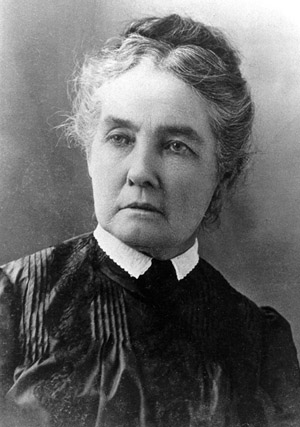
[photo moved to image asset]
Arizona Historical Society
Maria Wakefield
The “Maria Wakefield Junior High School” was the name formally selected for the new southside junior high school building completed during the past summer, the Tucson school board announced last night. The name was selected to pay tribute to a pioneer Tucson woman who has been called the “mother of Tucson schools” not only because she dared the danger of a wild Apache country to become one of its first teachers, but also because of her continued efforts on behalf of education during the remainder of her life here.
People are also reading…
Maria Wakefield was a New York girl who moved with her parents to Rochester, Minn., and became a teacher in a school there. While on a train trip in 1873, she met Surveyor General John Wasson of the territory, who before his departure on a trip to Washington, had been asked by Governor Safford of the territory to try to find some young woman teacher who would be willing to risk the dangers of the wild country to start a real public school in Tucson.
Miss Wakefield became interested and before the end of the journey informed Wasson that she would accept the offer.
Several times before, schools had been started in Tucson, usually with men teachers, but had not met with much success. In fact, some students of early history do not regard the Tucson public school system as actually starting until the arrival of Miss Wakefield and a girl companion from the east.
Soon after her return to Rochester, correspondence was exchanged between her and Governor Safford. In his letter finally asking her to come he wrote a message which read something like this; “You had better start as soon as you get this because the Apaches are now heading for the eastern part of the territory and you may be able to get here before they start back.”
So Miss Wakefield and a girl friend from Maine started their long journey going by water to San Francisco and thence to San Diego. The last part of the journey was a stage trip of five days and five nights of continuous riding with the only stops being for changes of horses. During these brief pauses, the two girls were entertained by the stage driver with stories of the depredation of the Apaches. The saguaro cacti were new things to them and behind each of the giant growths, the girls were certain that a bloodthirsty Apache must be lurking.
They arrived in Tucson November 3, 1873, to find a town where only three American woman lived. They were quartered in a four-room dwelling which served both as a school and as their living quarters. The school opened November 5, two days later, and only one of their pupils knew any English at all and that one knew only a few words. He was Ygnacio Bonillas, who afterwards became a leader in Mexican politics and once served as Mexico’s ambassador to the United States.
About a year after her arrival here Miss Wakefield married Edward Nye Fish, who owned a flour mill and had numerous other business interests in the territory.
While she gave up her teaching upon her marriage, she did not give up her interest in schools and she and Mrs. C. H. Lord led a campaign during which $3600 was raised from, three dances and public donations by business men to build Tucson’s first building erected solely for public school purposes. This building was complete in 1874.
This interest in education continued throughout her life. When the time limit of use of the $25000 first appropriated for the establishment of the University of Arizona approached with nothing being done, Mrs Fish personally contacted prominent citizens and convinced them of the need for action, so that within a short time work on the first university building was started.
Many of the early day residents were aided in their education by donations and assistance given by Mrs. Fish. She furnished clothes for children whose parents could not afford to provide them with school clothes. Many children unable to buy school books were helped by her.
Mrs. Fish also had a part in the starting of the first Protestant church in Tucson. There was no such church when she arrived here. She gathered together a number of Protestant friends for a song service which was continued for a few more weeks and eventually led to the building of the first Protestant church a
non-denominational organization, at a site where the city hall now stands.
Mrs. Fish did Sept. 22, 1909.
Many distinguished early day visitors were entertained by Mr. and Mrs. Fish, including Frances Willard, when she came here to organize the W.C.T.U., President and Mrs. Rutherford Hayes, the Wells and the Fargos of the Wells-Fargo company, and many military leaders drawn here by the presence of the army post.
Mr. Fish was always interested in her activities, encouraged her and was liberal in contributing funds for her endeavors. Their daughter, Mrs. Clara Fish Roberts who lives on North Tyndall avenue, also has been active in Tucson affairs.
Even before coming here Maria Wakefield had pupils who in later life were to achieve great fame. At Rochester, Minn., two of her pupils were Charles and Will Mayo, later to become the famous brothers of the Mayo hospital. The Mayo farm and the old Dr. Mayo and her father were close friends.


 Faculty concerned about changes to U of A admissions policy
