

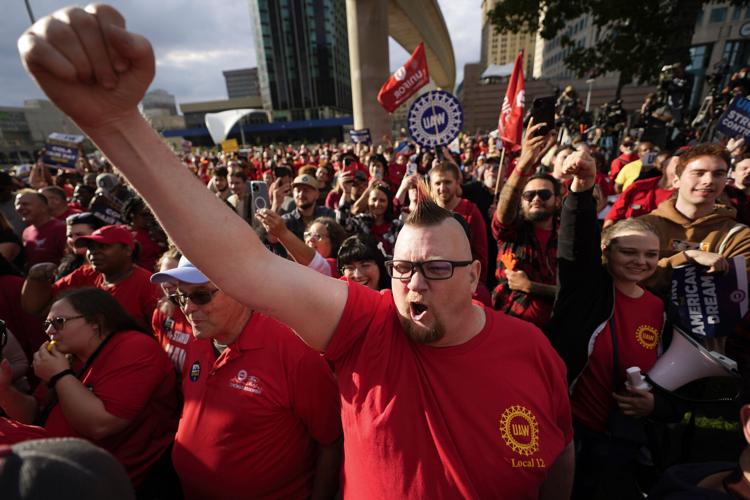
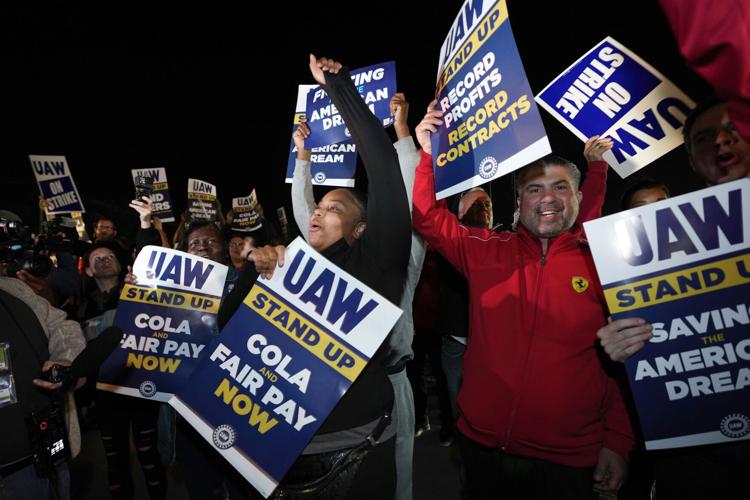
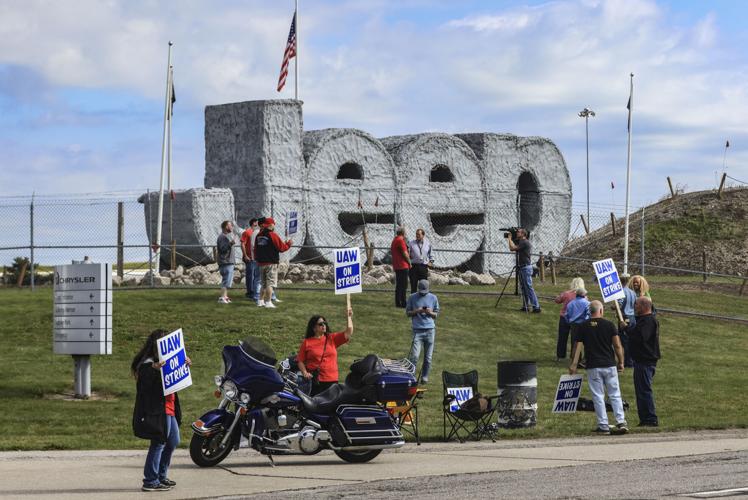
DETROIT — Nearly one in 10 of America’s unionized auto workers went on strike Friday to pressure Detroit’s three automakers into raising wages in an era of big profits and as the industry begins a costly transition from gas guzzlers to electric vehicles.
By striking simultaneously at General Motors, Ford and Chrysler owner Stellantis for the first time in its history, the United Auto Workers union is trying to inflict a new kind of pain on the companies and claw back some pay and benefits workers gave up in recent decades.
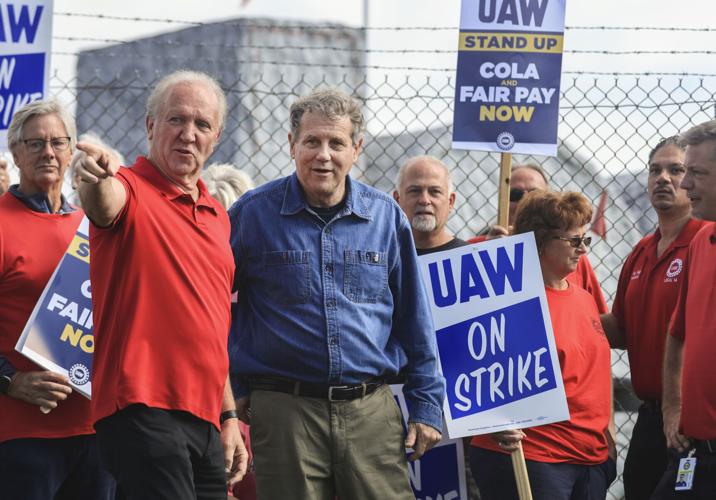
The strikes are limited for now to three assembly plants: a GM factory in Wentzville, Missouri, a Ford plant in Wayne, Michigan, near Detroit, and a Jeep plant run by Stellantis in Toledo, Ohio.
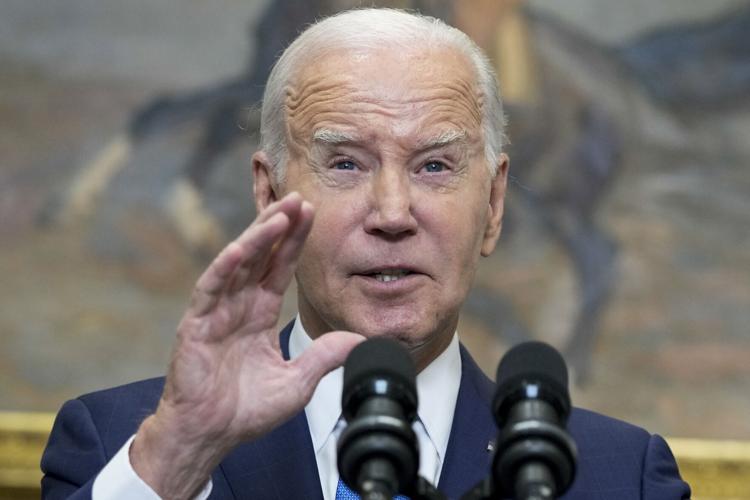
The workers received support from President Joe Biden, who dispatched aides to Detroit to help resolve the impasse and said the Big 3 automakers should share their “record profits.”
People are also reading…
Union President Shawn Fain said workers could strike at more plants if the companies don’t come up with better offers. The workers seek across-the-board wage increases of 36% over four years; the companies countered by offering increases ranging from 17.5% to 20%.
Workers out on the picket lines said they hoped the strikes won’t last long, but added they were committed to the cause and appreciated Fain’s tough tactics.
“We didn’t have a problem coming in during COVID, being essential workers and making them big profits,” said Chrism Hoisington, who has worked at the Toledo Jeep plant since 2001. “We’ve sacrificed a lot.”
Still, Hoisington said she hopes the strike ends quickly so she doesn’t have to tap her savings to buy a house. “Hopefully this doesn’t last long or else I’m going to have to spend my down payment on groceries,” she said.
Previously in its 88-year history, UAW negotiated with one automaker at a time, limiting the industrywide impact of any work stoppages. Each deal with an automaker was viewed as a template — but not a guarantee — for subsequent contract negotiations.
Now, roughly 13,000 of 146,000 workers at the three companies are on strike, making life complicated for automakers’ operations, while limiting the drain on the union’s $825 million strike fund.
If the contract negotiations drag on — and the strikes expand to more plants — the costs will grow for workers and the companies. Auto dealers could run short of vehicles, raising prices and pushing customers to buy from foreign automakers with nonunionized workers. It could also put fresh stress on an economy that has benefited from easing inflation.
The new negotiating tactic is the brainchild of Fain, the first leader in the union’s history to be elected directly by workers. In the past, outgoing leaders picked their replacements by choosing delegates to a convention.
That prior system gave birth to a culture of bribery and embezzlement that ended with a federal investigation and prison time for two former UAW presidents.
The combative Fain narrowly won his post last spring with a fiery campaign against that culture, which he called “company-unionism,” which he said sold out workers by allowing plant closures and failing to extract more money from automakers.
David Green, a former local union leader elected to a regional director post this year, said it’s time for a new way of bargaining. “The risks of not doing something different outweigh the risks of doing the same thing and expecting a different result,” he said.
During his more than two-decade career at General Motors, Green saw the company close an assembly plant in Lordstown, Ohio, that employed 3,000 workers. The union agreed to concessions to help the companies get through the Great Recession.
“We’ve done nothing but slide backward for the last 20 years,” Green said, calling Fain’s strategy “refreshing.”
The strikes will likely chart the future of the union and of America’s homegrown auto industry as companies face a historic transition from building internal combustion automobiles to making electric vehicles.
The limited-strike strategy could have ripple effects, GM CEO Mary Barra said Friday on CNBC.
Many factories are reliant on one another for parts, Barra said. “We’ve worked to have a very efficient manufacturing network, so yes, even one plant is going to start to have impact.”
Citing strike disruptions at its Wayne plant, Ford told about 600 non-striking workers at the plant not to report to work on Friday, Ford spokeswoman Jennifer Enoch said.
Fain called the union’s demands audacious but said the automakers are raking in billions and can afford them. He scoffs at company claims that costly settlements would force them to raise vehicle prices, saying labor accounts for only 4% to 5% of vehicle costs.
In addition to the wage increases, union negotiators also seek: restoration of cost-of-living pay raises; an end to varying tiers of wages for factory jobs; a 32-hour week with 40 hours of pay; the restoration of traditional defined-benefit pensions for new hires who now receive only 401(k)-style retirement plans; and pension increases for retirees, among other items.
Top-scale assembly plant workers make about $32 per hour, plus large annual profit-sharing checks. Ford said average annual pay including overtime and bonuses was $78,000 last year.
The Ford plant that’s on strike employs about 3,300 workers. The Toledo Jeep complex has about 5,800 workers, and GM’s Wentzville plant has about 3,600 workers.


 Faculty concerned about changes to U of A admissions policy
