

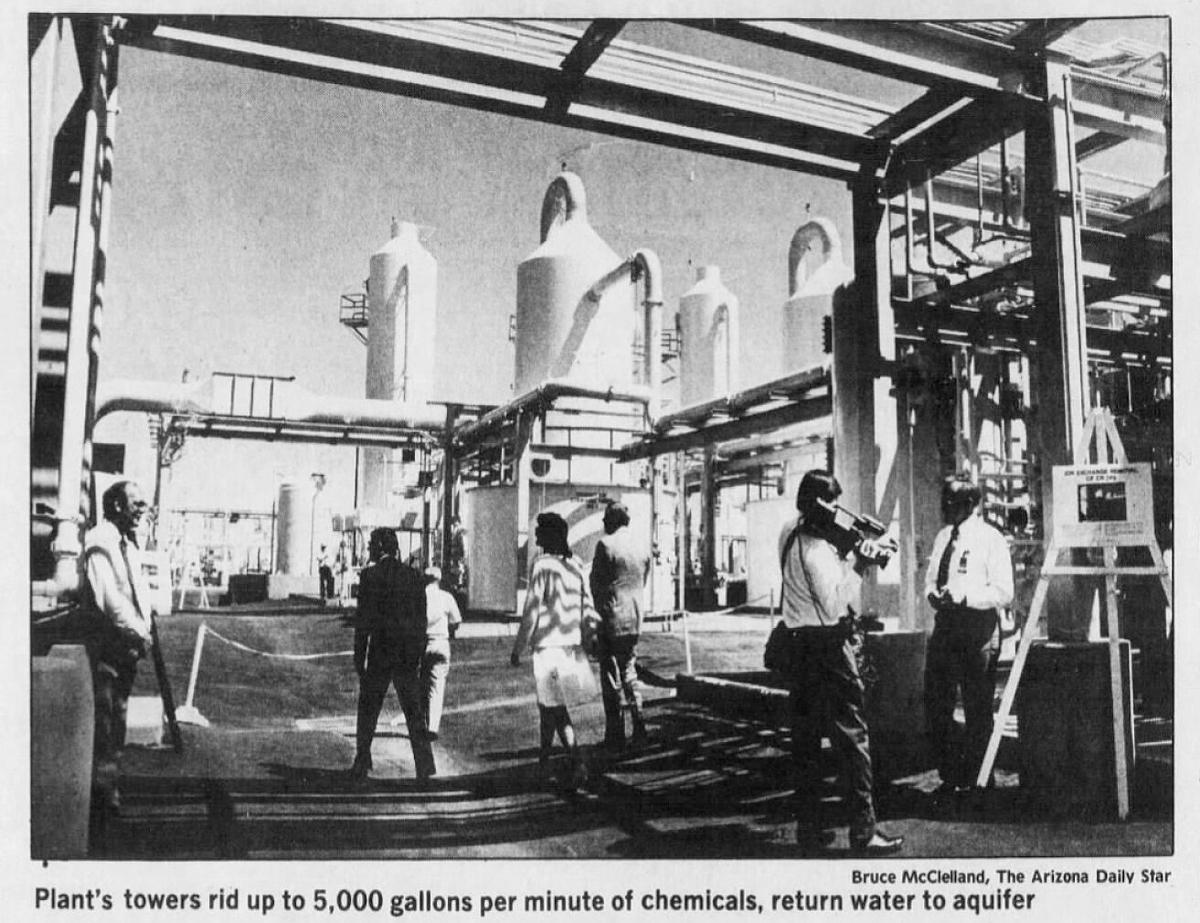
The Air Force and Hughes Aircraft Co. yesterday started a $28 million system to clean TCE, chromium and other chemicals from southside ground water.
The largest of all Defense Department water-cleaning systems, expected to operate for 10 to 30 years, was started formally at a brief ceremony.
It had operated successfully under test conditions for several days, said Hughes spokesman Michael Letson.
"We are doing all we can to improve the situation," said Gen. William E. Thurman, commander of the Air Force's Aeronautical Systems Division.
He said the pollution "was due to ignorance more than anything. We thought it (TCE) was clean and safe.
"Using TCE was standard practice in 1951 when this plant opened. We used it and disposed of it according to the book and thought we were good neighbors," Thurman said. "Then they rewrote the book."
People are also reading…
Trichloroethylene, a common industrial solvent from World War II until the mid-1970s, causes cancer in laboratory animals.
D. Kenneth Richardson, a Hughes vice president, said his company reclaims 90 percent of its water — 150 million gallons a year — and "is committed to doing the right thing in the future."
The new ground-water cleaning system was chosen from 18 options suggested by Air Force consultants and "will not disrupt other cleanup projects in the area," Thurman said.
Ground water in an area extending nearly two miles northwest from the Air Force-owned Hughes plant to Los Reales Road, in a finger-shaped plume up to a mile wide, will be cleaned by the system.
TCE pollution was discovered in 1981 and now reaches northwest two miles past Los Reales Road to near Michigan Street. It has forced closure of eight Tucson Water wells.
Hughes and the Air Force deny responsibly for the pollution north of Los Reales Road, which may have several sources.
The northern pollution cleanup is under Superfund study, and a consultant last month suggested using a system similar to the one the Air Force is using.
The Air Force system cleans up to 5,000 gallons of water a minute. The cleaned water will be put back into the polluted aquifer until all its water meets drinking quality standards.
The system uses three pairs of towers. The TCE and related chemicals leave the water and combine with air when exposed to air in the towers.
The tainted air is filtered through carbon to remove the chemicals.
Chromium is removed by ion-exchange units before the polluted water goes to the towers.
Officials said the towers remove 97 percent of the TCE and related chemicals.
They said the ion-exchange units are to keep chromium levels in the water lower than the drinking water minimum of 0.05 parts of the substance per million.
Water will be tested daily to be sure it meets drinking standards before it is put back into the aquifer, an official said.
