

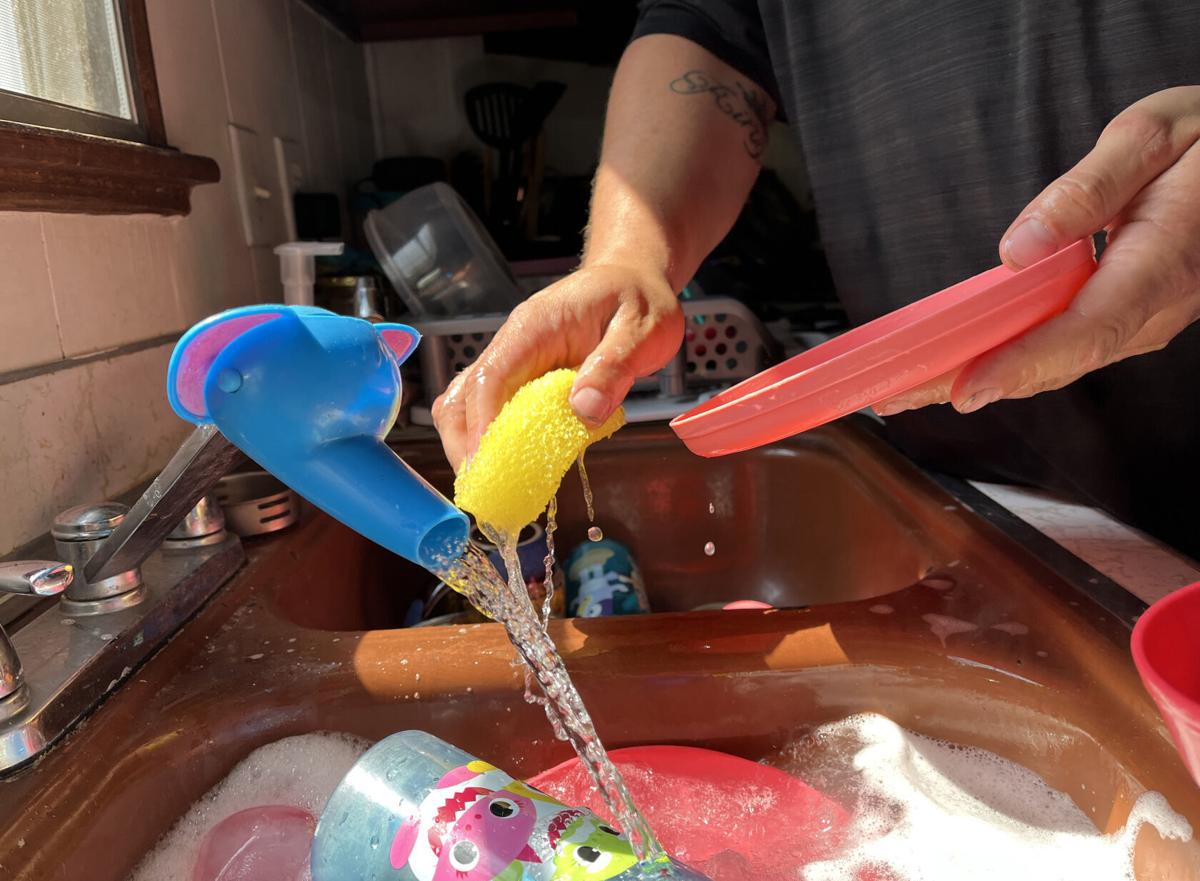
If you’re exposed to the toxic PFAS “forever chemicals” in your drinking water, you’re far from alone, as millions in New York rely on drinking water sources that contain unsafe levels of the chemicals.
The New York State Department of Health notes that “human exposure to PFAS is widespread and that nearly all people in the United States have some PFAS compounds in their blood” since the chemicals have been pervasive in the environment for decades through their use in furniture, clothing, cookware, pesticides and more.
“People are exposed to PFAS in water mainly through drinking and foods prepared with that water,” according to the state health department. “Household uses, such as cleaning, washing, and bathing, do not result in significant exposure.”
People are also reading…
But there are several steps you can take to reduce exposure to PFAS, which stands for per- and polyfluoroalkyl substances. The solutions range in cost from relatively cheap water filters to several hundred dollar water filtration systems.
The first thing to do is find out whether you’re potentially exposed to PFAS in your drinking water. Check out our database of 2021 drinking water system contaminant levels, compiled using state Department of Health Data, which measures contaminants in drinking water sources. This is the latest data posted by the New York Department of Health; the 2022 data is due to be posted this year.
The state health department recommends looking at your Annual Water Quality Report that you receive from your water supplier to double-check that data in case your water supplier has treated PFAS or taken steps to limit your exposure. Some annual Water Quality Reports have been posted online; others will have to be requested directly from your water supplier.
It’s important to note that while the U.S. Environmental Protection Agency says that reducing exposure to PFAS can protect your health, the presence of PFAS in your tap water doesn’t necessarily mean you should stop drinking it.
The state health department notes that even if your water exceeds the state’s maximum contaminant level, it “does not mean that water is unsafe for use while the public water system takes actions to reduce the levels.”
If you decide to proceed with drinking water PFAS treatment, here’s what to know:
— Activated carbon treatment and reverse-osmosis treatment are the most studied and effective PFAS removal options, according to the EPA.
— Boiling water does not remove PFAS, according to the EPA.
— The state of New York keeps a list of in-home water filtration options for household drinking water here. The state of Washington also keeps a list of PFAS point-of-use filter options, separated by price.
— When deciding about a product to purchase, look for certifications from third-party organizations such as the NSF or Water Quality Association, according to the state of New York.
— Brand names of certified products by those two organizations include: A.O. Smith, Amway/eSpring, Aquasana, Brondell Inc., Carbon Block Technology, Clearly Filtered In.c, Coway Co. Ltd., Culligan International, Franklin Water Treatment, Hydroviv LLC, Kinectico Inc., LG Electronics, Multipure, Samsung Electronics, Tupperware China, Watpure International and Zero Technologies LLC.
— Not all filters are created equally. A Duke University study found in 2020 that while any filter is better than nothing, “many household filters are only partially effective at removing toxic perfluoroalkyl substances.” Make sure the filter specifically notes it removes PFAS chemicals like PFOA and PFOS.
— Just because you install or deploy a water filtration system doesn’t mean you can let it go without upkeep. “Your water filtration unit must be maintained for it to continue to be effective,” according to the New York State health department.
— The EPA has answered many more questions about PFAS and drinking water here.
Hayleigh Colombo is a member of the Lee Enterprises Public Service Journalism Team.


