

It may not have been Grand Central Station, but Tucson’s El Paso & Southwestern passenger depot, was indeed grand by Tucson standards. After all, it was 1912 and Arizona had just become a state.
Although the railroad originally hauled ore, passenger traffic was becoming more important. When service was extended from Fairbank to Tucson, with hopes of going on to Phoenix, plans were begun to build passenger and freight stations here.
The passenger station, at 419 W. Congress St., was to cost $40,000 and the freight station $30,000. Five thousand dollars went for landscaping the surrounding area.
When it was completed, it was considered one of the most beautiful structures in Tucson.
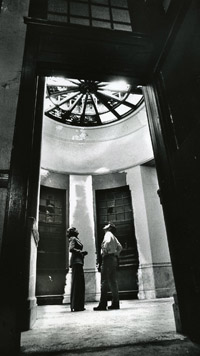
The main rooms in the passenger station opened to a huge rotunda 30 feet high and 20 feet in diameter. The rotunda was topped with a stained glass dome.
People are also reading…
[photo moved to image asset]
1978 file photo
Before the renovation, Mrs. Alan Norville, wife of the depot’s owner, and architect R. J. Jernigan look through a skylight that once was stained glass.
There were two waiting rooms, one for men and one for women, a baggage room, ticket-office, telegraph operator’s office and two outdoor waiting rooms. The building had running water, toilets and electric lights.
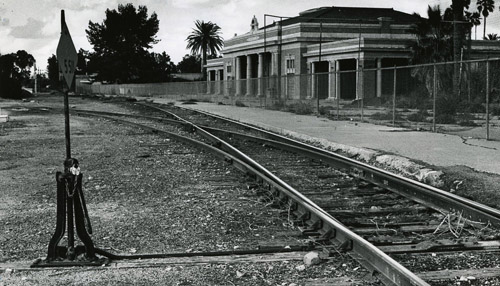
Red tile covered the roof. The porticos were each supported by four Tuscan columns. The nearby freight station was built in the same style.
[photo moved to image asset]
1978 file photo
The El Paso & Southwestern Railway Depot before it was renovated in 1978.
But within twelve years, the stations were boarded up. A merger with Southern Pacific moved rail service to the depot on Toole Ave.
The passenger depot sat empty for many years, but in 1978, it underwent extensive renovation by owner Alan Norville. Since then, restaurants including Carlos Murphy’s and Garcia’s, have occupied the space. It has also been used for office and storage space.


 Faculty concerned about changes to U of A admissions policy
