

NEPTUNE, Ohio — A growing number of farmers and entrepreneurs are converting dung into dollars.
Manure sales are up, as more grain and vegetable farmers turn to animal waste as an alternative to higher-priced commercial fertilizer, say state agriculture regulators. The market also has grown because of the emergence of large livestock farms, which generate an abundant supply of manure.
"Back in the late '80s, I was told you'd never sell manure," said Kevin Elder of the Ohio Department of Agriculture. "Today, there are a large number of farms that broker it, that sell it to grain farmers."
In 2003, only one person in Ohio was licensed to buy and sell large amounts of manure. Today, there are 30 — with 48 more in the process of getting permits.
In neighboring Illinois, 12 companies have sought permits to haul manure since certification began in 2002.
People are also reading…
In Iowa, with its many livestock operations, manure-hauling businesses flourish. The number of certified commercial haulers there increased from 1,385 in 2005 to 1,447 last year.
Ben Puck, who has operated a hauling business in Iowa for 28 years, said sales for his services have increased as much as 15 percent in the past year, primarily because of large livestock farms.
The skyrocketing price of commercial fertilizer is making manure more attractive. The price of nitrogen fertilizer, for example, has more than doubled in the past four years, in part because of the rising cost of natural gas needed to make it.
Manure generally costs about $50 less an acre than commercial fertilizer, said Gene Tinker, animal-feeding-operations coordinator for the Iowa Department of Natural Resources. Actual savings would depend on the type of commercial fertilizer a farmer had been using.
Stricter environmental regulations have nudged some livestock farmers into the manure market. Runoff from large livestock operations can harm water quality and aquatic life in the vicinity.
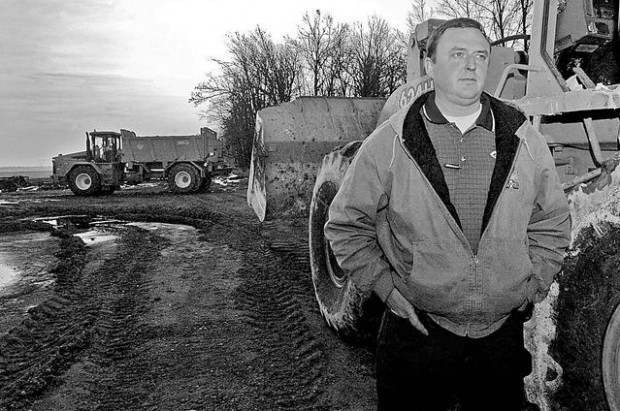
"It came almost out of necessity," said Matt VanTilburg, who has combined a manure business with raising corn and soybeans on the family farm near Neptune, a village about 60 miles north of Dayton.
He said manure sales have steadily increased since he started the business five years ago, reaching $750,000 last year.
Bill Siefring used to give away manure from his farm in western Ohio — 7,000 tons a year from 750,000 chickens. But there was so much demand he began to auction it off, with the going price increasing from $1.68 a ton in 1996 to $6.50 a ton in 2002.
Today, he contracts with a handful of farmers who take all the manure the chickens generate.
Charles Wortmann, a soil scientist at the University of Nebraska-Lincoln's Institute of Agriculture and Natural Resources, said poultry manure has become especially popular because of its high nutrients.
Spreading manure has its drawbacks. Manure is usually heavier than commercial fertilizer and more expensive to transport. It can attract insects and contain seeds that sprout weeds. And, of course, there is the odor.