

PHOENIX — Even though seven lotteries were taking place inside, the auditorium at a state office building in Phoenix was eerily quiet.
The only excitement occurred when Mitchell Fox and Samantha Barker won one of the lotteries, giving them a chance to buy a liquor-store license for use at a tobacco-and-liquor store they plan to open in Pinal County. They clapped and let out a muted cheer, then left the building.
"It's huge," Fox said of winning the lottery. "It makes the store complete."
Four years after the state resumed lotteries as a way of putting new liquor licenses on the market, it was clear May 15 the initial excitement has worn off. This year, the state held just seven lotteries out of 45 possible. That's because in the other 38 categories, there were no more entrants than licenses available and thus no need for a lottery.
People are also reading…
Total entrants in the lottery system diminished to 80 this year from 194 in 2006, the first year of Arizona's current liquor-license lottery. Next year is scheduled to be the lottery's last, but officials would like to extend it.
"I think the economy this year has a lot to do with it," said Kim Kwiatkowski, who oversees licensing for Circle K in Arizona.
Circle K offers an example of the diminishing enthusiasm for buying new-on-the-market licenses through the lottery. Kwiatkowski put just 10 entries into the lottery this year — the lowest number of entries he has made for the convenience store chain since beginning with 29 entries in 2006.
Still, the lottery remains an important source of liquor licenses, because in some counties it's hard to find owners willing to sell their liquor licenses.
"You can go out and purchase on the open market, but there's not that many out there," Kwiatkowski said. "And the people who have them want a lot of money for them."
The lottery has been an important source of licenses to a variety of Southern Arizona businesses, groups and individuals — a movie theater, a performing-arts center, an aspiring restaurateur and others.
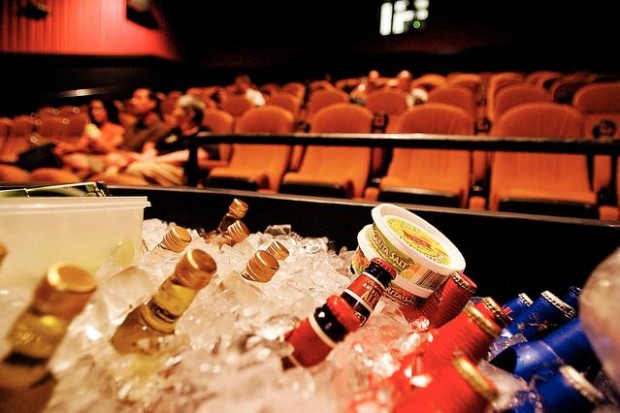
Tucsonan Scott Cassell won a beer-and-wine bar license at last year's lottery and has been serving alcohol during special age-21-and-over screenings at his Oasis Cinema in Nogales.
"It's done exactly what we hoped it would do in bringing in a more mature demographic for individual showings," Cassell said. "It seems like the people who come in for those showings spend more." How it works
Arizona's liquor-license lotteries are different from other lotteries in that the winners don't get something for free; they just win the right to buy something at what the state has determined is fair market value.
The Legislature approved putting new liquor licenses on the market through lotteries for five years starting in 2006. The last time new licenses had been issued in the three categories offered in the lottery was in the late 1980s.
The lotteries offer a set number of licenses per county in the three categories that are limited by state law: Series 6 (bar licenses), Series 7 (beer-and-wine bar licenses) and Series 9 (liquor-store licenses). In Pima County, five licenses were available in each category.
Licenses in those categories are also available for sale, but some entrants said they tried the lottery because they're hard to find for sale. Jim Mack said he spoke to brokers about getting a beer-and-wine license for the new Community Performing Arts Center in Green Valley.
"They said Series 7s (beer-and-wine bar licenses) are very hard to come by. They aren't very common, and you'd be better off going to the lottery and throwing your name in there," said Mack, executive director of the center's foundation.
Mack ended up winning in the lottery, and now he must pay the state the appraised market value of the license: $8,733.
To price licenses, the state has appraisers look into the cost of each of three types on the open market in all of the state's 15 counties. This year, the appraised value of the licenses available ranged from $5,333 for a Series 7 license in Santa Cruz County to $231,267 for a Series 9 license in Maricopa County.
The diminishing demand for liquor licenses may mean those prices are exaggerated in some areas. The prices appear to have dropped in the months between when the appraisals were carried out and when the lottery was held, said Jerry Oliver, director of the Arizona Department of Liquor License and Control.
"Since the time we did the appraisal, the price has gone down another $10,000 (or) $15,000," Oliver said, referring to prices in Maricopa County. It can be a moneymaker
For some recipients, winning a license in the lottery can be the key to opening a business — or at least optimizing it.
Barker and Fox said winning the right to buy a license means they will get to open a new Fox Tobacco & Liquor in Pinal County near Apache Junction.
In an area growing as fast as Pinal County, liquor-store licenses were not available on the open market, and little guys like Barker and Fox would be competing against big chains such as Circle K and Wal-Mart.
Mack expects that having a license to sell beer and wine at the Green Valley arts center will make a big difference.
"With any performing-arts center or any performance facility, having the ability to offer a glass of wine at intermission, or a beer, it's an excellent source of revenue," he said. It also opens up the possibility of selling drinks at fundraisers and renting out the facility, he said.
Tucsonan Carlos M. Roldan applied for a Series 7 and for a Series 6 license. He won both, taking the Series 7 (beer and wine bar) license in a lottery and winning the Series 6 (full bar) license by default, because there were fewer entrants than licenses available.
Roldan said he had tried to buy a couple of local restaurants but failed. Then he entered into a business plan for opening a restaurant but needed a license for that and hoped for a full-bar license.
Still, winning the lottery doesn't guarantee a successful business. In fact, there's no guarantee the business will even get off the ground, especially considering that local authorities still may weigh in on the new license-holders' plans.
Rhonda Jacobsen won the right to buy a Series 6 license for Santa Cruz County last year. The license cost Jacobsen about $32,000, but so far she's been unable to use it.
She wanted to host tequila tastings at Cowgirl Ugly — the name of her Tubac boutique — but the location doesn't have proper zoning, and she hasn't found a location that will work.
"I really didn't think I was going to win the thing, to tell you the truth," she said.
But Cassell, of the Oasis Cinema, said he found the Nogales City Council cooperative despite the novelty of selling alcohol at a movie theater. Some forced to sell
With the economy down, other licenses are coming on the market, brokers said. The problem is, many people offering them have had financial problems that are attached to the licenses, said Richard Kane, a Tucson business and liquor-license broker.
For example, the owner of the license may have stopped paying sales taxes in an effort to stay afloat, and the state government may have put a lien on the license, Kane said.
Those problems make the new licenses offered through the lottery more attractive because they are clean, with no historical problems attached.
Kane supports the lotteries, in part because they bring new licenses on the market. Also, there haven't been so many put on the market that it has driven prices down.
"Despite adding supply, price is increasing," Kane said.
The liquor-license department hopes to continue the lottery system beyond its current end date, which is next year, spokeswoman Lee Hill said. The department plans to ask the Legislature to extend the lotteries for another five years.
Hill noted that even with the sour economy, the department has made money for the state's general fund by selling licenses through the lottery — almost $5 million per year up until this year. And if the lottery is extended, it would give the department the flexibility to continue offering new licenses.
"We want to have the opportunity to do so without year-by-year or after-the-fact responding to the population growth," Hill said.
Price table
The state Department of Liquor License and Control has appraisers determine the value of each kind of license available in the lotteries. Lottery winners have to pay this much in order to get the license. In the chart below, the number of licenses available to be issued in each series is shown in parentheses after each county.
County Series 6 fmv* Series 7 fmv Series 9 fmv
Apache (1) $28,233 $6,333 $54,933
Cochise (3) $36,833 $6,300 $71,767
Coconino (3) $79,167 $9,833 $57,700
Gila (1) $30,233 $5,933 $51,800
Graham (1) $26,433 $5,400 $50,467
Greenlee (1) $25,567 $7,367 $33,200
La Paz (1) $24,000 $5,267 $31,667
Maricopa (10) $114,433 $13,267 $231,267
Mohave (3) $97,967 $14,567 $182,967
Navajo (3) $32,233 $5,400 $53,367
Pima (5) $42,967 $8,733 $52,067
Pinal (3) $43,900 $6,900 $77,467
Santa Cruz (1) $30,967 $5,333 $62,067
Yavapai (3) $67,467 $11,067 $163,533
Yuma (3) $60,867 $7,767 $93,167
* fair market value