

Intellectual property is the gift that keeps giving — for some. Current copyright laws, especially in the United States, tend to favor the incumbents, which is why Disney still owns Mickey Mouse and his posse.
It wasn't always like this. Copyrights, trademarks, patents and other legal mechanisms associated with the ownership of ideas (and not things) once had finite terms. Their purpose was to allow creators or owners (not always the same entity) to materially benefit from the work, not to provide perpetual income.
But technology has always been at least one step ahead of the law. And the "rip, mix and burn" of today can easily be applied to fairy tales, songs, plays and most every other aspect of high and low culture throughout human history.
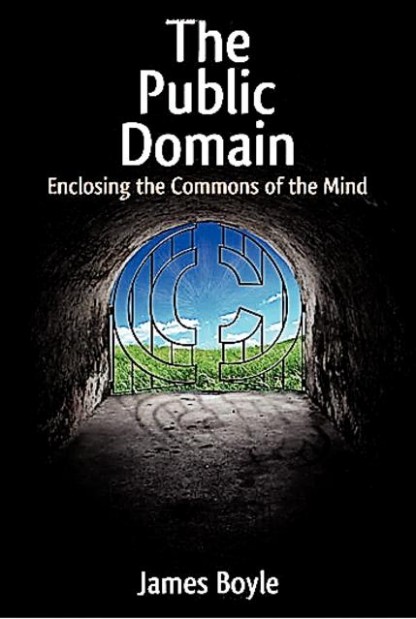
A new book looks at the uneasy relationship between culture, copyright law and creativity: "Public Domain: Enclosing the Commons of the Mind" by James Boyle; Yale University Press, 336 pages ($28.50).
People are also reading…
Boyle is a Duke University law professor. One of the big challenges he faced in doing this book was resisting the unnatural tendency to write about this subject in formal, academic terms. He admits his colleagues often devalue work if it eschews this dry style. He had concerns in doing so but decided that the message and substance required a more colloquial presentation.
Fortunately, the author is a fine writer, gifted teacher and great explainer, so readers can actually enjoy this thoughtful and important discussion.
What Boyle seeks to accomplish here is ambitious: He wants to present the history of intellectual copy protection and elicit outrage from readers that will result in a movement akin to environmental activism.
That's a pretty tall order, but as he writes: "Since copyright lasts for 70 years after the death of the author (or 95 years if it was a corporate 'work for hire'), that could be a very, very long time indeed. Long enough, in fact, to keep off limits almost the whole history of moving pictures and the entire history of recorded music. Long enough to lock up almost all of 20th century culture."
He maintains that rather than protect creators, current laws hamper creation. He offers example of works that were in some ways derived from earlier ones, but the result was something that we'd unquestionably consider "new." That's just for starters. Boyle also gets into the notion of Creative Commons, a sort of secular copyright that's legally recognized, too.
The book is available at www.thepublicdomain.org online.
About the book
"Public Domain: Enclosing the Commons of the Mind" by James Boyle; Yale University Press, 336 pages ($28.50).