

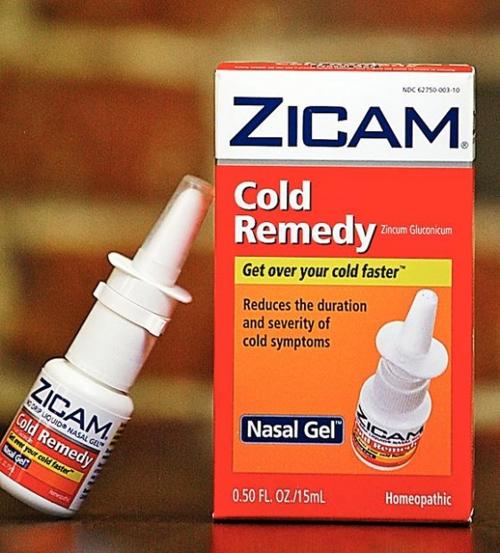
PHOENIX — A federal appeals court reinstated a shareholder lawsuit against Scottsdale-based Matrixx Initiatives over what company officials knew about potential dangers from its popular Zicam cold remedy.
In a unanimous ruling Wednesday, a three-judge panel of the 9th U.S. Circuit Court of Appeals said District Judge Mary Murguia was wrong to throw out the lawsuit, filed in 2004. In that case and a companion one, shareholders charged that the company hid certain information from them about questions raised about Zicam's safety.
Murguia had concluded the shareholders did not provide real evidence that Matrixx officers acted to deliberately deny information to shareholders.
But appellate Judge A. Wallace Tashima said inferences that Matrixx intentionally or deliberately withheld information about the link between Zicam and anosmia — the inability to perceive smells — "is at least as compelling as any plausible nonculpable explanation."
People are also reading…
Tashima said questions of whether Matrixx withheld material evidence should be decided by a jury.
The ruling is the latest setback for Matrixx, which just four months ago withdrew two forms of Zicam — its nasal gel and nasal swabs — from the market following warnings from the U.S. Food and Drug Administration about the link of the product to anosmia. And the company announced in January it was paying out $12 million to settle 340 lawsuits brought by customers who purchased the over-the-counter medication.
Despite that, company officials have continued to insist there is "no reliable scientific evidence" that the product is linked to anosmia, saying that any loss of smell is caused by a cold virus, which Zicam is designed to treat.
Calls to a company spokesman seeking comment about the appellate court ruling were not immediately returned.
The lawsuit involves people who bought shares of Matrixx in 2003 and 2004. At the time Zicam Cold Remedy amounted to about 70 percent of the company's total sales. The active ingredient in the product is zinc gluconate.
According to the claim, company officials were aware that numerous users of the product had developed anosmia but they failed to disclose the risk, and issued misleading statements.
Much of the case surrounds research done at the University of Colorado of 10 patients who had developed anosmia following Zicam use. The researchers were planning to present their findings at a presentation on Sept. 20, 2003 to the American Rhinologic Society.
Matrixx, however, informed one of the researchers that he did not have permission to use the Zicam name and the report was presented absent the brand identification.
It was not until Feb. 6, 2004, that the findings, and the specific mention of Zicam, were disclosed to the general public on the television show Good Morning America.
