

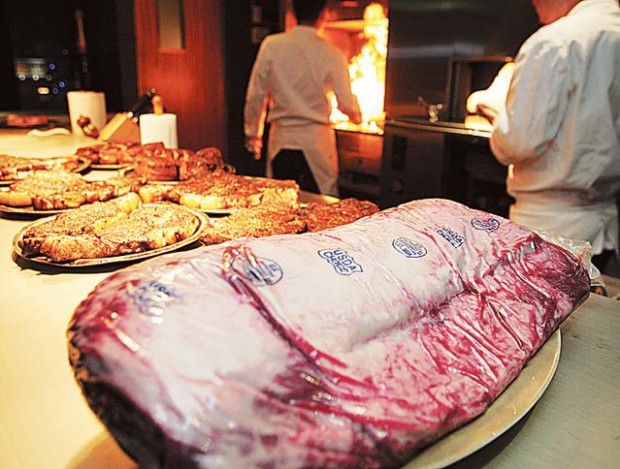
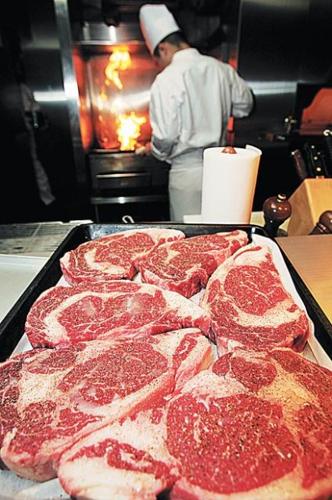
TOKYO — Released from a two-year ban based on fear of "mad cow" disease, American beef headed back to Japanese grills on Monday. The imported meat was to appear at a popular barbecue chain and a private banquet put on by U.S. producers.
The planned feasts followed a barrage of limited shipments over the weekend triggered by the Japanese government's long-awaited decision last week to ease the embargo on U.S. beef imposed in December 2003.
The fete on Monday heralded the return of American beef to what once was its most lucrative overseas market. U.S. producers sold some $1.4 billion worth of beef to Japan in 2003, and supporters were eager to woo Japanese palates once again.
"We want to show them that our Nebraska beef processing firms . . . are able to meet their import regulations," said Greg Ibach, director of the Nebraska Department of Agriculture, which was hosting a banquet later Monday at a Tokyo restaurant.
People are also reading…
Ibach and his delegation got a small shipment of ribeye and tenderloin through Customs over the weekend for private use at the banquet — for a select group of importers and companies with links to Nebraska — and at the U.S. Embassy in Tokyo.
The wider Japanese public was to get its first mouthful at the Zenshoku Korean barbecue chain. American beef was to debut in 30 restaurants in the area in western Japan on Monday, then return to 26 outlets in Tokyo and other parts of eastern Japan today.
"The public might not easily accept American beef, but we respect the opinions of a minority, and we welcome those who choose U.S. beef," said Hiroyuki Toriyama, spokesman for the chain, which includes restaurants called "Yakiniku-den" and other names.
"The past image of American beef as tasty meat is deeply rooted," he said.
It was expected to be weeks or even months, however, before Japanese shoppers at supermarkets or diners at popular and cheap beef-and-rice bowl outlets savor their first tastes.
Yoshinoya, a favorite beef bowl chain, is concerned that remaining restrictions on U.S. imports will limit the meat's availability.
Monday's American beef debut caps a long voyage back to the Japanese market.
Japan shut its ports to U.S. beef on Dec. 24, 2003, after the discovery of the first case of mad cow disease — formally known as bovine spongiform encephalopathy, or BSE — in the U.S. herd.
At first, Tokyo demanded that Washington test each head of cattle as it goes to slaughter as Japan had done since 2001 to contain its own mad cow spread, but U.S. producers balked, saying that was unnecessary and too costly.
After many months of negotiation, the two sides agreed to allow the importation of meat from cows 20 months old or younger. No cow that young has ever been proven to have mad cow disease.
Still, the final opening of the market had to wait for Japan's Food Safety Commission to compile and approve a report that concluded U.S. beef was almost as safe as Japanese beef if proper safety steps were taken.
U.S. beef still faces an uphill struggle in Japan, where consumers are particularly sensitive to safety concerns and will often shell out more money — for more expensive homegrown beef, for instance — rather than run a risk.
A recent poll shows a strong majority of Japanese still harbor fears about American beef. And some restaurants were reluctant to market American beef until they were certain the public would be receptive.