

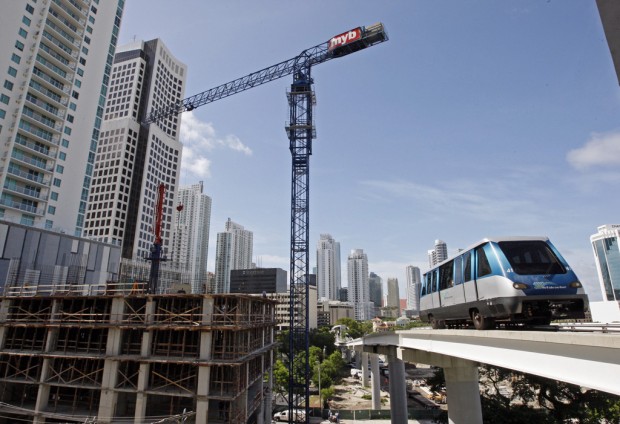
MIAMI - The new wave of condos on the drawing boards for Miami are as varied as tiny studios downtown and palatial 7,000-square-foot penthouses at Grand Bay. But most of them share a common financing strategy.
It's called OPM - other people's money.
After Florida's worst real-estate collapse, banks are mostly still balking at lending for condominium construction, though much of the glut from the last debacle has been absorbed sooner than predicted.
So developers - eager to strike quickly in the face of fresh demand - are persuading cash-rich buyers, mostly foreigners, to plunk down big deposits on pre-construction deals for cutting-edge towers that are touted as nothing less than transformational for Miami.
New projects boast come-ons such as automated parking; rooftop pools with private cabanas; and maid, butler and chef services in smart, green buildings, designed to make the existing new towers look so last week.
People are also reading…
Under the new model, condo buyers are agreeing to put up as much as 80 percent in a series of down payments during construction. Ten percent of each deposit is kept safe in an account the developer doesn't touch, as required by state law. The rest is available for construction.
That shift of risk to the buyer is a stark change from the past, when buyers typically put up 20 percent for pre-construction projects in Miami, with 10 percent set aside in escrow and 10 percent at risk for construction. The balance was due at closing when they got the keys.
Now, it is the buyers, not the banks, who are in danger of big losses if a project goes south. And when it comes to recovering their lost money, buyers are behind most other creditors.
Still, there are a fair number of takers for the new cash-heavy deals, which are similar to the financing model in South America.
At least nine projects are already in the works in Miami using the new financing model.
Developers say the new approach weeds out speculators, who upended projects in the last boom. When prices cratered, droves of buyers walked away from 20 percent deposits and refused to close on new units, leaving developers unable to pay their banks.
"The supply of buyers is less, but they're more real. They're not relying on debt," said David Martin, president at Terra Group, which plans high-end condo buildings.
The key, experts say, is to choose a developer with a solid record. Even so, sales contracts typically limit developers' liability should things go wrong.