

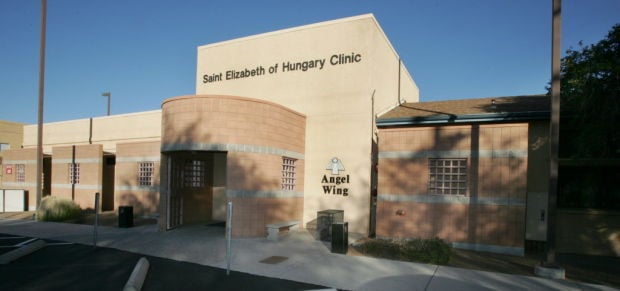
St. Elizabeth Health Center is no longer a part of Catholic Community Services, and will now collaborate with the El Rio Community Health Center.
Officials with St. Elizabeth's, which serves a mostly indigent population of about 20,000 to 24,000 patients per year, say the nonprofit clinic has been on the brink of closing and that pairing with the much larger El Rio will allow it to retain its critical function in the community.
St. Elizabeth's will maintain its Catholic mission. The partnership is neither a merger nor an acquisition, officials emphasize. But the collaboration will allow the clinic to draw federal dollars through El Rio. That financial assistance will be crucial to keeping St. Elizabeth's open.
El Rio Community Health Center, with a budget of more than $100 million, is the largest provider of medical and dental services to uninsured and Medicaid populations in Pima County.
People are also reading…
The nonprofit Marana Health Center, which also serves a large number of low-income patients, will also be helping St. Elizabeth’s. Along with El Rio, Marana Health Center will share its expertise in such areas as billing, accounting and IT.
Jane Bakos will remain in her role leading St. Elizabeth's. Her new title is chief executive officer.
Bakos says the organization has been experiencing serious losses since 2010 due to cuts in direct state funding and increased community need.
During that time, despite numerous efforts to reduce costs and increase revenue, losses at St. Elizabeth's exceeded $1.5 million. In an organization with an annual budget of about $5 million, continuing to operate with that size of deficit became unsustainable for both St. Elizabeth’s and for Catholic Community Services, she said.
The health center had not only become a drain on Catholic Community Services, but it needed to be an independent entity in order to get much-needed federal dollars, Bakos said.
“Although it’s sad to part ways after a wonderful partnership of more than 50 years, it’s the right thing to do,” said Peg Harmon, who is the chief executive officer of Catholic Community Services.
“We are tremendously grateful to El Rio Community Health Center for working with us to find a way to help St. Elizabeth’s continue its important mission.”
El Rio, which serves 81,000 to 82,000 patients per year, says the relationship with St. Elizabeth’s is an unprecedented one.
“They are not becoming part of El Rio,” said Brenda Goldsmith, executive director of the El Rio Foundation. “This was the result of a year of dialogue between two boards and the diocese.
“Most of their patients are uninsured … They are an important part of the safety net.”
Goldsmith and Bakos say the only effect on patients will be positive.
“We think it will provide better integrated care,” Goldsmith said. “They have specialists we don’t have. The benefits are mutual.”
Bakos said that despite health reform, need has continued to grow. The number of Arizonans enrolled in Medicaid, a government insurance program for low-income people, is at an all-time high. In Arizona the program is called AHCCCS, or the Arizona Health Care Cost Containment System.
“Many of our AHCCCS patients were previously uninsured. They still need a place to go,” Bakos said.
St. Elizabeth’s will be governed by its newly formed board of directors, led by Dr. José Santiago.
Bakos stressed the collaboration does not diminish the clinic’s ongoing need for donations and volunteers.
