

In addition to that fragrant fertilizer they leave behind, horses leave a trail of money.
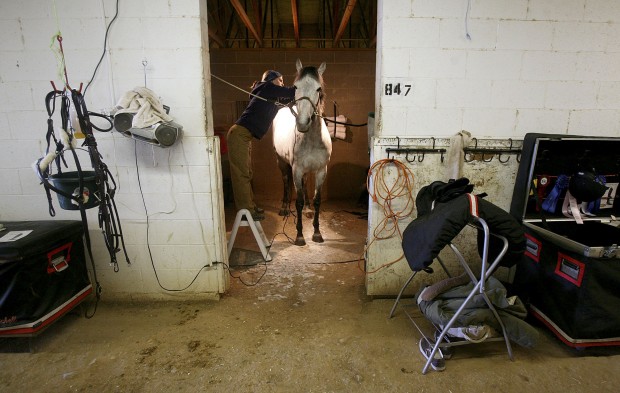
Every winter during the buzz and fuss over the Tucson gem shows, Match Play golf, the Tucson Rodeo and baseball spring training, there's a temporary town of horses - and the people who love and tend to them - that slips in and out of the Pima County Fairgrounds and leaves behind an estimated $15 million.
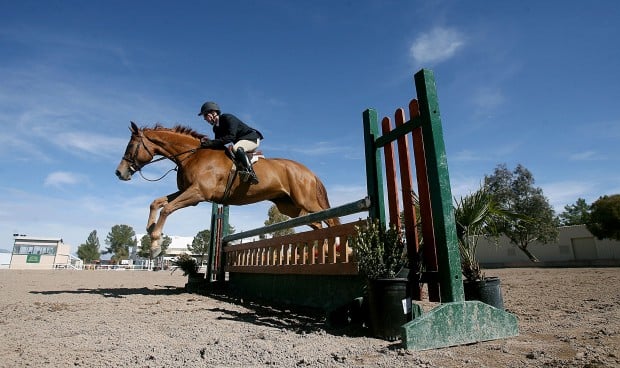
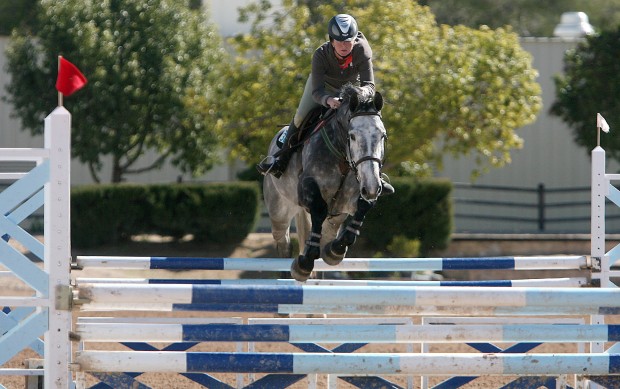
The series of six five-day hunter/jumper events - think derby hats, English saddles and beautiful horses jumping over fences - is known collectively as the Arizona Winter Circuit. There's a different event each week, starting on Wednesday and concluding with a $25,000-Grand Prix event each Sunday.
The total purse for the six-week event is $300,000, according to HITS (Horse Shows in the Sun), the Saugerties, N.Y.-based company that has produced the Tucson show since 1991. HITS also runs winter shows in Ocala, Fla., and Thermal, Calif.
People are also reading…
Though the shows haven't been immune from the recession, there are roughly 400 horses entered in this year's Tucson series, and there are about four humans here for each horse, show manager Joe Dotoli said.
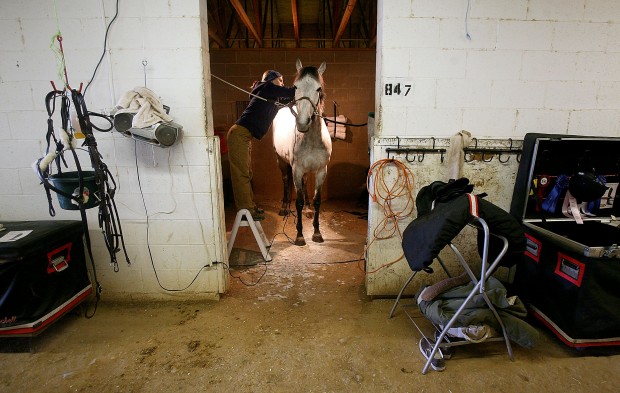
"It's a little community that we set up," Dotoli said. "Four hundred horses and four persons per horse: riders, trainers, grandparents, grooms, stable hands, vets, administrative staff. Some people come in from elsewhere, but we also hire local EMTs, jump-crew guys for the setup, in-gate personnel, a horse masseuse, two farriers, one local vet, truck and van drivers."
"It's twelve hundred people. All of them need a place to stay and need three squares."
Some of the riders, trainers, crews and family stay in fancy fifth-wheel trailers or Class A RVs parked at the fairgrounds or nearby RV parks, but many stay at hotels. The Lodge at Ventana Canyon and the chain hotels at Tucson International Airport court the horse crowd with advertising in the show program.
A rider's outfit, just the clothing, can easily cost $2,000, say vendors at this year's show. It can go much higher - one vendor's sign had a "sale" price of $750 on a pair of boots.
But the people's expenses often pale in comparison to the horses'.
The transportation costs for moving horses to such an event, whether done by hired horse-transport services, by trainers or by owners who buy their own truck and trailer rigs, are high. Some of the horses are local, but many come from adjoining states, and some are from Canada and Mexico or even South America.
Then there are vet bills, feed and the cost of other routine care.
Saddles start around $1,500 and can run over $5,000, and that doesn't include any of the other tack - beautiful leather straps and harnesses, brass and silver fittings and buckles.
"I used to compete here and Southern California," said Cindy Chavez, manager of Greenway Saddlery, one of the vendors set up near the fairgrounds livestock barns.
"Horseshoeing, just basic shoes, are $150 every six weeks, unless your horse needs corrective shoeing, then it's $250 or more. And the vet bills ..." Chavez said. "But these beautiful animals, they give back so much more."
And then there's the cost of the horses themselves. It's likely there was at least one horse, and maybe a few, that competed at this event that cost more than the total six-week purse. While horses that sell for six figures are not the average in hunter/jumper competition, they aren't rare, either - especially not at the upper levels, said some of the veterans at this year's event.
"From a business standpoint," Dotoli said, "it's amazing how much of this goes on without the public knowing, under the radar."
Tucson shows recovering from recession, slowly
The recession hit the horse-show circuits hard starting two years ago, but organizers say there seems to be a modest recovery.
This year's Tucson event is stronger than last year's, with more entries, said the show manager of the Arizona Winter Circuit, Joe Dotoli.
But he believes Tucson's recovery is slower than that for most winter hunter/jumper events elsewhere in the U.S., in Florida, California and Mississippi, which are larger than Tucson's.
"All the winter circuits are 10 to 15 percent up" from last year Dotoli said, based on what he's heard about the other winter series.
In Tucson, "we're up more like like 5 to 10 percent" from last year, he said.
He said entries of local trainers and horses did not recover as well as those of out-of-town trainers participating in this year's Tucson circuit.
And not everyone is so sure about the recovery, even a modest one. It seems it isn't sending owners and riders to the tack shop waving their credit cards.
"This is the worst it's ever been," said Tucsonan Joel Natkowski, owner of Cross Creek Tack, which had a "going out of business sale" sign on the entrance to its mobile tack shop.
"I was down, but not like this year. Two years ago there were 700 horses," he said, but this year there are 400 here. "Everybody's down probably 50 percent," Natkowski said of the vendors at this year's show.
"Some shows, they get very wealthy people, Tom Selleck and the Hormel family," but this show is not so well-heeled, Natkowski said.
But Cindy Chavez, manager of Greenway Saddlery, said even the very wealthy have dialed back their spending.
"Those that had $30 million now may only have $20 million, it's all relative," Chavez said. "But most are in the working class. They have to cut back."
Tom Pickard, owner of Equi-Venture Tack & Apparel, said he has been able to keep his earnings even with pre-recession years only by going to several more shows each year.
The Oklahoma-based dealer for high-end French manufacturer Antares (custom saddles selling for up to $5,000) said business is still down 25 percent in the Midwest, "but here it's 50 percent down."
"Trainers that were bringing 25 horses to the show are bringing in maybe 15. People that were coming for all six weeks are maybe coming for two or three," Pickard said.
Still, Dotoli said it's not just the numbers that make him somewhat optimistic that the recession's affect on the horse-show business is lessening.
"But more than the percentages, people are talking about buying horses," Dotoli said. And that's something he didn't hear much of that last year.
Contact reporter Dan Sorenson at 573-4185 or dsorenson@azstarnet.com