

The Army and Tucson-based Raytheon Missile Systems have test-fired the latest version of the company’s venerable Sidewinder air-to-air missile from a ground launcher to down an unmanned aircraft target, the company said Wednesday.
What happened
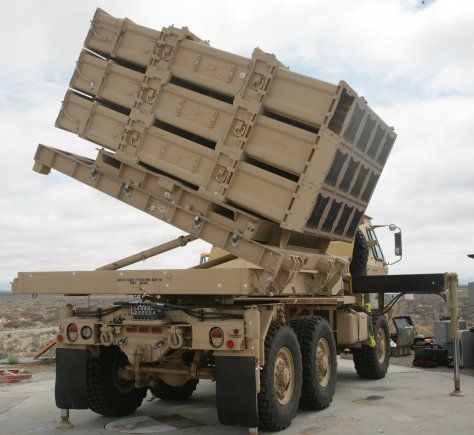
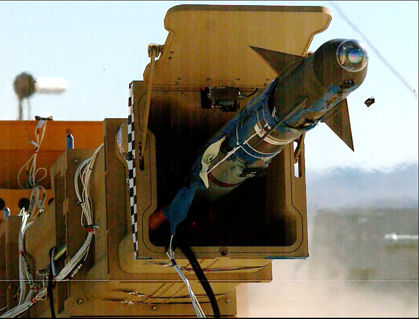
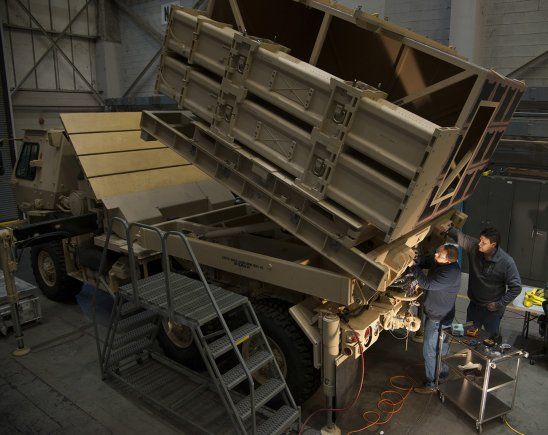
Raytheon said that an AIM-9X Block II Sidewinder missile was launched from a prototype Multi-Mission Launcher, a new ground-based launch system under development by the Army. The test was performed in March at White Sands Missile Range in New Mexico, and details were announced by the company Wednesday.
The AIM-9X missile locked onto an unmanned aircraft before launch and then intercepted and destroyed the drone, which was flying 1,500 meters above ground level.
Why it’s significant
The supersonic, heat-seeking Sidewinder is normally fired from aircraft at aerial targets, and Raytheon said the test demonstrated that the latest AIM-9X variant can also be used without modification for ground-based air defense.
People are also reading…
Originally developed for the Navy in the 1950s, the Sidewinder has been fielded by more than 30 allied nations and was first used by U.S. fighters during the Vietnam War. Eighteen nations currently field the AIM-9X, which Raytheon has been making for 14 years. The Block II version, declared operationally ready in March, adds a datalink to direct the missile to its target in mid-flight.
What’s a Multi-Mission Launcher?
As its name suggests, the Multi-Mission Launcher is designed to fire a variety of missile types. In the same test with the AIM-9X, the launcher fired another missile carrying an Army-developed “low-cost active seeker,” as well as a Miniature Hit-to-Kill vehicle — designed to destroy its targets by sheer impact — made by Lockheed Martin. Both successfully flew planned non-intercept flights, the Army said.
The launcher is designed to provide 360-degree protection while firing at multiple targets at the same time. Besides unmanned aircraft, potential targets include cruise missiles, rockets, artillery and mortars.
What’s next?
The Army plans to continue testing and expects the launcher to be ready for service by 2019. Raytheon said it expects the Sidewinder to be a main weapon used with the launcher.
Contact Assistant Business Editor David Wichner at dwichner@tucson.com or 573-4181. On Twitter: @dwichner

David Wichner
Reporter