

The Buffalo Niagara job market is stuck – just as the fall surge in Covid cases threatens to undermine consumer confidence in some of the most sensitive parts of the economy.
It’s been four months since the region managed any appreciable job growth, stalling the recovery from the deep cuts that devastated the economy during the pandemic lockdown.
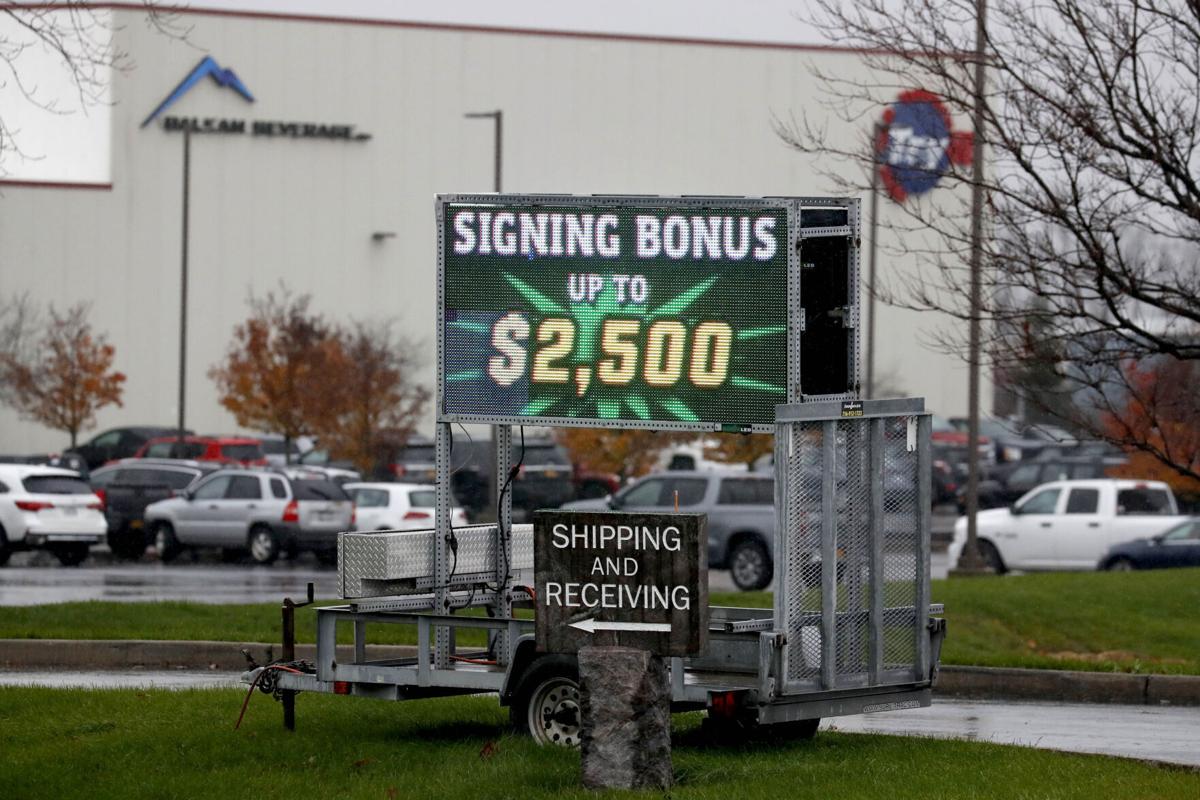
The hope for a speedy recovery this spring as vaccines rolled out was squashed by a grinding worker shortage, which made it difficult for companies to hire all the people they wanted.
By June, we had crawled back within 6% of our pre-pandemic job totals – a considerable accomplishment considering that we started out in a 22% hole.
But since then, we’ve flatlined.
Data released Thursday by the state Labor Department confirmed that the region still is essentially treading water. While there were encouraging gains in manufacturing and construction jobs, those were offset by big drops in employment at hotels, bars and restaurants.
People are also reading…
“We’re still pretty far down,” said Fred Floss, a SUNY Buffalo State economist. “We’re nowhere near back to where we should be.”
If the spike in cases gets even worse and further restrictions are imposed, such as a more extensive mask mandate, then that could further undermine the confidence of consumers to go out and about – and spend money while they’re at it.
“That’s why they haven’t done it,” said Julie Anna Golebiewski, a Canisius College economist. “They’re avoiding it because it does worry people.”
As we learned during the lockdown, people spend less when they stay home. And in an economy where consumers spending accounts for 70% of all economic activity, wary consumers could quickly cut back in ways that put a meaningful drag on an already stalled recovery.
The October jobs data was a bit murky because of the Mercy Hospital strike, which sidelined 2,000 workers last month and prompted Catholic Health to hire temporary replacement workers, which offset some of those losses.
That led to an overall loss of 1,400 jobs from September to October,, which economists think is pretty much all due to the Mercy strike. Without it, the job totals would have barely budged.
“Everything is pretty flat right now,” said Timothy Glass, the Labor Department’s regional economist in Buffalo.
Glass thinks the continued weakness through the summer and early fall stems from the struggles companies face when they try to hire.
That’s because the Buffalo Niagara labor force is shrinking. It’s almost 3% smaller now than it was before the pandemic, which means that about 1,400 fewer workers are either holding jobs or looking for one.
That may not sound like a big deal, but it is, because we’ve been losing workers for a long time.
We’re down almost 38,000 workers from 10 years ago. That means almost 1 of every 15 people who was in the workforce a decade ago has dropped out.
That’s a lot of workers. It heightens competition among businesses for workers, pushing up wages and giving those workers more options to consider before they accept a job.
The pandemic made the shortage even worse. Covid-related health worries knocked some workers out of the labor pool. Others retired early. Still more – particularly female workers – had to stay home to care for children with schools going remote last year and affordable child care still hard to find today.
To make up for the worker shortage, businesses – especially in the hospitality and retail sectors – relied heavily on students to fill temporary positions this summer, Golebiewski said. When those students went back to school, it was doubly hard to replace them.
That was especially true at local restaurants. During a typical year, the region loses about 400 jobs at bars, restaurants and other dining venues from September to October. This year, those business shed 2,500 positions – more than six times the normal drop.
“It indicates the difficulty in finding replacements for the students,” Golebiewski said.
Remember that the next time you see a restaurant closed on a day it would normally be open, or when you see a sign when you walk in asking you to be patient because they’re short-staffed.
And now, with Covid on the upswing again, those restaurants will be an early warning beacon on whether consumers are getting antsy about venturing out again, especially now that the colder weather has ended the outdoor dining that helped overcome some of that lingering wariness.
“The leisure and hospitality sector is likely to feel the effect of not only the rising positivity rate, but also the increase in hospitalizations,” Golebiewski said.
The good news is that other parts of the economy are less sensitive to Covid’s ebbs and flows, now that vaccines are available.
Manufacturing jobs are almost 3% higher than they were before the pandemic, even with the difficulties hiring. Construction jobs have swelled by almost 6% above 2019 levels, hitting a record high for the third straight month.
“Manufacturing and construction both seem to be getting back to – and beyond – where it was before,” Glass said.
That’s encouraging, because those sectors tend to pay better and provide more career-oriented jobs.
But if the Covid surge starts convincing consumers that they’d better stay home, it’s the restaurants and the entertainment venues that will feel it first.
And that’s how we’ll know if the recovery is turning into a reversal.

