

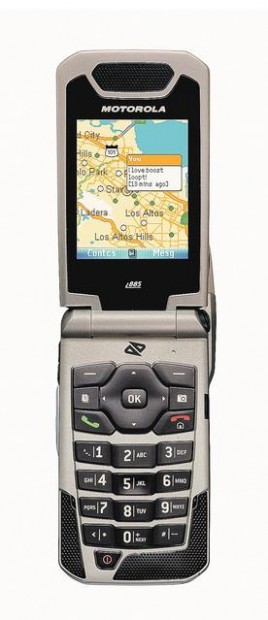
Sam Alton was leaving a computer science class at Stanford last year when he wondered where his friends were.
It's an age-old question, but it got Alton thinking of a different way of arriving at the answer. Alton's creation, for which he left school after his sophomore year, is a service called Loopt, which allows mobile-phone users to locate friends using Global Positioning Satellite technology on a cell phone.
The service, which is being offered on Boost Mobile, provides a real-time cell-phone map that pinpoints the location of friends who have agreed to be tracked. Their location is accurate to within 30 feet under peak conditions.
The service also issues alerts when a subscriber's friends are nearby, allowing the subscriber and his friends to call or text-message each other to arrange an impromptu meeting.
People are also reading…
As part of the service, Boost and Loopt will allow users to tag a location and leave a message about that site. For example, a person could warn friends about a bad dish at a restaurant by leaving a note at the location on the map.
More than 35,000 Boost users have been using the service for free since September. Starting next year, the service will cost $2.99 a month.
Earlier this year, operators like Disney Mobile gave parents the ability to track the whereabouts of their children using their kids' GPS-enabled phones. The Loopt application, though, represents the first example of friends tracking each other on live maps using their cell phones.
Alton said a service like Loopt makes sense in today's mobile world. He said one of the most common text messages is "Where are you?" Loopt, he said, answers that question and facilitates communication.
"This is about deeper communication," said Alton, the 21-year-old chief executive and founder. "It really brings people together. Instead of the virtual world of social networking, this brings back the human touch."
Alton said he is talking to other carriers about adding the service next year, when Loopt's exclusive agreement with Boost expires.
Helio, another niche mobile carrier, started a similar service last week called Buddy Beacon, which allows subscribers to locate each other using a GPS-enabled device called the Drift. The service, free for Helio subscribers, uses a mapping feature that calls up the location of fellow Helio users who have agreed to be part of a user's Buddy Beacon network.
There's a big difference between Helio's service and Loopt's. Loopt users, who are being tracked at all times, have to turn off the system if they don't want to appear on their friends' maps. Buddy Beacon requires users to update their location every time they want to be seen by their friends.
Helio spokesman Rick Heineman said the updating function is designed to preserve some privacy and control for users.
"Between opting in to update your location and only broadcasting to approved people, we've gone to great lengths to make sure privacy is paramount in this service," he said.