

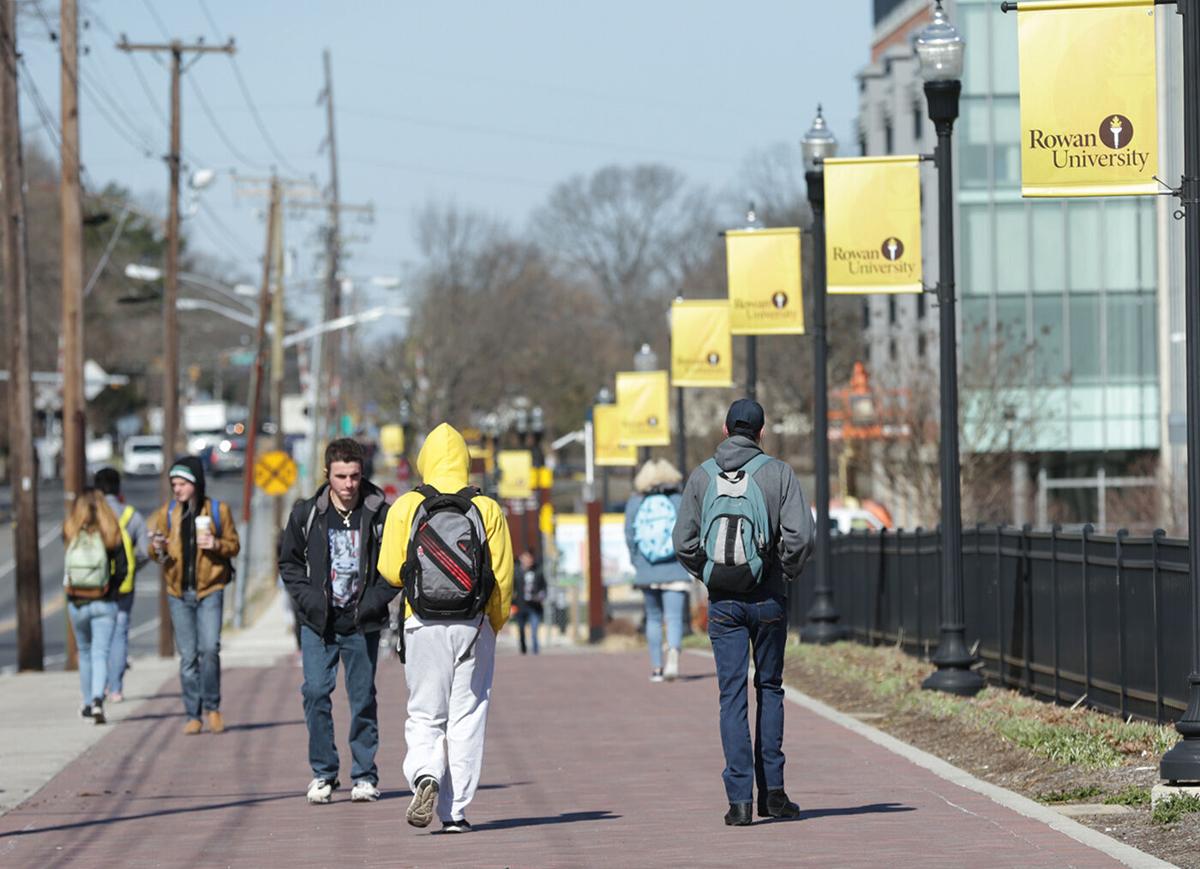
GLASSBORO — Sophomore Carly Weinstein said this semester at Rowan University has been the hardest three months of her life.
On top of struggling with her own mental health, one of Weinstein’s roommates attempted to hang herself in their dorm room.
“I know that this is an epidemic and it’s very complex,” Weinstein told a crowd of her peers Monday during a student government meeting dedicated to the topic of suicide and mental health. “In my personal experience, I feel like this situation was dealt with completely wrong.”
Three recent suicides and a number of attempted suicides this semester at Rowan revealed, among other problems, a lack of awareness of services among students, inadequate funding for those services and a need for more counselors — issues that colleges across the country are attempting to deal with.
People are also reading…
GLASSBORO — The fall of a Rowan University student from one of the college’s parking garages has led to a campuswide response that has included vigils and discussions on mental health and suicide prevention.
“It is a reality, and students are realizing it and taking advantage of it, so the universities need support in expanding their services and creating new programs,” said Benedict Ezeoke, Stockton University’s new executive director of counseling and wellness.
Ezeoke is making changes to improve the services at Stockton, including adding staff, more training for others on campus, including housing and athletic staff, adding a walk-in program that next semester will be available during all hours the Wellness Center is open, and presentations throughout campus.
Suicide on college campuses is not a new issue, but the rate among college-age students nationally has been on the rise for more than a decade. It is the second leading cause of death among college-aged students.

GALLOWAY TOWNSHIP — For someone experiencing a mental health disorder, it is more than just a “bad day,” said licensed clinical social worker Cathleen Morris.
In the past decade, the rate of suicides in New Jersey among 18-24-year-olds has fluctuated. It increased from 8.7 per 100,000 residents in 2007 to 10.2 in 2012, dropped to a low of 8.2 in 2016 and rose again to 10.3 in 2017, state health data show.
According to a recent report on mental health help on college campuses in Cosmopolitan magazine, between 2010 and 2016, the number of students seeking on-campus counseling rose by 30%, “more than five times the growth of overall college enrollment.”
Rowan, which has also seen its enrollment increase, has 15 counselors and plans to add three more next year to keep up with the need, but college spokesman Joe Cardona said there will never be enough.

In September 2014, a seventh-grader from Hamilton Township died by suicide.
“You have to go by best practices and look at how you service students,” Cardona said. “We made a dramatic change last spring and going into this fall where there used to be a wait list. What we do now is when a student comes in, they are assessed on their level of crisis.”
He said programming for mental health services also happens through various departments and clubs on campus, and that some students are offered a private counseling session or group counseling while others may be referred off-campus.
During the meeting at Rowan’s Student Center last week, held in response to a student falling from a campus parking garage the week prior, student after student took the microphone to share their stories, concerns and suggestions for how Rowan could provide better mental health services and awareness on campus.
When law enforcement officers share their experiences with friends and family, whether it’s responding to a car accident, a domestic dispute or a shooting, Atlantic County Sheriff Eric Scheffler said it can feel isolating.
Weinstein said the night of her roommate’s attempted suicide, she called the Wellness Center hotline but was connected to the police, who responded to the scene.
Her friend was taken to the hospital, then was transferred and received treatment from an off-campus facility, but returned unannounced to the dorm room. She said there was no communication or follow-up with her or her other roommate from the Wellness Center on the situation.
“She walked right back in our dorm like nothing ever happened,” Weinstein said. “Nobody gave her resources to go elsewhere.”
Rowan adjunct professor Mandi Dorrell, adviser for the college’s Active Minds club, which promotes mental health awareness, said a quarter of students will seek mental health services during their time on campus.
MAYS LANDING — Outside the AtlantiCare Teen Center at Oakcrest High School, a small garden is beginning to bloom.
Weinstein had recommended her friend seek treatment, but her friend declined.
“Like many others, she did not feel that the Wellness Center could provide her what she needed. And unfortunately, she realized she needed the help too late. I am lucky enough that our shower curtain in our bathroom bent, which caused her to touch the floor,” Weinstein said.
Dorrell suggested more people on campus need to be trained on mental health issues and suicide prevention, and that counselors need to meet the students physically where they are, instead of waiting for them to seek out services.
Mia Sondacaro, a junior at Rowan and co-founder of the Active Minds organization there, said that because of Active Minds, she now is well-versed in the services offered at Rowan, but realizes many other students do not.
Sondacaro, 20, of Pompton Plains, Morris County, agreed the college could do more but did not blame the Wellness Center staff.
“Of course there could always be reform, but it’s not just a Rowan situation. I think it goes way beyond just on the campus level. It’s a societal issue,” she said.
Although the news out of Rowan seems jarring, in New Jersey, the suicide rate for college-aged students is below the national average of 16.3 per 100,000 residents. Jeff Carrick, assistant director of the state Division of Children and Families Children’s System of Care, suggested more adaptive programs, like text messaging, to reach more young people in the ways they are most comfortable.
Diana Salvador, clinical director for DCF program, said that because a stigma still exists around receiving mental health services — although it has been chipped away at significantly over the past decade — it can be harder to reach those in need.
“I think that also can’t be ignored in our culture. We still have a long way to go,” Salvador said. “Colleges and universities, their main priority is to educate students, so it takes a lot of ground working and nurturing within those walls.”

